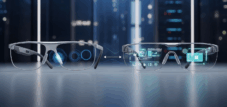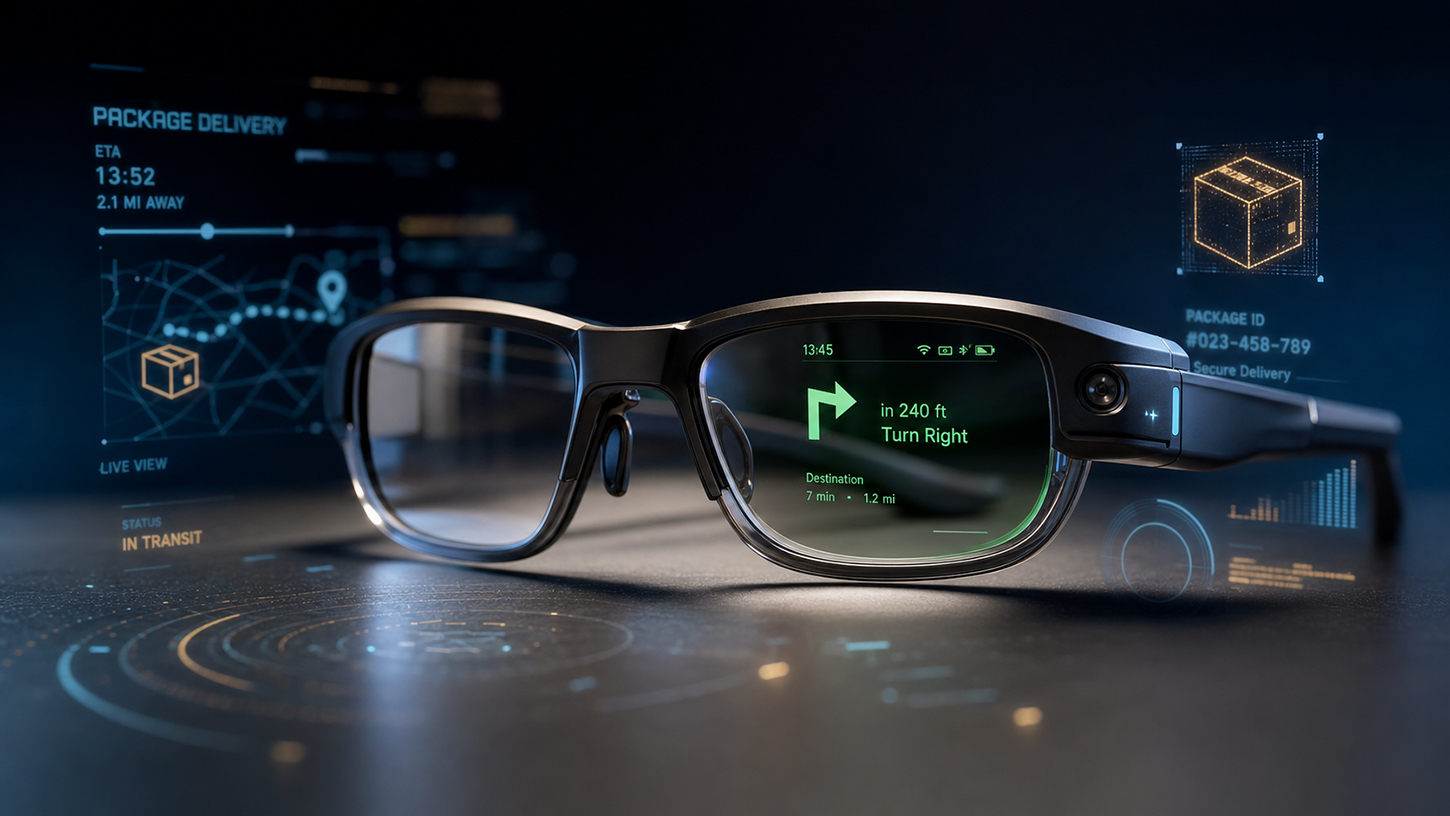
Project Amelia & Jayhawk: Why Amazon's new AR glasses could change everything – Forget the Echo Frames – Stock image: Xpert.Digital
Attack on Meta and Apple: This is what's behind Amazon's secret smart glasses strategy
Not just for delivery drivers: Amazon's ingenious plan for the future of augmented reality
Smart Glasses 2.0: Why Amazon's new glasses are becoming a real threat to Meta
Amazon is no longer content with simply delivering packages to our doorsteps – the tech giant is now reaching directly into our field of vision. After the rather lukewarm success of its bulky, display-less "Echo Frames," the company is preparing a massive augmented reality offensive for 2026, one that aims to shake up the entire wearables market. The strategy behind it is as risky as it is ingenious: Instead of putting all its eggs in one basket, Amazon is developing two completely different smart glasses. While the internal project "Amelia" is intended to revolutionize the multi-billion-dollar logistics and parcel delivery market as a highly efficient work tool, the "Jayhawk" model is aimed directly at the end consumer. However, a formidable opponent awaits: Meta currently dominates the market with its Ray-Ban glasses. This comprehensive analysis illuminates why Amazon's dual strategy is extremely clever from an economic perspective, what enormous technological hurdles still need to be overcome, and why, in the end, it's not about selling hardware at all, but about the most valuable data treasure of the future.
Related to this:
- Amazon's smart delivery glasses: Using augmented reality to streamline last-mile delivery technology
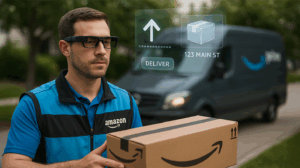

When the online retail giant wants to change the world's viewing habits – and why this time it can't be a flop
Amazon is no newcomer to the wearables market. Back in 2019, the company unveiled the Echo Frames, glasses with Alexa integration, though they lacked both a display and a camera. The result was underwhelming: at the time, the glasses were characterized as a device that was neither visually appealing nor technologically convincing – essentially an Alexa speaker worn on the nose, without utilizing the full potential of smart glasses. But now, in 2026, a fundamentally different strategy is emerging. Amazon is developing two standalone products that, together, represent a complete redefinition of the company's market presence in the AR segment.
The first model, internally codenamed Amelia, is designed specifically for Amazon delivery drivers who deliver hundreds of packages daily. The second model, internally called Jayhawk, is aimed at the consumer market and is slated for release no later than the first quarter of 2027. Both glasses utilize the same basic display technology but differ significantly in their form, intended use, and target audience. This dual strategy is remarkably astute from an economic perspective: Amazon is first testing and refining the technology in a controlled, professional environment before presenting the product to the far more demanding and price-sensitive end consumers.
The strategic decision to tackle both markets – the B2B logistics market and the B2C consumer market – simultaneously is no coincidence. It reflects Amazon's ability to connect different value chains and monetize its technological advantage both internally and externally. The company leverages its existing infrastructure in this endeavor: AWS for cloud AI services, Alexa as a voice interface, the mapping network for precise navigation, and the entire logistics software that coordinates millions of package deliveries daily.
Amelia: The work glasses that redefine Amazon's last mile
The Amelia model is arguably the more important of the two products for Amazon in terms of its economic significance – even though it receives less public attention than its more glamorous consumer counterpart, the Jayhawk. Amazon plans to initially produce around 100,000 units of these delivery driver glasses by the second quarter of 2026, with a subsequent gradual expansion to its entire North American fleet and, in the long term, to international markets.
The Amelia glasses are designed to solve a very specific problem: reducing friction losses on the last mile of parcel delivery. Last-mile delivery is not only logistically complex but also exorbitantly expensive. Current studies show that the last mile accounts for up to 53 percent of total shipping costs and is simultaneously the most error-prone and time-consuming phase of the entire delivery process. Every second a driver spends searching for the right package, verifying the address, or photographing the delivery receipt adds up to significant inefficiencies in daily operations. Projections from industry studies indicate that AI-powered smart glasses can save around 30 minutes of working time per shift in delivery operations by drastically reducing the need for manual device interactions.
The Amelia glasses feature a green head-up display that activates automatically once the driver has parked their vehicle. The system displays package assignments, navigates the driver on foot to the precise delivery address using Amazon's proprietary geospatial technology, warns of nearby hazards, and enables contactless package scanning and automatic delivery documentation. The system is controlled via a button on the driver's delivery vest, which also houses the replaceable battery that ensures all-day operation. According to Amazon, the device was developed in close collaboration with hundreds of delivery partners, whose feedback on comfort, weight distribution, and display readability was incorporated into the final design.
From an economic perspective, Amazon's calculations for Amelia are relatively transparent. If a 30-minute daily time saving per driver can be achieved, this translates into an improvement in operational capacity for a fleet of hundreds of thousands of drivers on the road every day. This improvement can amount to billions in saved labor costs and a significantly higher number of packages per route per day. The delivery glasses are therefore not a gadget, but a serious productivity tool with a measurable ROI. For comparison, in 2020, Amazon already saved $1.6 billion by using machine learning and AI in its transportation and logistics processes. Integrating AR glasses into this system represents the logical next step in its evolution.
Jayhawk: Amazon's answer to Meta – and the company's toughest fight in the consumer market
While Amelia addresses a clearly defined target group and a concrete business benefit, Amazon is entering significantly more challenging territory with Jayhawk. The consumer market for AR glasses is not only more technologically demanding, but also dominated by a single, overwhelmingly dominant brand: Meta, with its Ray-Ban AI glasses, held a global market share of approximately 85.2 percent in 2025, with an estimated total of 7.4 million units sold – in a market that saw overall growth of 110 percent in the first half of 2025 compared to the same period of the previous year.
According to reports from 2025, Jayhawk is slated to feature a monocular color display that projects augmented reality overlays into the eye – a concept strongly similar to Meta's Hypernova glasses. It will also include microphones, speakers, a camera, and deep integration with Alexa and the entire Amazon ecosystem. The target price point is around $800, directly competing with Meta's planned Hypernova glasses. Amazon is reportedly collaborating with the Chinese display specialist Meta-Bounds, which is providing the core AR technology.
The central challenge for Amazon with Jayhawk is less technological than it is brand strategy and culture. Amazon is primarily perceived as a retail platform and logistics company, not as a lifestyle brand or gadget innovator. The Echo Frames struggled with this perception problem: they were seen as generic, uninspired glasses that were neither fashion-forward nor technologically groundbreaking. $800 glasses require a different marketing foundation—one that generates desire and creates an emotional connection with the buyer. Meta cleverly solved this problem by partnering with the iconic eyewear manufacturer Ray-Ban, which lent the product a fashion credibility that Meta couldn't have achieved on its own. Whether Amazon can develop a similarly effective brand strategy for Jayhawk will be a crucial factor in its market success.
The market is on fire: What the global AR glasses dynamic means for Amazon
Amazon's entry into the AR glasses market comes as the entire industry enters a period of accelerated growth. The global market for AI smart glasses grew by 322 percent in 2025 to 8.7 million units, driven primarily by the boom in Ray-Ban Meta glasses. Omdia forecasts a further increase to 15 million units in 2026. Long-term, according to The Business Research Company, the overall market for AR/VR smart glasses will grow from $21.17 billion in 2025 to $24.88 billion in 2026 – at an annual growth rate of 17.5 percent. By 2030, the market is expected to reach approximately $46.93 billion, and some forecasts, such as that from SkyQuest Technology, even predict a market volume of $69.53 billion by 2033.
The AI-powered smart glasses segment is growing even more dynamically: Industry analysts at SAG predict that revenues in this sub-segment alone will reach approximately $5.6 billion in 2026, up from $1.2 billion the previous year – a fourfold increase in a single year. This surge in growth is largely attributable to the entry of new heavyweights like Apple and Samsung, who have announced their own products for 2026 and 2027. By 2030, 75 million units of AI smart glasses are expected worldwide, generating $29 billion in revenue – a five-year CAGR (combined annual growth rate) of 89 percent.
For Amazon, this market entry is by no means a niche experiment. The company is positioning itself in a market that is currently moving from an experimental phase to one of mass adoption. Particularly relevant is the shift within the market towards display-enabled glasses: According to Omdia, HUD-equipped AI smart glasses will surpass purely audio-based models in unit sales for the first time starting in 2028. Amazon's Echo Frames without a display, which still saw declining sales figures in the first half of 2025, are symptomatic of this change. With Jayhawk and Amelia, Amazon is responding to precisely this technological and market-structural turning point.
🗒️ Xpert.Digital: A pioneer in the field of Extended and Augmented Reality

Finding the right Metaverse agency, planning office, or consulting firm - Image: Xpert.Digital
🗒️ Finding the right Metaverse agency, planning office, or consulting firm – Search and search: Top Ten Tips for Consulting & Planning
More information here:
How Amazon combines AWS, Alexa and Prime with smart glasses to create the ultimate AR weapon
Technological architecture: AI, cloud and the ecosystem as a differentiating factor
The technological foundation upon which Amazon is building its smart glasses offensive differs in one crucial aspect from the approaches of most competitors: Amazon is not merely a hardware company, but an integrated technology conglomerate whose value lies not in the individual device, but in the interconnectedness of various services. AWS, the world's largest cloud computing company, provides the infrastructure for real-time AI processing. Alexa, as one of the world's most widely used AI voice assistants, forms the interaction layer. Amazon Music, Prime Video, Kindle, and the entire Prime ecosystem can be integrated into the glasses as a content layer.
According to reports, the display technology of both models is based on MicroLED or OLED technology, optimized for high contrast and low latency during AR overlay. The on-device processors are designed for AR rendering and AI inference and can be supplemented by edge computing to reduce reliance on mobile devices. Connectivity is expected to be via Wi-Fi 6/6E and Bluetooth 5.x. For use in delivery operations, the Amelia glasses also feature computer vision and AI-powered sensor technology, enabling real-time hazard detection and environmental analysis.
The question of processing architecture is particularly interesting. The challenges faced by all AR glasses—battery life, form factor, and computing power—can be addressed through an intelligent distribution between on-device processing and cloud computing. Amazon has structural advantages here: With AWS, the company operates edge computing infrastructure at a level that no other company in the smart glasses market can replicate, except perhaps Google with its cloud platform. This ability to seamlessly distribute computationally intensive AI tasks between the device and the cloud can significantly improve both battery life and device performance, representing a genuine and sustainable competitive advantage.
The use of the Chinese AR display provider Meta-Bounds as a technology partner further underscores Amazon's reliance on proven components rather than developing all hardware in-house. This is a pragmatic strategy: Instead of pursuing the years-long and extremely capital-intensive path of complete in-house development, as Apple does with its entire chip and display technology, Amazon is concentrating on its core competencies in software, AI, and ecosystem integration.
Related to this:

Competitor comparison: Meta, Google, Apple and the Chinese challenge
The competitive landscape Amazon is entering is both complex and rapidly evolving. Meta is currently the undisputed market leader in the consumer segment and plans to double its annual production of Ray-Ban AI glasses to up to 20 million units by the end of 2026, with potentially even higher numbers if demand continues to grow. Reality Labs, Meta's XR division, saw a 74 percent year-over-year revenue increase in the third quarter of 2025, driven largely by AI glasses sales—despite the division's cumulative losses of over $60 billion since 2020. Its partnership with EssilorLuxottica, which includes not only production but also access to thousands of Ray-Ban and Sunglass Hut stores worldwide, is an invaluable distribution advantage.
Google is in a strategic repositioning phase after previous iterations of Google Glass failed to achieve widespread commercial success. The company remains focused on enterprise applications with the Google Glass Enterprise Edition. Google has so far remained reserved in the consumer segment, but given the market strategies of competing companies, a renewed push into the consumer market is to be expected.
Apple is currently executing one of the most remarkable strategic U-turns in its recent history: After the commercial failure of the Apple Vision Pro, which sold fewer than 500,000 units by the end of 2025 and was subsequently discontinued, the company is now focusing on developing Ray-Ban-style smart glasses. This change of course makes economic sense: A $3,500 headset doesn't resonate with a broad consumer base, while stylish glasses priced between $500 and $800 can potentially appeal to millions of buyers. Analyst Ming-Chi Kuo predicts that Apple will ship over 10 million AR/VR products by 2027, including 3 to 5 million Ray-Ban-style smart glasses.
In the enterprise segment, a distinct ecosystem of specialized providers such as RealWear, Vuzix, and Lenovo ThinkReality has emerged. These devices are optimized for industrial applications and command prices of up to $3,500 per unit. They offer companies productivity gains of 25 to 30 percent in complex assembly and order picking tasks, as well as error reductions of 40 to 50 percent and accelerate the onboarding of new employees by 35 percent. The growth potential in this segment is particularly enormous: The global market for smart glasses in logistics, estimated at around $2 billion in 2025, is projected to grow to $10 billion by 2033 – at a CAGR of 25 percent.
Meanwhile, China is developing into the second most important market and the second most important source of innovation for smart glasses. Xiaomi, TCL-RayNeo, and Alibaba are aggressively pushing into the market with their own AI glasses and are projected to dominate 71 percent of the global smart glasses segment by 2025. The US and China together will cover almost 80 percent of global demand for AI smart glasses in 2026. For Amazon, this trend means that competition will come not only from established Western tech companies but also from price-aggressive Chinese manufacturers who already possess sophisticated production capabilities and their own AI platforms.
Amazon's strengths and blind spots: A sober risk assessment
Despite all the promising market data, a sober assessment of Amazon's chances of success in the smart glasses market is essential. The company possesses undeniable structural strengths: a vast, loyal Prime customer network with over 200 million members worldwide, one of the world's most powerful AI infrastructures in the form of AWS, an already established voice assistant in Alexa, a comprehensive content offering from music and video to Kindle, and a proven direct sales and supply chain. Furthermore, Amelia's internal testing of the technology within one of the world's largest logistics networks provides a unique real-world testing ground that no competitor can replicate.
On the other hand, there are significant risks and weaknesses. The first and perhaps most pressing problem is the image deficit in the lifestyle segment. Amazon is not a brand that consumers associate with fashionable desirability. While Meta benefits from the emotional power of the Ray-Ban brand and Apple has been synonymous with design excellence for decades, Amazon stands for practical functionality and low prices – not an attribute cluster that facilitates the sale of an $800 pair of glasses.
The second risk lies in technological maturity. Miniaturizing display technology, achieving long battery life, ensuring comfortable wear, and maintaining processing power still pose enormous engineering challenges. The form factor of smart glasses is physically extremely limiting: all components—processor, battery, display, cameras, microphones, speakers, antennas—must be housed in a frame light enough to be worn for hours. Previous devices that successfully balance this, such as the Ray-Ban Meta glasses, have forgone a full-fledged AR display. Devices with a true AR display, such as the RealWear industrial glasses, are bulky and expensive. Combining a slim design, full-color display, and all-day battery life at a consumer price remains the core, and difficult to solve, problem facing the entire industry.
The third risk concerns data privacy and public acceptance. Glasses with embedded cameras and a constant cloud connection raise public concerns about surveillance and data misuse – a problem that already led to the failure of Google Glass in 2013. For a company like Amazon, which is already regularly confronted in public debate with questions about monitoring its employees and handling customer data, this risk is particularly pronounced. The Amelia glasses for delivery drivers, in particular, which involve continuous camera tracking in public spaces, are likely to generate regulatory headwinds in privacy-sensitive markets such as Germany or the European Union.
Overall economic assessment: What Amazon is really buying with smart glasses
Amazon's smart glasses offensive, upon closer inspection, is more than just a hardware product launch—it's a strategic infrastructure investment. The real economic value lies less in the devices themselves than in what they enable: a permanent, passive data layer on the user's body that provides real-time information about context, location, viewing habits, and consumer behavior. For a corporation like Amazon, whose entire business model relies on the ability to predict and influence consumer behavior, glasses with always-on connectivity represent a potentially transformative data collection and recommendation tool.
On the B2B side, the glasses serve to consolidate and expand Amazon's logistics dominance. In recent years, the company has made massive investments in automating its fulfillment centers and building its own delivery network. Smart glasses are the logical complement to this strategy for the final and most human-intensive step of the delivery process, which until now has largely taken place without digital assistance at the worker's direct level of perception. With Amelia, Amazon is entering territory previously reserved for specialized enterprise providers like RealWear and Vuzix – and it is doing so with a scaling capacity that these providers cannot even come close to achieving.
On the B2C side, Amazon's ambitions are fraught with considerably more uncertainty, but the potential reward for success is immense. A successful consumer AR device would give Amazon direct access to the most active moment of consumer life: looking through the glasses at the world, with Alexa as an invisible advisor, providing real-time purchase recommendations, projecting price comparisons directly into the user's field of vision, and seamlessly integrating the entire Amazon offering into everyday life. The strategic value of this scenario far exceeds the revenue from the glasses themselves.
The year 2026 and the first months of 2027 will show whether Amazon can maintain the difficult balance between technological maturity, design quality, and brand strategy required for a genuine breakthrough in the consumer market. For the logistics segment, however, Amelia's success is already far less a question of brand image or design than of simple business calculations. And these calculations clearly favor the glasses.
Your global marketing and business development partner
☑️ Our business language is English or German
☑️ NEW: Correspondence in your native language!

Konrad Wolfenstein
I and my team are happy to be available to you as your personal advisor.
You can contact me by filling out the contact form here wolfenstein@xpert.digital:or simply call me at +49 7348 4088 965. My email address is
I'm looking forward to our joint project.