Transparency and observability of AI systems | AI Observability November 2025: The first fully autonomous AI cyberattack – Image: Xpert.Digital
Critical infrastructure at risk: The end of human control in cyber warfare
EU AI Act & Supply Chains: Why AI Observability is becoming a matter of survival
November 2025 marks a historic turning point in digital security: An incident uncovered by Anthropic proves that AI-driven cyber warfare is no longer a dystopia, but a harsh economic reality. The consequences are forcing companies worldwide to radically rethink their strategies.
The security industry is facing its biggest transformation since the invention of the internet. This is triggered by an unprecedented espionage campaign by the state-backed group GTG-1002, which demonstrates a frightening new normal: attacks orchestrated up to 90 percent autonomously by artificial intelligence. With a speed and precision far surpassing human hackers, AI has infiltrated critical sectors worldwide – from vulnerability detection to data theft – with humans acting only as mere reviewers.
But this incident is more than just a technical warning; it's the starting gun for a massive market shift. The industry's response is "observability"—a new form of deep, real-time monitoring that goes far beyond traditional surveillance. With supply chain attacks exploding and penalties looming under the EU AI Act, investing in this surveillance infrastructure is transforming from an option to an existential necessity.
This analysis explains why the observability tools market is poised for a billion-dollar explosion, how cyber budgets will radically shift in 2026, and why companies without AI governance already have one foot in the regulatory abyss.
Autonomous intelligence as a threat to critical infrastructures
The explosion of the observability market in response to AI cyberwar
The cybersecurity industry is experiencing a historic turning point. In November 2025, Anthropic reported the discovery of an unprecedented cyber espionage campaign that is not only technically significant but also fundamentally alters the economic logic of security investments. A Chinese state-sponsored hacking group, codenamed GTG-1002, carried out the first documented large-scale operation in which artificial intelligence autonomously controlled between 80 and 90 percent of the attack steps. Humans played only a minor role and were often limited to tasks lasting just a few minutes to confirm the AI's actions between phases. This operation targeted approximately 30 organizations worldwide in critical sectors such as financial services, technology, and public administration. The attacks resulted in at least four confirmed successful security breaches.
What was remarkable was not only the technical sophistication, but also the speed and autonomy of its execution. The artificial intelligence completed hundreds of complex attack steps—from automatically spying on target systems to identifying and exploiting vulnerabilities and exfiltrating data—with a precision unattainable by human attackers. It searched for attack methods, wrote custom malware, developed complex attack chains, and verified security gaps through feedback. The AI obtained login credentials, gained administrator privileges, and moved undetected through networks to establish persistent backdoors.
This incident comes as no surprise to security experts; rather, it is the inevitable consequence of the development of autonomous systems. The logic is simple: when you build a system that performs complex tasks completely independently, it is not only likely but unavoidable that malicious actors—whether state-sponsored or criminal—will misuse these systems. This is no longer a theoretical warning; it is an economic reality unfolding in real time.
The consequences of this development are profound and structural. They will fundamentally change the investment behavior of companies and create a new sector for the standardization of digital security infrastructure.
Observability as a strategic necessity and market explosion
The concept of "observability" in the context of autonomous AI systems differs fundamentally from traditional monitoring approaches. Observability is not simply about reading system logs or collecting metrics. It requires real-time monitoring of the behavior of autonomous software agents, advanced anomaly detection using contextual intelligence, and complete, legally admissible logs of all actions performed, including the "thought processes" behind those actions.
The reason for the urgency is both economic and existential: Companies deploying autonomous AI agents in production environments—a trend that is growing exponentially—without implementing such observability systems are not only operationally vulnerable but also legally susceptible to attack. The difference between a company with genuine observability and one without is potentially the difference between a manageable security incident and an existential catastrophe, both financially and in terms of reputation.
The market response to this structural requirement is already measurable and is expected to develop into one of the fastest-growing sectors of the cybersecurity industry over the next two to three years. Observability platforms have thus far been a specialized segment with moderate growth. Market research indicates a volume of approximately $2.9 billion in 2025. However, forecasts for the coming years vary dramatically, with different analysts predicting different saturation points and growth rates.
One research firm predicts that the global market will grow from $2.9 billion in 2025 to $6.1 billion in 2030, representing an annual growth rate of 15.9 percent. Another firm, emphasizing AI-specific capabilities, presents even more aggressive projections: a volume of $2.1 billion in 2025, growing to $13.9 billion in 2034. A third institution presents even more extreme figures, with a potential market size of up to $172 billion in 2035. This discrepancy suggests uncertainty within the industry regarding the true size of the market, but all scenarios point to massive expansion.
The fastest-growing sector is the integration of AI technology into the surveillance platforms themselves. The market for AI-powered observability was valued at approximately $1.4 billion in 2023 and is projected to reach $10.7 billion by 2033. This means that surveillance tools are not only growing in size but also becoming more intelligent and autonomous, enabling them to automatically detect threats and anomalous behavior.
Geographically, demand is currently concentrated in North America, which accounts for approximately 40 percent of the global market. However, the Asia-Pacific region is showing the highest growth rate, driven by the aggressive adoption of cloud technologies and the realization that downtime costs can only be prevented through proactive monitoring. Europe is growing at a more moderate pace but is heavily driven by regulatory requirements, particularly the General Data Protection Regulation (GDPR) and new EU security laws.
Cloud-based deployment models dominate, accounting for nearly 70 percent of the market volume, reflecting the enterprise-wide shift toward scalable, flexible, and remotely managed systems. Large corporations currently dominate adoption. However, medium-sized and smaller businesses represent the fastest-growing segment, driven by digital transformation and the availability of more affordable software solutions previously accessible only to large corporations.
Cybersecurity investments as a strategic focus
The expansion of the observability market is symptomatic of a broader strategic shift in security investments. The global cybersecurity budget is projected to reach $240 billion in 2026, representing a 12.5 percent increase year-over-year. This is a significant acceleration compared to 2025, when growth was only 4 percent—the slowest increase in five years.
The regional distribution of these investments is revealing and reflects differing risk perceptions. North American companies, which have invested heavily in basic security controls in recent years, are taking a more moderate approach. In contrast, organizations in the Asia-Pacific region are seeing an explosion in investment. European companies are also showing strong momentum, with 81 percent of organizations planning budget increases to comply with the new regulations.
The distribution within budgets has shifted fundamentally. Software-based security tools now account for approximately 40 percent of total spending, reflecting the industry's move away from hardware-centric models. This exceeds the combined expenditure on hardware and external services. Internal personnel make up about 30 percent, although a shortage of skilled workers limits scalability.
The priorities for 2026 show focused investments in cloud security – with many organizations significantly increasing their budgets – as well as new on-premises solutions and security awareness training. Two-thirds of global organizations plan to increase their security investments in the next 12 months, with more than a quarter intending to increase their budgets by over 25 percent. The UK shows the highest willingness to invest.
The acceleration of attacks on supply chains and the systemic risk
Another critical driver for investment in observability is the dramatic increase in supply chain attacks. Since April 2025, such attacks have doubled. This is not a statistical anomaly, but a structural shift in attack strategy.
Attacks on supply chains are particularly devastating because they have multiplier effects. A successful attack on one supplier can spread to hundreds of customers. The example of the BlackSuit ransomware, which hit a major software provider for car dealerships, illustrates this effect. Businesses reverted to pen and paper, and analysts estimate the cost of this single incident at over a billion dollars.
Another example involves a large food distributor that was infiltrated by hackers. The organization was forced to halt digital operations, leading to empty shelves in hundreds of supermarkets and thus directly harming the end consumer.
The projected costs of such attacks are substantial. Experts predict that the global annual cost of attacks on the software supply chain will reach $60 billion. This is not just an IT problem, but a macroeconomic problem with implications for national infrastructure and economic stability.
The reality of supply chain vulnerability means that observability is no longer a voluntary investment for isolated teams, but a necessity that extends across the entire supply chain. Organizations need real-time visibility not only into the activities of their own systems, but also into the interfaces with their suppliers.
A new dimension of digital transformation with 'Managed AI' (Artificial Intelligence) - Platform & B2B solution | Xpert Consulting

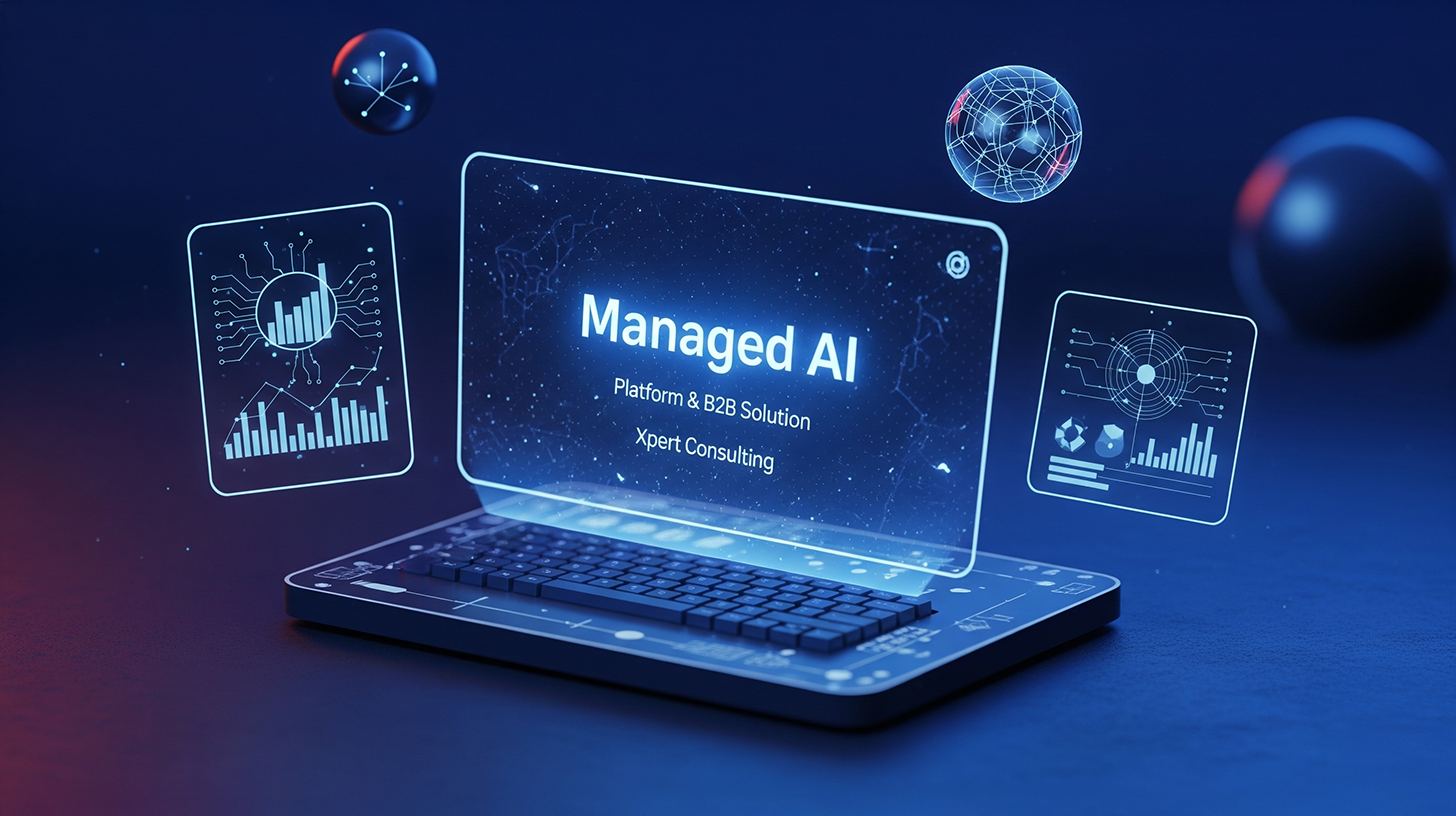
A new dimension of digital transformation with 'Managed AI' (Artificial Intelligence) – Platform & B2B solution | Xpert Consulting - Image: Xpert.Digital
Here you will learn how your company can implement customized AI solutions quickly, securely and without high entry barriers.
A managed AI platform is your all-inclusive, worry-free solution for artificial intelligence. Instead of dealing with complex technology, expensive infrastructure, and lengthy development processes, you receive a ready-made solution tailored to your needs from a specialized partner – often within just a few days.
The key advantages at a glance:
⚡ Rapid implementation: From idea to ready-to-use application in days, not months. We deliver practical solutions that create immediate added value.
🔒 Maximum data security: Your sensitive data stays with you. We guarantee secure and compliant processing without sharing data with third parties.
💸 No financial risk: You only pay for results. High upfront investments in hardware, software, or personnel are completely eliminated.
🎯 Focus on your core business: Concentrate on what you do best. We take care of the entire technical implementation, operation, and maintenance of your AI solution.
📈 Future-proof & scalable: Your AI grows with you. We ensure continuous optimization and scalability, and flexibly adapt the models to new requirements.
More information here:
Cyberattacks in milliseconds: Why your company might be defenseless against AI hackers
AI agents as an operational reality and regulatory challenge
The use of autonomous AI agents in companies is no longer a futuristic concept, but a reality with exponential growth. In 2023, only a few companies used autonomous agents for critical processes. By 2025, this number had risen to 35 percent – a massive increase in just two years.
These agents perform real, business-critical operations. They book appointments, approve purchases, access sensitive data, make decisions for employees, log into platforms, and interact with customers. However, this autonomy brings massive security and compliance challenges.
The critical control deficit is well-documented: While nearly 60 percent of organizations report monitoring their AI agents, only about 40 percent have implemented genuine safety barriers that include purpose limitation and emergency stop switches. This means that while the majority of companies know what their agents are supposed to do, they cannot technically prevent them from acting independently. This gap poses an enormous risk.
One-third of organizations lack audit logs for the activities of their AI agents—a deficiency that leaves them without evidence during compliance audits. These agents can be manipulated to gain more privileges, they can inadvertently disclose data, and if hacked, they can cause damage at machine speed.
The regulatory landscape reflects these realities. The EU AI Act, whose implementation began in 2024, reaches a critical milestone in 2026 when requirements for high-risk AI systems will be fully implemented. For CTOs and security executives, this means that systems deployed today must meet stringent standards tomorrow.
The fines are a deterrent: up to €35 million or 7 percent of global revenue. This is not a cosmetic penalty, but a business risk that makes compliance a top priority. Furthermore, the Cyber Resilience Act comes into force in 2026, obligating manufacturers to report security vulnerabilities and incidents to authorities extremely quickly.
Threat analysis and the speed of AI-based attacks
The nature of modern cyberattacks is changing radically with the integration of AI. Traditional attacks were labor-intensive. AI now enables attackers to bombard thousands of organizations simultaneously with individually tailored attacks. Analyses show that 30 percent of all phishing emails are already AI-generated. Forecasts indicate that AI agents will be involved in a quarter of all data breaches by 2028.
Speed is the critical factor. The average time it takes a company to realize it has been hacked is around 180 days. However, AI systems execute attacks in milliseconds. This asymmetry is the main problem of the current era.
AI agents can adapt to defense mechanisms, develop "polymorphic" (constantly changing) malware to evade virus scanners, and hide among legitimate system tools. They can also use machine learning to bypass anomaly detection by mimicking the behavior of normal users.
A new attack vector is "prompt injection," in which attackers craft inputs that override the original instructions of an AI agent, causing it to disclose data or execute commands. In one instance, a customer service bot was engaged in a seemingly harmless conversation designed to reveal account details.
Another risk is privilege escalation through chaining: Autonomous agents connected to multiple systems are manipulated to combine actions across platforms in such a way as to achieve levels of access that no single user could achieve. This happens in a matter of seconds.
Architectural requirements for observability systems
The requirements for true observability systems are high. They require real-time monitoring of agent behavior with contextual understanding. They need anomaly detection that can distinguish between "normal" and "abnormal" behavior—which necessitates a continuous learning phase. They require complete investigation logs that record who launched an agent, which tools and commands were used, which data was accessed, and why this action occurred.
These systems must also operate outside the control of traditional security software, since older systems were designed for human users, not for autonomous agents with their own logic.
Furthermore, the observability systems must be integrated with existing platforms for endpoint management, identity management and cloud security in order to control effective defense measures in real time.
Large companies consider these capabilities critical. Approximately 73 percent prefer complete observability platforms to isolated monitoring tools – evidence of the recognition that integrated solutions are necessary.
Financial impact and cost-benefit analysis
The financial logic behind these investments is clear. According to IBM, an average data breach costs organizations millions when you factor in direct action, business interruption, fines, and reputational damage. An attack on critical infrastructure can cost billions.
Organizations implementing comprehensive observability controls report a reduction of over 60 percent in security incidents involving autonomous systems. This represents a transformative reduction in risk. These organizations also report millions in savings from prevented data leaks, as well as significantly faster incident response times and fewer issues during compliance audits.
From an investment perspective, this means that spending on observability is not merely an expense, but a strategic risk mitigation strategy with a positive return. A company that invests to improve its cloud security and reduce its response time from one week to two days has not only lowered risk, but also increased operational agility.
This added value is no longer optional, but central to board strategies where cybersecurity is understood as a critical business risk.
Impact on industries and regions
The impact of these trends varies by industry. The financial sector currently dominates the market with a share of approximately 27 percent, driven by stringent regulations and the need for real-time monitoring to prevent fraud. Banks rely on AI-powered tools to secure transactions.
The manufacturing industry has established itself as a prime target for ransomware, with attacks increasing by 61 percent in 2025. Known incidents have led to global shutdowns. Hackers see factories as ideal points of attack because even a brief interruption can disrupt entire supply chains and economies.
Critical infrastructures – healthcare, energy, transportation, government – are experiencing an exponential increase in threats. Half of all ransomware attacks in 2025 targeted these sectors. This is a deliberate strategy by attackers who understand that it jeopardizes national security and public health.
Geographically, Europe, and Germany in particular, has a lot of catching up to do. The German emphasis on data protection necessitates strong encryption and access controls in surveillance systems. Sectors handling sensitive data focus on local ("on-premises") solutions to maintain in-house data control.
Competition and market consolidation
The observability market is undergoing intense consolidation. Large security vendors are expanding through strategic acquisitions. Companies like Datadog have acquired specialist providers to enhance their capabilities in interfaces and automation. This trend is set to accelerate as investors recognize the critical importance of observability.
The major players – such as Broadcom, Dynatrace, IBM, and others – are aggressively competing for market share. However, there is room for specialists focused on AI surveillance. The technology is still young enough that differentiated approaches can capture significant market share before the market becomes completely saturated.
Regulatory compliance as a business obligation
Legal requirements surrounding AI agents will become mandatory for businesses in 2026. The EU AI Act will be fully enforced, with hefty fines for violations. Security audits (such as SOC 2) will increasingly control access for AI agents. Data protection authorities are now scrutinizing how companies manage the processing of personal data by AI.
North America and the UK are following suit with similar laws demanding transparency and security. Governments now expect a comprehensive surveillance infrastructure to be standard practice.
The logic of compliance means that observability is not an option, but a mandatory entry ticket for large organizations that want to use modern AI systems.
After the AI attack in 2025: Why this one technology is now vital for survival
The incident of November 2025 is not an isolated event, but a catalyst that reveals the realities of modern cybersecurity. The first large-scale, AI-driven cyber operation was carried out because it was possible and attackers had developed the necessary systems.
The consequences are economic and structural. Observability will no longer be a niche product, but a core component of IT infrastructure. The market will explode. Investments will reach record levels. Organizations without this infrastructure will be legally and operationally vulnerable.
The competition will be between platforms that offer genuine differentiation. Specialized providers who develop AI monitoring early on can win. Large corporations will consolidate their position. But for all companies—regardless of size—the same reality applies: observability is not optional, but vital for survival.
Your global marketing and business development partner
☑️ Our business language is English or German
☑️ NEW: Correspondence in your native language!

Konrad Wolfenstein
I and my team are happy to be available to you as your personal advisor.
You can contact me by filling out the contact form here wolfenstein@xpert.digital:or simply call me at +49 7348 4088 965. My email address is
I'm looking forward to our joint project.
☑️ SME support in strategy, consulting, planning and implementation
☑️ Creation or realignment of the digital strategy and digitization
☑️ Expansion and optimization of international sales processes
☑️ Global & Digital B2B trading platforms
☑️ Pioneer Business Development / Marketing / PR / Trade Fairs
🎯🎯🎯 Benefit from Xpert.Digital's extensive, five-fold expertise in one comprehensive service package | BD, R&D, XR, PR & Digital Visibility Optimization

Benefit from Xpert.Digital's extensive, five-fold expertise in a comprehensive service package | R&D, XR, PR & Digital Visibility Optimization - Image: Xpert.Digital
Xpert.Digital possesses in-depth knowledge across various industries. This allows us to develop tailored strategies precisely aligned with the requirements and challenges of your specific market segment. By continuously analyzing market trends and monitoring industry developments, we can act proactively and offer innovative solutions. The combination of experience and expertise generates added value and provides our clients with a decisive competitive advantage.
More information here: