


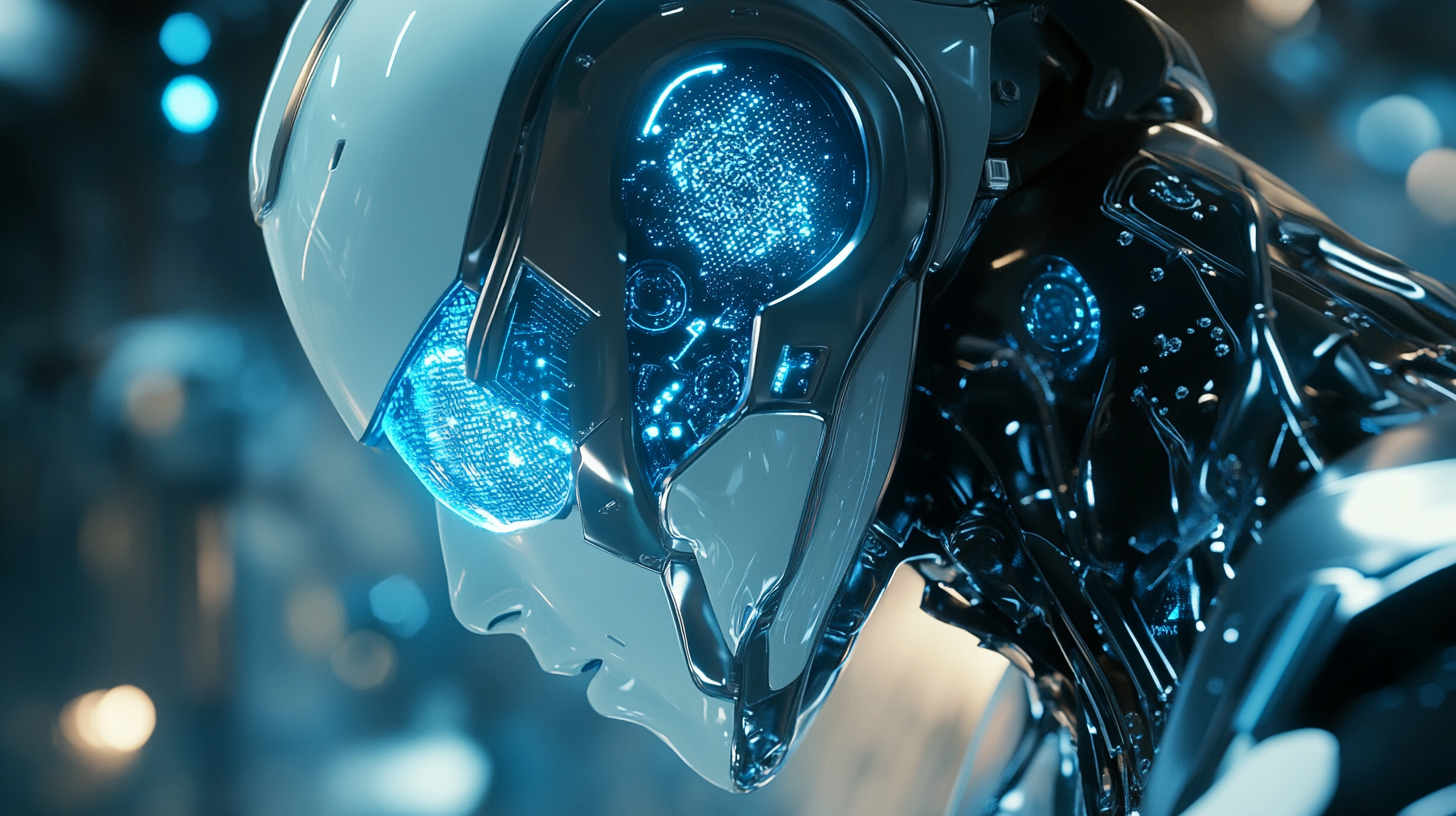
XPENG & Figure AI: The development of custom AI models for humanoid robots and their advantages – Image: Xpert.Digital
XPENG & Figure AI: The secret to the success of their own AI technologies
From precision to independence: The new era of robot development
Developing proprietary AI models for humanoid robots offers several strategic and technological advantages, as demonstrated in current projects such as Figure AI or XPENG:
1. Higher precision and domain-specific adaptation
Proprietary AI models enable tailored optimization for specific robot hardware and application scenarios. For example, Figure AI uses its own neural networks for real-time analysis of camera data (10 Hz) to synchronize movements more precisely with voice commands. XPENG, with its Turing chip (40 cores for AI calculations), relies on low-level models that directly process sensor data, thus minimizing reaction times.
Related to this:
2. Independence from external providers
Figure AI's decision to end its OpenAI partnership demonstrates that developing its own models offers greater control over its technology roadmap. This avoids dependencies on third-party providers whose models are often generic and not optimized for industrial requirements (e.g., factory safety).
3. Efficiency gains through vertical integration
The combination of proprietary AI and robot hardware leads to synergistic effects:
- Energy efficiency: XPENG's Turing chip reduces power consumption through specialized calculations.
- Cost reduction: In-house developments avoid license fees and enable economies of scale, as BMW's plans for mass production with Figure AI demonstrate.
4. Faster learning and adaptability
Proprietary AI frameworks like NVIDIA/CMU's ASAP (Alignment of Simulation and Reality) reduce training times for movement sequences by 52.7%. This allows robots to learn new skills faster – for example, by imitating humans or AI-generated simulations.
5. Competitive advantages in the global market
Chinese manufacturers like XPENG and Unitree already dominate thanks to their technological superiority. Proprietary AI models enable companies to protect their intellectual property and offer differentiated products – a crucial factor in the race for industrial applications.
Autonomous robots: Key technologies for disaster relief and factories
Despite the advantages, data quality, security certifications, and integration with cloud systems remain critical hurdles. However, projects like Neura Robotics' "Safety AI" demonstrate how additional AI layers can minimize risks.
Related to this:
Proprietary AI models are driving the autonomy, scalability and specialization of humanoid robots – key factors for their use in factories, care or disaster relief.
Developing their own AI models for humanoid robots offers companies like Figure AI and XPENG strategic and technological advantages, which are evident in current projects:
Figure AI: Independence and industrial precision
Figure AI has ended its collaboration with OpenAI in order to develop its own AI models. This enables:
- Hardware-optimized AI: The integration of 360-degree sensors (RGB cameras, infrared, depth sensors) with custom-designed neural networks that analyze image data at 10 Hz to achieve precise motion control.
- Industrial suitability: At the BMW plant in Spartanburg, Figure 02 shows how AI makes autonomous decisions in dynamic environments – for example, in the handling of body parts.
- Cost efficiency: By foregoing OpenAI licenses and focusing on mass production (target: over 1 million units), Figure AI reduces unit costs.
XPENG: Vertical Integration through the Turing Chip
XPENG's humanoid robot Iron uses an in-house 40-core AI chip specifically designed for robotics and autonomous driving:
- Real-time processing: The chip processes sensor data directly, reduces latency and enables 200 degrees of freedom for complex gripping and assembly tasks.
- Scalability: The AI system supports language models with up to 30 billion parameters and can be transferred to robotaxis, aircraft and industrial robots.
- Energy efficiency: Through domain-specific calculations, the chip consumes 40% less power than generic AI hardware.
Comparison of strategies
A comparison of Figure AI's and XPENG's strategies reveals fascinating differences in their approaches to integrating modern AI technologies. While Figure AI specializes in developing its own AI models, primarily for use in industrial robotics, XPENG pursues a different strategy. Its focus is on integrating versatile AI chips, enabling broader application.
The two companies also take different approaches to key technologies. Figure AI relies on high-frequency sensor data fusion, a method that allows for particularly precise data processing and analysis. XPENG, on the other hand, scores points with its powerful Turing chip, which is equipped with 40 cores and thus offers considerable computing power.
The two companies' areas of expertise further highlight these differences. Figure AI specializes in automotive manufacturing and collaborates with renowned partners such as BMW. XPENG, on the other hand, is more versatile: its technologies are used in factory automation, logistics, and even in the home.
This comparison shows how different approaches to AI development lead to specific advantages and open up unique opportunities in the respective target markets.
Competitive advantages through in-house AI
- Faster iteration: Figure AI trains models with factory data from BMW operations to minimize error rates.
- IP protection: XPENG's Turing chip architecture is patented and protects against imitation.
- Cloud independence: Both companies rely on edge computing to reduce the risk of failure in real-time scenarios.
Related to this:
Your global marketing and business development partner
☑️ Our business language is English or German
☑️ NEW: Correspondence in your native language!

Konrad Wolfenstein
I and my team are happy to be available to you as your personal advisor.
You can contact me by filling out the contact form here wolfenstein@xpert.digital:or simply call me at +49 7348 4088 965. My email address is
I'm looking forward to our joint project.