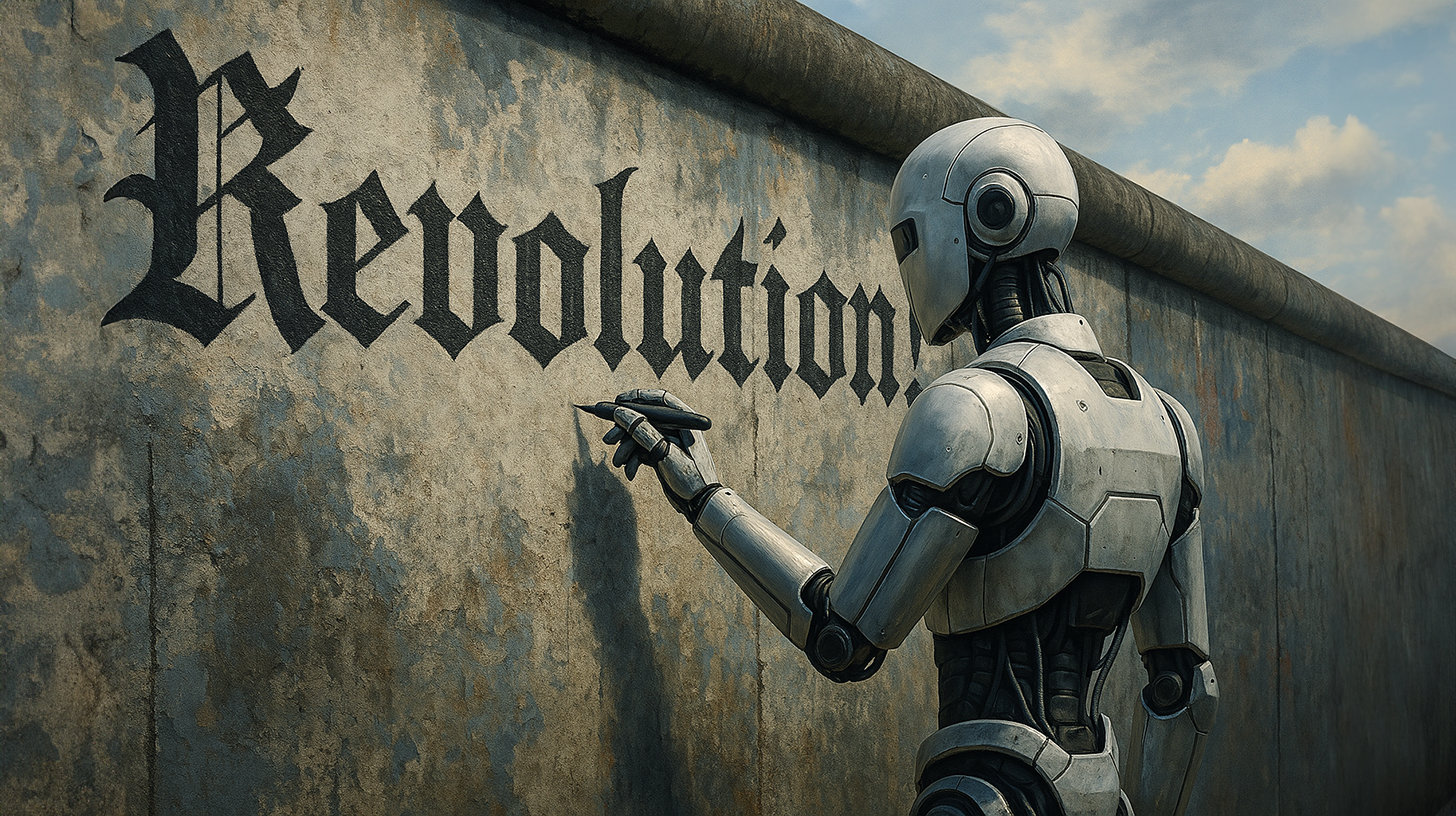
GPT-4o: OpenAI's revolution in AI image generation with perfect text rendering – Image: Xpert.Digital
GPT-4o: Precise text in images thanks to new AI technology
OpenAI sets a milestone in multimodal AI development
OpenAI has achieved a significant breakthrough in AI image generation with its new GPT-4o model. One of the model's most remarkable capabilities is the accurate rendering of text within generated images – a problem that has often posed major challenges for previous AI image generators. This innovation marks a significant advancement in multimodal AI technology and opens up new application possibilities for creatives and businesses.
The revolution in text rendering in AI-generated images
A long-standing problem with AI-generated images has been the inaccurate rendering of text. Previous models often produced strange character combinations or illegible text passages, significantly limiting their applications. With GPT-4o, OpenAI has now presented a solution that renders text with impressive accuracy – from handwritten notes and signs to complex infographics and logos.
The improvement is based on GPT-4o's native multimodal architecture. Unlike previous systems, which used separate models for text and images, GPT-4o processes all modalities in a single model. This integration eliminates information loss that previously occurred when translating between different models and enables more coherent processing of image concepts and text content.

Advanced skills and technological foundations
GPT-4o was trained on a combination of images and text, allowing the model to learn not only how images relate to language, but also how images relate to each other. This enables deeper contextual understanding and more precise image generation that is consistent with user requirements.
A remarkable technical advancement is the model's ability to process up to 20 different objects simultaneously and accurately represent their relationships. This results in significantly more coherent scenes and enables more complex visual narratives. Image consistency is considerably higher than with previous models like DALL-E 3, although not yet perfect – occasionally, details such as characters' hair growth may shift slightly.
In-context learning and image transformation
Another innovative feature is "in-context learning," where GPT-4o can analyze user-uploaded images and incorporate their details into new image generations. This enables, for example, the creative transformation of hand-drawn illustrations or the adaptation of existing images to specific requirements.
Practical applications in natural conversation
Integrating image generation into GPT-4o's conversational model transforms how users interact with AI image generators. Instead of isolated prompt inputs, images can now emerge and be refined within natural conversations.
This dialogue-oriented approach enables iterative work on images. Users can take a generated image as a starting point and then request specific changes, such as "Make the sky darker" or "Add a red balloon." The system maintains the context across multiple dialogue rounds, making image editing and adjustment significantly more intuitive.
Application examples with perfect text rendering
The improved text display now allows the creation of:
- Business cards with correctly displayed contact details
- Infographics with legible labels and diagrams
- Logos with precise lettering and hexadecimal colors
- Presentation slides with a transparent background
- Social media graphics with integrated messages
In a test using a handwritten poem from a diary, GPT-4o demonstrated significantly better results than comparable models. Its ability to accurately render even longer blocks of text sets GPT-4o apart from competitors like Midjourney or Adobe Firefly, which excel at photorealistic rendering but struggle with text integration.
Related to this:
Rollout and availability
OpenAI has begun rolling out its new image generation feature to different user groups. Currently, users with ChatGPT Plus, Pro, Teams, and Free accounts have access to the feature, although users of the free version should expect limitations on the number of images they can generate. Enterprise and Education customers will follow at a later date.
DALL-E will remain available as a separate option via a dedicated GPT, but will no longer be the default image generator in ChatGPT. API access for developers is expected in the coming weeks.
Security measures and borders
OpenAI equips all images generated with GPT-4o with C2PA metadata that identifies their AI origin. This provenance information is part of an effort to create transparency regarding AI-generated content and prevent potential misuse.
OpenAI CEO Sam Altman emphasizes that the new image generator is intended to give users more freedom in image creation, with fewer content rejections. At the same time, the company wants to "respect the very broad boundaries that society will ultimately set for AI.".
Despite the impressive progress, GPT-4o still has some limitations:
- Occasional incorrect cropping of images
- Possible hallucinations similar to those experienced with text models
- Difficulties in representing many distinct concepts simultaneously
- Inaccurate representation of text in non-Latin scripts
A milestone with future potential
The integration of a powerful image generation function with precise text rendering into GPT-4o marks a significant milestone in the development of multimodal AI systems. The ability to accurately display text in images solves one of the most persistent problems of previous AI image generators and opens up new creative and commercial application possibilities.
GPT-4o's native multimodality, where a single model handles all modalities, points to the path AI systems will take in the future. Instead of developing isolated capabilities in different systems, we are moving towards integrated models that can seamlessly combine various forms of communication and representation.
While GPT-4o already demonstrates impressive progress in text-to-image synthesis, it remains to be seen how this technology will evolve, particularly with regard to non-Latin scripts and more complex visual concepts. The continued improvement of these capabilities could lead to even more intuitive and versatile AI assistants, fundamentally transforming our creative and communicative work.
Related to this:
Your global marketing and business development partner
☑️ Our business language is English or German
☑️ NEW: Correspondence in your native language!

Konrad Wolfenstein
I and my team are happy to be available to you as your personal advisor.
You can contact me by filling out the contact form here wolfenstein@xpert.digital:or simply call me at +49 7348 4088 965. My email address is
I'm looking forward to our joint project.