
Published on: October 18, 2024 / Updated on: October 18, 2024 – Author: Konrad Wolfenstein

From Ulm, Neu-Ulm & Biberach: For SMEs & companies – Artificial Intelligence Agency Consulting – Image: Xpert.Digital
Artificial intelligence for SMEs: Increasing efficiency for companies in Ulm, Neu-Ulm & Biberach
For small and medium-sized enterprises (SMEs) as well as larger companies in Ulm, Neu-Ulm, and Biberach, the use of artificial intelligence (AI) is increasingly becoming a crucial factor for remaining competitive and driving innovation. A specialized AI agency can support companies in making the best possible use of this technology's potential and developing customized solutions for marketing, logistics, B2B, and mechanical engineering processes.
Why Artificial Intelligence is so important for SMEs and companies
Digitalization has triggered a revolution, and artificial intelligence (AI) is at the heart of this development. It enables companies to automate processes, analyze data effectively, and improve decision-making. For SMEs in particular, the efficient use of resources is essential to compete against larger rivals. This is where AI comes in – it offers numerous applications for maintaining a competitive edge.
1. Marketing with Artificial Intelligence
In marketing, artificial intelligence is used to optimize customer communication and make campaigns more targeted. By analyzing large amounts of data, customer preferences and behavioral patterns can be identified, enabling highly personalized communication. This personalization leads to an improved customer experience and significantly increases conversion rates.
AI-based tools can also help create content that is precisely tailored to the target audience, ensuring that the message reaches the right people. Chatbots are another example of AI being used in marketing – they offer potential customers 24/7 support and contribute to better customer loyalty. This is particularly important for smaller businesses, which often lack the personnel resources to provide continuous customer service.
2. AI solutions in logistics
Efficiency is a key factor in logistics. Artificial intelligence can help optimize logistical processes by forecasting demand, managing inventory, and planning optimal transport routes. Machine learning analyzes historical data to predict future needs, avoid bottlenecks, and thus improve the supply chain.
The use of AI algorithms can optimize transport routes and reduce the number of vehicles required, which not only saves costs but also reduces environmental impact. For SMEs in Ulm and Neu-Ulm, which often rely on local supply chains, this means a significant increase in competitiveness.
3. B2B optimization with AI
In the B2B sector, communication between companies is of central importance. AI can help automate business processes and optimize collaboration with partners. A good example of this is the use of AI-powered platforms that improve the exchange of information between suppliers and manufacturers.
By analyzing market and customer data, AI can also help identify new business opportunities and take targeted measures to build long-term partnerships. This leads to better market positioning and enables companies to reach new target groups.
4. Artificial Intelligence in Mechanical Engineering
Artificial intelligence also holds enormous potential in mechanical engineering. For example, AI can be used for predictive maintenance of machines. Through the continuous monitoring and analysis of operational data, anomalies can be detected early, thus avoiding unplanned downtime and reducing maintenance costs.
For mechanical engineering companies in the Neu-Ulm, Biberach, and Ulm region in particular, this means that production processes will become more stable and efficient. AI-supported quality control can also detect errors in the production process before they lead to larger problems. This saves time and money and ensures consistently high product quality.
Challenges in the introduction of artificial intelligence
Despite its many advantages, implementing artificial intelligence also presents some challenges, especially for SMEs. One of the biggest hurdles is the initial investment in the technology and employee training. Many companies are initially unsure whether using AI is truly worthwhile for them. However, the long-term benefits in terms of increased efficiency and competitive advantages far outweigh the initial costs in most cases.
Another issue is data protection. Especially in Europe, where the General Data Protection Regulation (GDPR) sets strict rules, companies must ensure that customer data is processed properly. AI systems that analyze large amounts of personal data must therefore be designed accordingly to protect privacy.
How an AI agency can support companies
This is where the importance of a specialized AI agency comes into play. Such an agency can not only support companies in implementing the technology, but also in identifying the right applications. The experts analyze which processes are best suited for automation and how AI can be integrated into existing business operations to achieve the greatest benefit.
For companies in Neu-Ulm, Ulm, and Biberach, a local AI agency offers the advantage of being familiar with the specific requirements and challenges of the region and being able to provide tailored consulting. From analyzing business processes to developing customized AI solutions – expert support enables efficient and effective use of the technology.
Practical examples of the use of artificial intelligence
One example of the successful use of AI is the automation of order processing. For a mechanical engineering company, this could mean that spare parts orders are automatically triggered as soon as the AI detects that the stock level has reached a critical value. This avoids production interruptions and reduces warehousing costs.
In marketing, AI-based software can be used to place targeted ads on social media that are precisely tailored to the needs of the target group. A small company in Ulm could thus ensure that its advertising reaches exactly the people most likely to be interested in its products.
Another example is predictive maintenance in logistics. A freight forwarding company could use AI to monitor how vehicles are used and when maintenance is needed. This minimizes unforeseen repairs and downtime.
The future of artificial intelligence for companies in Ulm, Neu-Ulm and Biberach
Artificial intelligence is rapidly advancing, and the opportunities for businesses are constantly expanding. In the future, SMEs in Ulm and Neu-Ulm could benefit from even more intelligent systems that not only optimize processes but also learn independently and adapt to changing conditions. The use of AI will play a role in virtually all areas of daily business – from production and marketing to customer service.
This presents a great opportunity for companies in the region. Those who embrace AI early and make the necessary investments can gain a decisive advantage. However, the key to success lies in the right advice and the selection of suitable solutions tailored to the individual needs of the company.
More information here:
Increase competitiveness and make processes more efficient
Artificial intelligence offers SMEs and companies in Biberach, Ulm, and Neu-Ulm enormous opportunities to increase their competitiveness and make their processes more efficient. Particularly in the areas of marketing, logistics, B2B, and mechanical engineering processes, the implementation of AI is demonstrating a multitude of advantages – from the personalization of marketing campaigns and the optimization of supply chains to predictive maintenance of machinery.
The path to successful AI implementation often leads through a specialized agency that not only assists with the technical implementation but also supports the strategic integration into existing processes. For companies that want to actively shape the future, the use of artificial intelligence is an investment that pays off in the long run.
More information here:

- Hidden Champion for SEO – Search Engine Marketing (SEM) and (SEO) – NEW: With Artificial Intelligence Search (AIS) – Image: Xpert.Digital

- Multimodular or multimodal AI? Spelling mistake or an actual difference? How does multimodal AI differ from other AI? – Image: Xpert.Digital

- Germany is actually making greater progress in the development and application of artificial intelligence (AI) than is often assumed – Image: Xpert.Digital
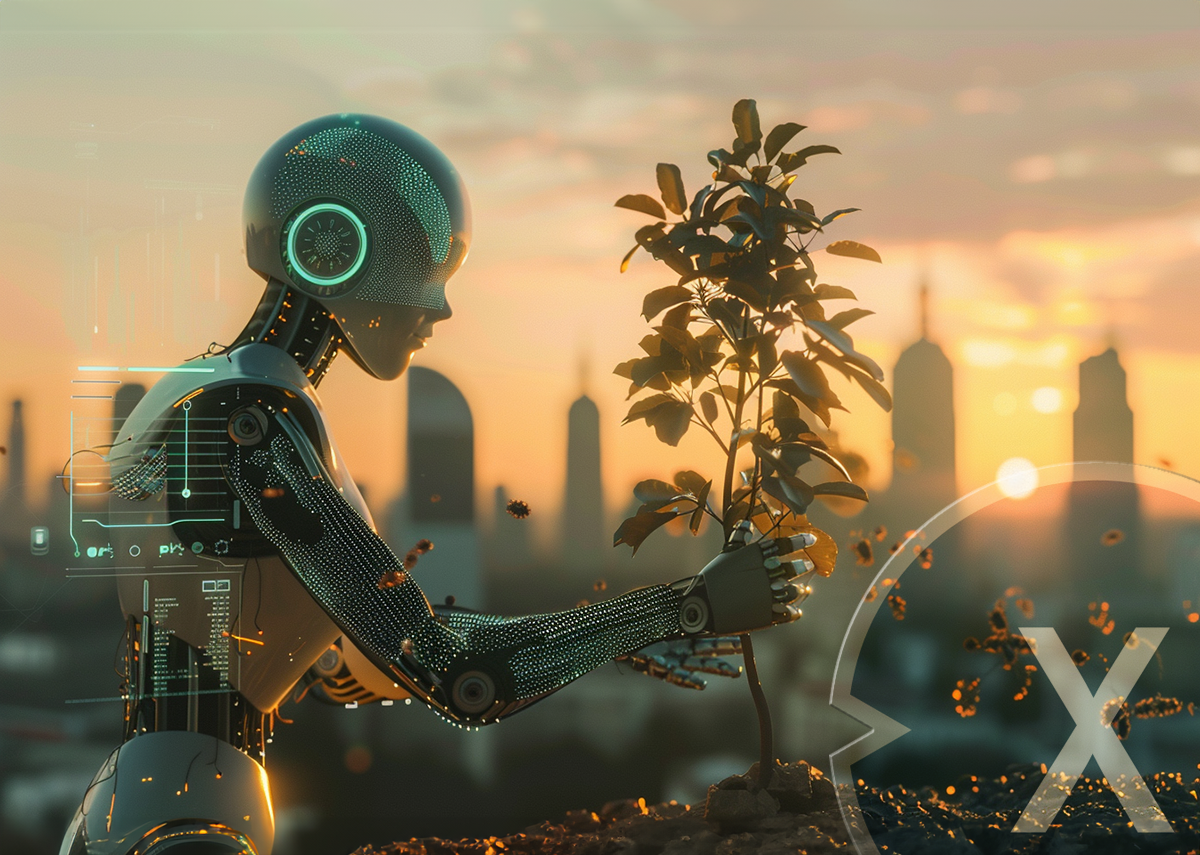
- Artificial Intelligence: When Germany is underestimated – Research excellence as a foundation and a human-centered AI approach – Image: Xpert.Digital

- An attempt to explain AI: How does artificial intelligence work and how is it trained? – Image: Xpert.Digital

- The development of new AI models is undoubtedly a crucial factor for the future of artificial intelligence (AI) – Image: Xpert.Digital

Smarter transformation: AI-supported solar energy for SMEs
Artificial intelligence (AI) is currently revolutionizing many industries, and the renewable energy sector is no exception. Small and medium-sized enterprises (SMEs) in Ulm and Neu-Ulm, in particular, have a multitude of opportunities to benefit from this technology. AI solutions can offer enormous added value, especially in the planning, installation, and optimization of rooftop photovoltaic systems on warehouses, office buildings, shopping centers, solar parks, and solar carports. In today's world, where the transition to sustainable energy is a central issue, companies can not only increase their efficiency by using AI, but also achieve significant cost savings and make an important contribution to environmental protection.
The importance of renewable energies in Ulm and Neu-Ulm
Ulm and Neu-Ulm have increasingly focused on expanding renewable energies in recent years, particularly in the field of solar power. The region boasts numerous industrial parks where warehouses and office buildings offer an excellent foundation for the installation of photovoltaic systems. Faced with rising energy prices and increasingly stringent climate protection regulations, more and more companies are seeking ways to reduce their energy costs and minimize their environmental footprint. This is where photovoltaic systems come into play.
Installing solar panels on large roof areas offers companies the opportunity to generate their own electricity, thereby not only saving costs but also becoming more independent from fluctuating energy prices. Such solutions are particularly attractive for shopping centers and office buildings, which have large roof areas and thus offer significant untapped potential for electricity production. Solar parks and solar carports complement the range of options and enable the use of solar energy on areas that have often remained unused until now.
Challenges in planning and implementation
However, the transition to renewable energy is not always easy. Many companies face challenges when it comes to planning, financing, and implementing such projects. This is where the support of specialized AI agencies can be invaluable. An AI agency specializing in renewable energy can significantly simplify the entire process of installing and managing PV systems. AI-based solutions offer precise analysis and forecasting of energy data, facilitating system planning and predicting energy yields.
Challenges that can arise when planning photovoltaic systems include assessing energy demand, optimizing system size, analyzing the best location, and selecting suitable technologies. AI can consider all these factors simultaneously and suggest solutions based on precise data and forecasts. This not only reduces planning effort but also increases system efficiency and maximizes energy yield.
Advantages of AI-supported solutions for photovoltaic systems
The advantages of AI-powered solutions are manifold. For example, artificial intelligence can be used to make precise predictions about expected energy yields, based on historical weather data, the building's orientation, and the roof's pitch. This allows companies to accurately assess the profitability of their investment even before installation. Furthermore, AI can help determine the optimal location for the system by considering sun exposure, shading from surrounding buildings, and other factors that could influence energy yield.
Furthermore, AI can help optimize system maintenance. Modern photovoltaic systems are equipped with sensors that continuously provide data on the system's condition and the electricity it generates. AI can analyze this data in real time, enabling early detection of potential problems before they lead to serious damage. This not only reduces downtime but also significantly lowers maintenance costs.
Another advantage of AI-supported systems is the optimization of self-consumption. Companies that produce their own electricity generally want to use as much of it as possible themselves to minimize their energy costs. AI can analyze the company's energy consumption and manage it so that as much of the generated electricity as possible is used on-site. Excess electricity can then be fed into the grid or stored in batteries for later use. This increases the system's profitability and makes the company less dependent on external energy sources.
Solar parks and solar carports: A promising addition
In addition to photovoltaic systems on building roofs, solar parks and solar carports also offer interesting opportunities for businesses. Solar parks, built on unused land, make it possible to generate large amounts of electricity that can either be used directly by the company or fed into the public grid. Solar carports, in turn, offer a dual benefit: they protect vehicles from the elements and simultaneously generate electricity. Solar carports are a particularly worthwhile investment for companies with large parking areas, such as shopping centers or office complexes.
Here, too, the use of artificial intelligence can make all the difference. AI-supported systems can optimize the utilization and energy demand of solar parks and solar carports, while simultaneously identifying the best way to integrate battery storage or other energy storage solutions. This ensures maximum utilization of the generated energy and contributes to the stability of the power grid.
The contribution to sustainability and the energy transition
Besides the economic advantages, companies that invest in photovoltaics and other renewable energies also make a significant contribution to climate protection. Reducing CO2 emissions and transitioning to sustainable energy sources are key components of the energy transition, and companies play a crucial role in this process. In Germany, numerous funding programs and tax incentives already exist to facilitate entry into solar energy and provide financial support.
The use of artificial intelligence can help to further advance this development. By automating processes and optimizing energy generation and use, companies are enabled to switch to renewable energies more quickly and efficiently. The integration of AI solutions into the solar energy sector thus promotes not only the competitiveness of companies, but also the sustainability of the entire economy.
Future prospects: What awaits us?
The combination of artificial intelligence and renewable energies will continue to grow in importance in the coming years. Technological advances will enable even more precise forecasts, further increase the efficiency of systems, and develop new business models based on the use of solar energy. This presents a unique opportunity for SMEs in Ulm and Neu-Ulm to benefit from this development and simultaneously contribute to the energy transition.
Investing in photovoltaic systems and using AI technologies is not just an economic decision, but also a step towards a more sustainable future. Companies that adopt these technologies early on secure a competitive advantage and position themselves as pioneers in an increasingly sustainability-oriented economy.
In conclusion, consulting a specialized AI agency is invaluable for companies looking to invest in renewable energy through photovoltaic systems. Whether it's about optimizing the system, predicting energy yield, or maximizing self-consumption, the use of artificial intelligence offers a multitude of opportunities to increase efficiency and maximize returns. Companies in Ulm and Neu-Ulm that take advantage of these opportunities will not only reduce their energy costs but also make a significant contribution to environmental protection.