Artificial intelligence as a business booster – Further practical tips for introducing AI in companies – Image: Xpert.Digital
🌟 Artificial Intelligence as a Business Booster in Companies 📈 – Further practical tips for introducing AI in companies from eleven interim managers
💡 In addition to our article “AI Competence Center for Hybrid Teams Instead of One AI Pope Alone”, here are some further practical tips for introducing AI into companies.
🚀 This article offers practical tips for implementing AI projects based on the experiences of interim managers. It covers various topics, including the profitable use of AI, shadow AI, data structuring, business intelligence, sustainability reporting, strategic planning, learning-by-doing, training, collaboration with external experts, ethical responsibility, and future perspectives.
💰 Profitable use of AI
Interim manager Eckhart Hilgenstock emphasizes that an AI project should pay for itself within 18 months. Otherwise, there is a risk that it will be obsolete within two to three years due to rapid technological developments. This assessment is based on practical experience and serves as a guiding principle throughout the book, in which the authors, all experts from the DACH region (Germany, Austria, Switzerland), provide well-founded recommendations based on successful projects.
Eckhart Hilgenstock is one of the eleven authors of the book "Artificial Intelligence as a Business Booster in Companies" (ISBN 978-3-98674-110-5), which is brimming with practical advice. All the authors are interim managers, meaning temporary executives who have already successfully completed AI projects in Germany, Austria, and Switzerland (DACH region). This was a prerequisite for contributing to the book, which was jointly conceived by United Interim, the leading community for interim managers in the DACH region, and the Diplomatic Council, a think tank with consultative status at the United Nations.
🛡️ Combating the Shadow AI
A particularly pressing problem in many companies is so-called shadow AI. Dr. Harald Schönfeld, Managing Director of the HR consultancy Butterflymanager, warns that employees often use AI tools like ChatGPT or Gemini independently, without management oversight. This practice poses significant risks in the areas of compliance, data protection, and security. Therefore, a controlled and transparent approach to AI is essential to avoid negative consequences for the company.
📊 Structuring mountains of data
Companies often possess vast amounts of unstructured data. Interim managers recommend organizing, analyzing, and leveraging this data. Even simple analytics tools can provide valuable insights: Who are the most important customers? Which products sell best? Which areas are losing money? Such questions can often be answered without complex AI, but structuring the data lays the foundation for future AI applications.
🔄 Upgrade from Business Intelligence to Artificial Intelligence
Many companies already use Business Intelligence (BI). The next logical step is to enhance it with AI. Choosing the right tools is crucial. These tools should support data analysis, financial planning, and the automation of repetitive tasks. Examples include automated invoice verification and account reconciliation. According to interim managers, this upgrade can typically pay for itself within twelve months.
🌍 Sustainability reporting with AI
The new Corporate Sustainability Reporting Directive (CSRD) imposes additional reporting obligations on companies. AI can provide valuable support here by facilitating the collection and processing of non-financial information. This allows companies to realize a return on investment (ROI) in this area in the short term. Implementing AI in small, well-considered steps is crucial. Small, manageable projects make it possible to gain experience, optimize processes, and minimize risks.
🔍 Identifying potential and strategic planning
According to Eckhart Hilgenstock, companies should carefully analyze in which areas AI can deliver the greatest benefits. Based on this analysis, clear timelines for implementing AI projects should be created. The initial focus should be on projects that offer short payback periods and immediate advantages.
📚 Supplemented by a learning-by-doing approach
Comprehensive theoretical knowledge of AI is useful, but ultimately, practical implementation is what counts. Companies should adopt a learning-by-doing approach to get the most out of their AI projects. Through continuous testing and adaptation, they can react flexibly to changes and optimally tailor the technology to their needs.
👩🏫 Training and further education
Successful AI integration requires qualified employees. Therefore, training and professional development are essential. Companies should offer skills development programs to ensure their teams can effectively utilize new technologies. This applies not only to IT specialists but also to employees in other areas such as marketing, sales, and production.
🤝 Collaboration with external experts
AI projects often require specialized knowledge that isn't always available within a company. Collaboration with external specialists can therefore be beneficial. Interim managers and other external experts can contribute valuable insights and know-how to accelerate and optimize implementation.
⚖️ Ethics and responsibility in the use of AI
In addition to the technical and economic aspects, the ethical dimension also plays an important role. Companies should ensure that their AI applications are used transparently, fairly, and responsibly. This includes using data ethically and carefully considering the impact of AI on employees and customers.
🚀 Future prospects and innovation
The use of AI opens up numerous new possibilities. From personalized customer communication and efficient production processes to innovative business models – the potential is enormous. Companies should continuously explore new areas of application and be open to innovation. The willingness to constantly evolve and integrate new technologies will ultimately make the difference in the competitive landscape.
🎯 With the right strategy
Introducing artificial intelligence (AI) into businesses is a complex but worthwhile endeavor. With the right strategy, pragmatic approaches, and continuous training, AI can become a crucial business booster. Companies that effectively utilize their data, avoid shadow AI, and invest strategically in small, manageable projects are well-prepared for the challenges and opportunities of the future. Close collaboration with experts and an ethically responsible approach to the technology complete the successful implementation of AI.
📣 Similar topics
- 📣 Practical tips for the successful implementation of AI in your company
- 🚀 Artificial Intelligence as a Business Booster: Strategies and Approaches
- 🛡️ Shadow AI: Avoiding risks in the areas of compliance and data protection
- 🔍 Data structuring: The first step towards effective AI use
- 💡 From Business Intelligence to Artificial Intelligence: A logical next step
- 🌍 Sustainability Reporting: How AI Supports Companies
- 📊 Identifying potential: Strategic planning for AI deployment
- 🎓 Training and further education: Qualified employees are the key
- 🤝 Collaboration with experts: External support for successful AI projects
- ⚖️ Ethics and responsibility: Transparent and fair use of AI in the company
#️⃣ Hashtags: #AI #DataProtection #BusinessIntelligence #Sustainability #Training
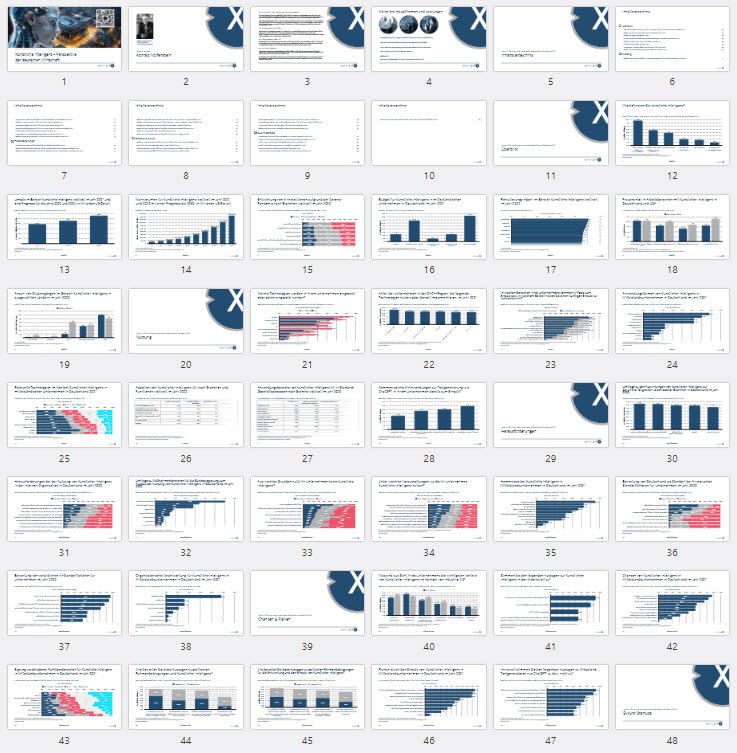
🤖📊🔍 The report 'Artificial Intelligence – Perspective of the German Economy' offers you a diverse thematic overview

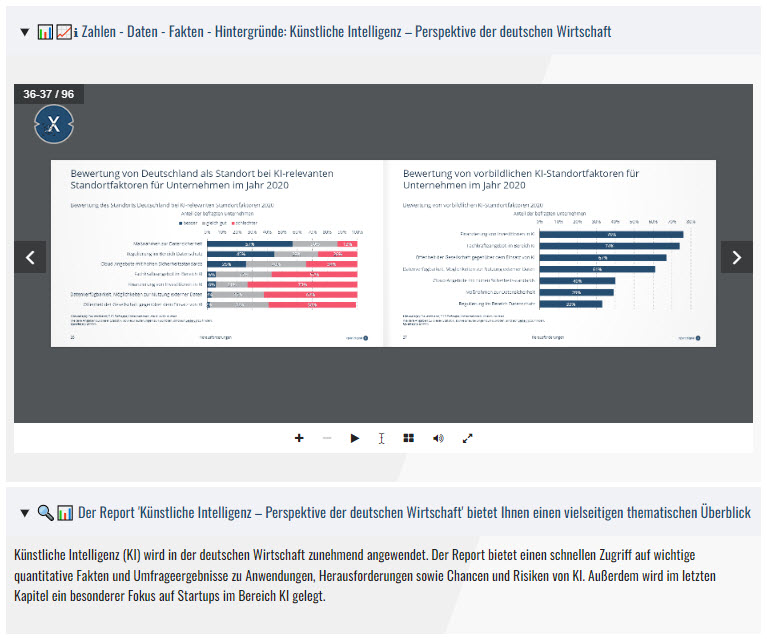
Facts, figures, and background information: Artificial intelligence – the perspective of the German economy – Image: Xpert.Digital
We currently no longer offer our newer PDFs for download. These are only available upon direct request.
However, you can find the PDF “Artificial Intelligence – Perspective of the German Economy” (96 pages) in our
📜🗺️ Infotainment portal 🌟 (e.xpert.digital)
under
https://xpert.digital/x/ai-economy
with the password: xki
view.

How AI is shaping Germany's industrial landscape – AI technologies as a new export opportunity – Image: Xpert.Digital
🎯🎯🎯 Benefit from Xpert.Digital's extensive, five-fold expertise in one comprehensive service package | BD, R&D, XR, PR & Digital Visibility Optimization


Benefit from Xpert.Digital's extensive, five-fold expertise in a comprehensive service package | R&D, XR, PR & Digital Visibility Optimization - Image: Xpert.Digital
Xpert.Digital possesses in-depth knowledge across various industries. This allows us to develop tailored strategies precisely aligned with the requirements and challenges of your specific market segment. By continuously analyzing market trends and monitoring industry developments, we can act proactively and offer innovative solutions. The combination of experience and expertise generates added value and provides our clients with a decisive competitive advantage.
More information here:
🤖🚀 Identifying potential and creating an AI timeline
🔍 The ongoing development of artificial intelligence (AI) is rapidly and fundamentally changing the business world. Companies that want to use these revolutionary technologies profitably should first systematically identify the potential in their various business areas and, based on this, create a comprehensive AI timeline. This approach enables them to take targeted steps to secure competitive advantages and position themselves efficiently in the market.
🔍 Analysis of operational potential
The first step involves a detailed analysis of existing operational areas to determine which functions and processes could benefit most from the implementation of AI. This requires a deep understanding of the company's own business processes and structures, as well as a thorough knowledge of the various AI technologies available. Areas such as customer service, logistics, production, marketing, and finance all have different needs and potential for the use of AI.
For example, in customer service, AI can be used in the form of chatbots to increase customer satisfaction and reduce service costs. In logistics, AI can optimize supply chains by using predictive models to manage inventory efficiently and shorten delivery times. In manufacturing, automated systems and Industry 4.0 technologies can be used to increase efficiency and minimize error rates. In marketing and finance, comprehensive data analytics and predictive tools can be used to develop and implement effective strategies.
📅 Creating an AI timeline
After identifying the potential, it's crucial to translate these insights into a structured AI timeline. This timeline should encompass not only short-term projects but also long-term visions and goals for the use of AI across the entire organization. A focused timeline helps prioritize the implementation of AI technologies and allocate resources efficiently.
Initially, AI projects should be considered that offer a rapid return on investment and immediate cost or competitive advantages. These could include projects that improve existing automation solutions or increase efficiency in areas where quickly measurable results are expected. Another important aspect is the training and further education of employees to ensure seamless integration of the new technologies.
🌟 Success stories in practice
Many companies have already developed and implemented successful approaches for AI. A prominent example is Amazon's use of machine learning. The company uses algorithms to analyze customer behavior and generate personalized product recommendations, which has led to significant increases in sales. Another example is the automotive industry, where manufacturers like Tesla use AI to develop self-driving vehicles that both increase safety and improve the driving experience.
🛠 Challenges and solutions
Despite its numerous advantages, the implementation of AI also presents challenges. One of the biggest hurdles is managing and maintaining the large volumes of data required for training AI models. Developing a robust data strategy and ensuring high data quality and compliance with data protection regulations are crucial.
Another challenge is integrating new technologies into existing IT infrastructures. This often means that older systems need to be updated or even completely replaced, requiring significant investment and planning. Creating a flexible and scalable IT architecture can address this issue and accommodate future developments.
Ethical considerations and employee acceptance also play a significant role. AI technologies can trigger anxieties about job losses and changing required skill sets. Transparent communication and comprehensive training programs are therefore crucial for building trust and gaining employee support for the change.
🌐 Future visions and long-term strategies
In the long term, the use of AI technologies opens up a multitude of opportunities that extend far beyond short-term gains. Examples of forward-looking AI projects include autonomous systems that could be used in various sectors such as agriculture, transportation, and urban planning. Such systems have the potential to drastically increase efficiency and sustainability.
Another promising area is the development of cognitive systems capable of independently solving complex problems and generating creative solutions. Such applications could be used, for example, in scientific research or product development to drive innovation.
Creating a research and development department specifically dedicated to exploring new AI technologies and their applications can be highly beneficial for companies. This department can analyze future trends, identify new opportunities, and ensure that the company remains at the forefront of technological development.
🎯 Strategic approach
Implementing AI technologies in companies requires a strategic approach based on a thorough analysis of operational potential and a clearly structured AI timeline. It is important to begin with projects that promise short-term successes while maintaining a vision for long-term development. By overcoming challenges such as data management and integration into existing systems, as well as considering ethical aspects and engaging employees, companies can leverage the diverse benefits of AI technologies. In the long term, AI innovations offer enormous potential for increased efficiency, new business areas, and societal benefits.
📣 Similar topics
- 🔍 Identifying potential within the company: First steps towards AI success
- 🗓️ Creating a comprehensive AI timeline: Planning, Implementing, Benefiting
- 🛠️ Analyzing operational potential: Where AI makes the biggest difference
- 🤖 Success stories in practice: AI implementations that pay off
- 📈 Challenges of AI integration and how to overcome them
- 💡 Solutions for AI challenges: Data management, IT and more
- 📊 Future visions with AI: Long-term strategies and potential
- 🚀 Long-term strategies: AI innovations for sustainable business success
- 🧠 Cognitive systems and their revolutionary applications
- 📚 Strategic approach: Successful AI implementation through planning and training
#️⃣ Hashtags: #ArtificialIntelligence #Strategy #Innovation #DataManagement #FutureVisions
We are here for you - Consulting - Planning - Implementation - Project Management
☑️ Industry expert, here with his own Xpert.Digital industry hub featuring over 2,500 specialist articles

Konrad Wolfenstein
I would be happy to serve as your personal advisor.
You can contact me by filling out the contact form below or simply call me on +49 7348 4088 965 .
I'm looking forward to our joint project.
Write to me



Xpert.Digital - Konrad Wolfenstein
Xpert.Digital is a hub for industry focusing on digitalization, mechanical engineering, logistics/intralogistics and photovoltaics.
With our 360° Business Development solution, we support renowned companies from new business to after-sales.
Market intelligence, smarketing, marketing automation, content development, PR, mail campaigns, personalized social media and lead nurturing are part of our digital tools.
You can find more information at: www.xpert.digital - www.xpert.solar - www.xpert.plus
Keep in touch