
AI boom with high risk: Anthropic posts an $80.7 billion loss – but the biggest danger lies elsewhere – Creative image on the topic, with AI: Xpert.Digital
Anthropic's AI bet: Record revenues, huge commitments, and one open question
What lies behind Anthropic's spectacular balance sheet – are revenues keeping pace with costs?
An $80.7 billion loss in just six months: This figure sounds like a financial disaster. However, it doesn't tell the whole story for Anthropic. Around $72 billion of the shortfall is said to be due to balance sheet revaluations of convertible bonds and other financial instruments – money that didn't actually leave the company's coffers in that amount. At the same time, the AI company's revenue is growing rapidly. But that doesn't necessarily mean that Anthropic has already established a sustainably profitable business model.
The crucial question, therefore, is not solely the size of the reported loss. More important is whether Anthropic can transform its growing revenues into sustainable profits in the long term. To achieve this, the company must bear high costs for computing power, chips, and cloud services, while committing to enormous infrastructure obligations for years to come. Furthermore, it faces strong dependencies on a few major customers and cloud partners – who can simultaneously be investors, suppliers, and competitors.
Anthropic's figures thus exemplify the next phase of the AI boom: Success no longer depends solely on the quality of a model, but also on whether its development and operation can be sustainably financed. The billion-dollar loss is a warning signal, but not necessarily for the most obvious reason. The greater risk lies in the fact that growth rates will slow while the bills for data centers, chips, and electricity continue to mount.
The balance sheet is exploding, but the real bet is on electricity, chips, and market power
A net loss of $80.7 billion in just six months initially appears to be the financial record of a failed business model. However, the situation at Anthropic is more complex. Around $72 billion, or almost 90 percent of the reported loss, is attributed to accounting revaluations of convertible bonds and other financial instruments. This amount of money did not actually flow out of the company's coffers. Nevertheless, it would be equally wrong to dismiss the loss as a meaningless accounting effect. Behind this spectacular figure lies a company whose revenue is growing at an almost unimaginable pace, but which simultaneously bears enormous operating costs, is committed to computing power long-term, and operates in a market where technological leadership is expensive, fleeting, and difficult to defend.
The economically crucial question, therefore, is not whether Anthropic actually burned through $80.7 billion. According to the available data, the company has not. Rather, the decisive factor is whether this extraordinary growth will translate into a sustainably profitable and resilient business model in time, before the infrastructure commitments already made, the falling prices for AI services, and the power of the major cloud companies restrict its financial flexibility. This balance sheet figure is a warning signal, but not for the reason suggested by the headline. It illustrates just how closely intertwined company valuation, financing, growth, and costs are in the AI economy.
A loss that primarily reflects the increased company value
The unusually high net loss can only be understood by distinguishing between expenses, cash outflows, and operating losses. Anthropic financed itself, among other things, through financial instruments that can later be converted into equity. Such instruments have a value that depends on the expected company value and the specific conversion conditions. If the company's valuation increases significantly, the investors' right to a later conversion becomes more economically valuable. Under the relevant accounting rules, the resulting increase in fair value can be recognized as an expense in the income statement.
This leads to a seemingly paradoxical result: the more successful the capital markets assess the company's future, the higher the reported short-term loss can be. The balance sheet expense then primarily reflects not a weaker operating performance, but rather an increased cost of obligations to investors. In this way, an increase in the company's value can generate a substantial loss. This is counterintuitive to outsiders, but economically comprehensible: the increase in value does not exclusively benefit the previous owners, but also increases the value of the claims contractually guaranteed to new investors.
Of the $80.7 billion net loss, approximately $72 billion is attributable to such valuation effects. This leaves roughly $8.7 billion on paper, but even this remainder should not be automatically equated with the operating loss or the actual cash outflow. The net result may include other non-cash items, financing costs, stock-based compensation, depreciation, and other special items. Therefore, a complete statement of cash flows, a reconciliation between reported and adjusted results, and clear disclosures of the valuation assumptions used would be necessary for a reliable assessment.
Nevertheless, the book loss has real economic significance. It illustrates how expensive financing taken out during the growth phase can become when company valuations rise sharply. If a convertible bond is later converted into shares, a portion of the balance sheet debt may disappear, but the existing shareholders' stakes are diluted. A non-cash expense is therefore not without consequences. It often shifts the burden from liquidity to ownership stakes, voting rights, and future earnings per share.
The headline confuses three different truths
Three levels must be distinguished for proper classification. First, there is the reported net loss according to applicable accounting standards. It is neither fabricated nor irrelevant. Second, there is the operating loss, which reveals whether current revenues cover the costs of development, computing power, sales, personnel, and administration. Third, the free cash flow is crucial because it shows how much additional capital the company actually needs.
The public debate often conflates these levels. Those who interpret the entire net loss as simply burned cash drastically overestimate the current liquidity burden. Conversely, those who completely exclude the $72 billion and then speak of a healthy business underestimate the still considerable costs and long-term liabilities. The sober interpretation lies somewhere in between: The largest item is driven by balance sheet factors, but the operating business remains capital-intensive and risky.
A comparison with 2025 illustrates the pattern. Back then, the net loss was around $42 billion, of which more than $34 billion was attributable to similar revaluations of liabilities. At the same time, the operating loss was projected to be around $8.1 billion, while annual revenue reached approximately $4.6 billion. Ordinary operating expenses thus significantly exceeded revenue. However, the exceptional revenue growth in 2026 rapidly alters this ratio. Therefore, even figures that are only a few quarters old can already present an outdated picture for a company in this growth phase.
The revenue growth is real and exceptional
Anthropic generated approximately $16.3 billion in revenue in the first half of 2026, according to available figures. In the same period of the previous year, revenue was only about $1.1 billion. This represents a nearly fifteenfold increase in revenue within a single year. Even in a young technology market, this is an extraordinary leap. It demonstrates that Claude, programming tools like Claude Code, and the use of its models via interfaces and cloud platforms are not only generating attention but also attracting substantial paid demand.
The quarterly figures make the acceleration even clearer. Revenue of approximately $4.7 billion in the first quarter was followed by roughly $11.6 billion in the second quarter. For the third quarter, revenue was reported at approximately $16.8 billion, roughly 45 percent higher than the previous quarter. This would mean that Anthropic generated approximately $33.1 billion in revenue for the first nine months of the year. The third quarter alone would already be more than three times the size of the entire year 2025.
However, such growth rates cannot simply be extrapolated into the future. Percentage increases inevitably decrease as the initial base grows. Furthermore, a portion of AI demand is usage-dependent. Revenues can therefore fluctuate more than with traditional software subscriptions. High utilization by individual large customers, extensive model testing, or the rapid adoption of new agent applications can significantly boost a quarter's revenue without automatically creating a stable, long-term revenue stream.
Nevertheless, it would be wrong to view Anthropic's business as merely a speculative narrative. The surge in revenue signals rapid commercialization. Companies are paying for programming, data analysis, customer service, document processing, knowledge work, and automated processes. Programming, in particular, is well-suited as an early mass market because productivity gains can be measured relatively quickly, and developers can rapidly integrate new tools into existing processes. Those who combine high-quality models, reliable interfaces, and robust enterprise functionalities in this area can generate substantial revenue in a short period.
The crucial test begins below the sales line
High revenue alone doesn't tell the whole story about whether Anthropic has built a successful business. With traditional enterprise software, the marginal cost of an additional user is usually low. In contrast, with generative AI, every query incurs computational costs. The longer the context, the more complex the task, and the more processing steps an AI agent performs, the higher the resource consumption can be. Therefore, rapidly growing revenue can be accompanied by equally rapid increases in variable costs.
Anthropic's spending on computing capacity and infrastructure rose to almost nine billion dollars in the first half of 2026. In the same period of the previous year, it had been around 2.3 billion dollars. Costs have thus almost quadrupled, while revenue grew considerably faster. This is initially positive because it suggests a significant improvement in immediate profitability. Roughly speaking, infrastructure expenses in the first half of the year represented about 55 percent of revenue. However, this figure is not a complete substitute for a reported gross margin, as costs can be categorized and recorded in different ways.
For the third quarter, the company reported adjusted profitability and positive free cash flow. It also reported an adjusted operating margin of approximately 11 percent and $1.70 in revenue per dollar of accounting costs. These figures suggest economies of scale. However, their significance remains limited as long as it is not transparent which expenses were excluded from the adjusted metrics. In particular, stock-based compensation, research and development expenses, depreciation, financing effects, or the costs of long-term capacity contracts can make the difference between convincing operational performance and a generously defined key performance indicator.
The key question, therefore, is how the contribution margins of individual products are developing. API revenues, fixed corporate quotas, premium subscriptions, and services brokered via cloud marketplaces have different cost and margin profiles. Programming agents can offer particularly high value, but also generate a high computational load due to lengthy workflows, repeated tool calls, and extensive contexts. Only when Anthropic discloses how much revenue remains after direct modeling and distribution costs can the quality of growth be reliably assessed.
Research becomes heavy industry
The long-term infrastructure strategy is more economically significant than the spectacular half-year loss. Based on available contract data, Anthropic expects commitments of at least $518 billion for cloud services, chips, data centers, and related infrastructure over a period of approximately seven to ten years. Around 80 percent of this sum is said to be non-cancellable or payable regardless of actual usage. Further planned or negotiated capacity could increase the potential volume to as much as $750 billion.
This changes the nature of the company. An AI lab, originally characterized primarily by research, software, and highly qualified employees, is evolving into an operator and major consumer of industrial infrastructure. Computing capacity is becoming a strategic upfront investment, comparable to long-term secured raw materials, energy, or production facilities. The largest AI providers cannot wait for demand to arise and then order servers at short notice. High-performance chips, network connections, substations, cooling systems, and data centers require long lead times. Those who reserve too late risk technological lags and supply bottlenecks.
The contracts are therefore both insurance and a gamble. They insure Anthropic against limited computing power and give the company the ability to meet demand, train models, and scale products. At the same time, anticipated growth is translated into largely fixed costs. If demand falls short of expectations, model prices fall more sharply than planned, or customers switch to cheaper alternatives, the payment obligations continue. The company then wields considerable leverage over capacity utilization: high utilization improves unit costs, while low utilization transforms strategic reserves into expensive excess capacity.
Among the known liabilities, those exceeding $111 billion to Google, approximately $110 billion to Amazon, and a good $31 billion to Microsoft stand out. In addition, there are substantial, largely non-cancellable lease obligations related to Broadcom technology. The precise timing of these obligations is just as important as the total amount. A ten-year commitment does not immediately impact liquidity in full, but it requires sustained high revenues and predictable access to capital.
🎯🎯🎯 Data-driven B2B industry hub as a quasi-in-house solution

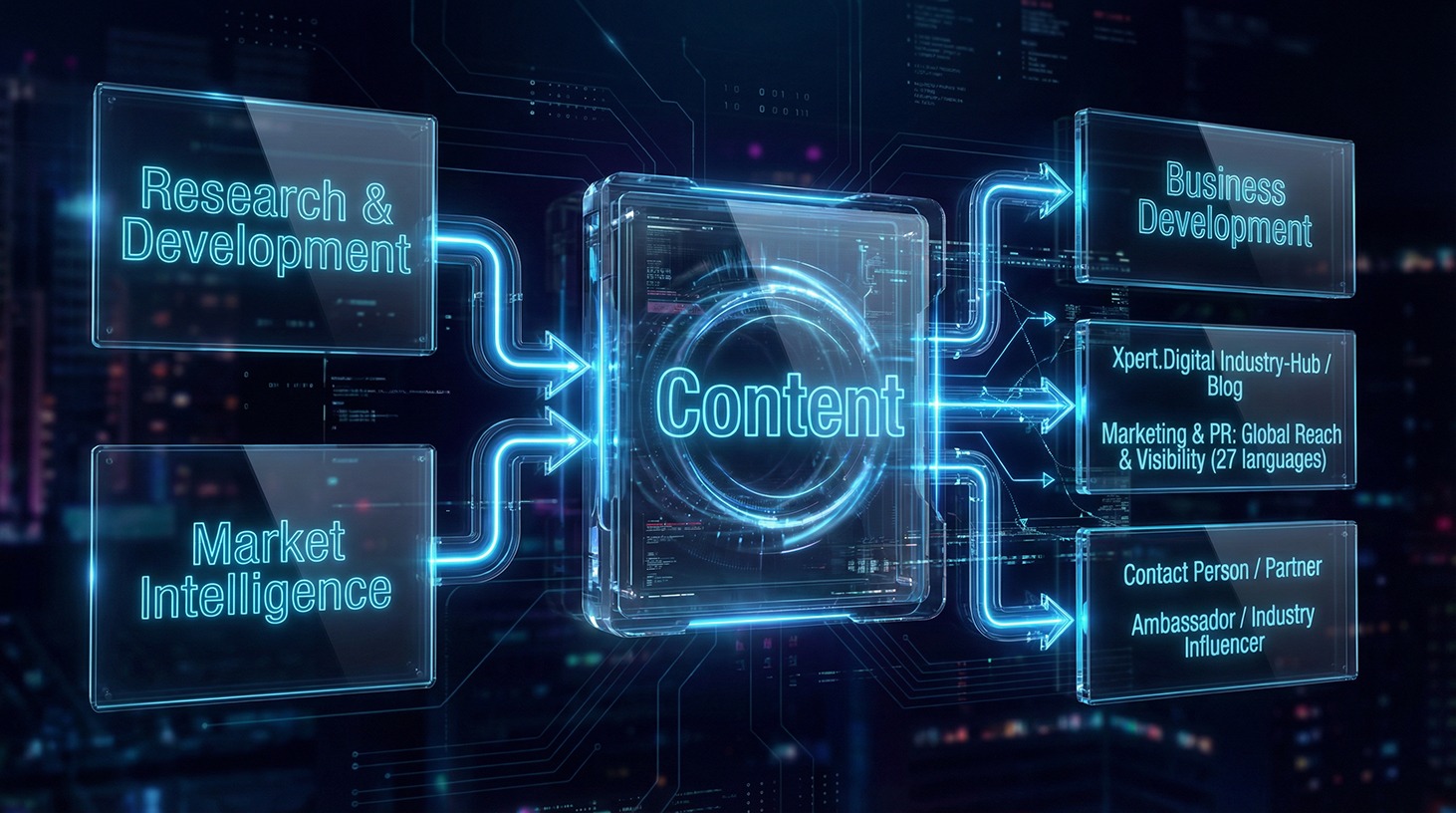
The quasi-in-house solution: How Xpert.Digital closes operational gaps in B2B marketing and sales – Smart Content-Driven Business - Image: Xpert.Digital
Xpert.Digital is a data-driven B2B industry hub led by Konrad Wolfenstein . The company acts as an external, quasi-in-house solution for industrial partners, closing operational gaps in marketing, content, and sales – without requiring additional resources on the client side.
More information here:
Risks and opportunities for Anthropic in the AI market
The cloud partners are on both sides of the table
Anthropic's relationships with Amazon, Google, and Microsoft are unusually close. These corporations can simultaneously act as investors, lenders, infrastructure partners, distribution channels, customers, and competitors. They provide capital and computing power, distribute Claude through their cloud platforms, and at the same time develop their own models or support competing providers. These multiple roles create strong interdependencies.
This offers significant advantages for Anthropic. Through the major cloud marketplaces, the company gains access to existing enterprise customers whose security requirements, billing systems, and IT contracts are already established. Support for multiple chip platforms—Amazon's Trainium, Google's TPU, and Nvidia's GPU—also reduces its reliance on a single hardware architecture. Technically, Anthropic can distribute different workloads across the most cost-effective systems and at least partially retain its negotiating power.
At the same time, a portion of the added value is transferred to the platforms. In 2025, 47 percent of revenue is projected to have been generated through Amazon and Google. Of the approximately $2.16 billion in such revenue, roughly $351 million was allocated to distribution fees. This equates to about 16 cents per dollar of revenue generated. Anthropic records the full contract value as revenue and reports the platforms' share as sales and marketing expenses. This presentation can make the revenue appear larger than it would be with a net calculation, although it may be permissible under accounting principles.
This interconnectedness also creates a cycle of capital and demand. Hyperscalers are investing billions in Anthropic; in return, Anthropic commits to substantial purchases of cloud and computing resources. A portion of the invested capital thus flows back to the infrastructure partners in the long term. This is not inherently artificial or problematic. Strategic industry partnerships often function similarly. However, investors must consider what proportion of the reported momentum stems from independent end-customer demand and what proportion is driven by the financing and distribution structure.
A few major customers can quickly turn the success curve around
Besides the supplier side, the customer side is also concentrated. Two customers accounted for approximately one-fifth of revenue in the first half of 2026, which translates to roughly $3.3 billion. In the previous year, nearly a quarter of revenue came from just two customers. Such concentration is not unusual in an early growth phase, but it significantly increases the risk.
If a major customer reduces its usage, negotiates better terms, migrates applications to its own model, or switches to a competitor, this can impact both revenue and margin. The risk is exacerbated if customer revenues are flexible or usage-based, but Anthropic has to pay for its computing capacity years in advance through non-cancellable contracts. On the procurement side, the company then bears fixed obligations, while on the sales side, there is no equivalent guarantee of purchase.
For large enterprise customers, this asymmetry improves their negotiating position. They can demand price caps, portability, transparent model changes, guaranteed availability, and protection against short-notice product discontinuations. For Anthropic, this creates a strategic conflict of objectives. Long-term contracts would increase planning certainty but could require price reductions and extensive performance guarantees. Flexible usage allows for higher prices during periods of limited capacity but makes revenues more volatile.
A broader customer base would therefore not only be a sales target, but also a key component of risk management. The crucial question is whether Anthropic can develop standardized, repeatable enterprise products from individual large AI projects. Only when thousands of organizations permanently integrate Claude into business-critical processes will impressive growth translate into a resilient revenue stream.
The price drop works both for and against Anthropic
The costs of using high-performance language models have fallen dramatically in recent years. For a given performance level, inference prices have dropped by orders of magnitude at times. Simultaneously, hardware, software optimization, model architectures, and utilization are improving. This development benefits Anthropic because every task can be completed with less computational effort, and existing resources can generate more revenue.
However, this same progress threatens pricing power. As comparable model performance becomes increasingly cheaper, customers can more easily play vendors off against each other. Open models reduce their performance gap, smaller, specialized models take over routine tasks, and companies increasingly distribute requests dynamically across different systems. The economic value then shifts from pure model intelligence to integration, reliability, security, data access, user interface, and control of complex workflows.
For Anthropic, simply releasing a more powerful base model on a regular basis is therefore insufficient. The company must create a product ecosystem that generates switching costs without forcing customers into unreasonable dependencies. Claude Code is an important approach in this regard. When a system deeply understands the development process, can operate tools, analyze codebases, and execute tasks independently, it creates more value than simply selling individual text tokens. However, resource consumption per order also increases because agentic systems perform many steps. Efficiency gains per computational step can be more than offset by a significantly higher number of computational steps.
This rebound effect shapes the entire AI economy. Cheaper calculations don't necessarily reduce overall consumption. They make new applications economically viable, increase usage, and shift more and more tasks to AI systems. This could create a large market for Anthropic. However, profitability hinges on whether the price per automated task rises faster than its total computing and operating costs.
A valuation needs more than a growth rate
The high company valuation assumes that Anthropic will become not just a rapidly growing software provider, but a fundamental platform of the digital economy. With a valuation in the range of one to two trillion dollars, even double-digit billion-dollar revenues are insufficient to comfortably meet traditional valuation metrics. Investors must assume that the market will grow strongly for many years, that Anthropic will retain a significant share, and that margins will increase considerably despite high infrastructure costs.
The optimistic scenario is plausible, but ambitious. AI agents could automate large parts of knowledge work, accelerate program development, and serve as a new user interface for enterprise software. In this case, a leading model company would not just be a software supplier, but a kind of digital production factor. High upfront investments could be rewarded later through high utilization and economies of scale, similar to the development of global cloud infrastructure.
The pessimistic scenario looks different. Models could converge more quickly, prices could fall, and customers could capture the majority of the benefits themselves. Cloud providers might favor their own models or skim margins through infrastructure and sales. Regulatory requirements, liability claims, and security issues could drive up costs. In this scenario, while Anthropic remains technologically significant, it doesn't earn the margins necessary to justify an extreme valuation.
A sound valuation must therefore employ scenarios. Crucial factors include not only revenue and growth, but also gross margin, computing costs per task, customer retention, capital requirements, dilution, contractual obligations, and the duration of a technological advantage. The difference between booked revenue and economically retained revenue after platform fees, discounts, infrastructure costs, and necessary reinvestments is particularly critical.
Electricity is becoming a strategic production factor
The planned computing power cannot be measured solely in chips. Several gigawatts of connected load correspond to the size of large industrial complexes. AI data centers require not only processors but also reliable power grids, cooling, water, space, transformers, fiber optics, and permits. This shifts part of the competition from algorithms to energy and location policy.
Globally, data center electricity consumption is expected to roughly double by 2030 compared to the middle of the decade. AI-optimized data centers are growing even faster. In the United States, a large portion of the additional electricity demand by the end of the decade could be attributable to data centers. This means that the expansion plans of companies like Anthropic depend not only on capital and chip availability, but also on grid expansion, power plant capacity, and public acceptance.
The location is crucial for the cost structure. Regions with affordable electricity, fast permitting processes, reliable cooling, and robust networks are becoming increasingly attractive. At the same time, local resistance can arise if data centers strain scarce network capacity, consume water, or influence electricity prices. Long-term contracts for computing power therefore indirectly involve significant energy, construction, and permitting risks.
Anthropic's diversification across multiple vendors and chip types reduces individual technical dependencies but does not eliminate systemic risk. The major cloud partners compete for the same chips, power plant projects, and grid connections. A bottleneck can therefore affect multiple supply chains simultaneously. The ability to train models more efficiently and intelligently distribute requests across different hardware will become just as important a competitive advantage as pure model quality.
Security is also a matter of balance sheet balance
Anthropic strongly positions itself on responsible and safe AI. However, from an economic perspective, safety is not just a matter of branding, but a potential cost and liability factor. Powerful models can support flawed decisions, disclose confidential data, facilitate cyberattacks, or behave differently than intended in automated processes. With increasing autonomy, the potential for damage also increases.
For enterprise customers, the question of liability in case of misconduct is therefore becoming increasingly important. Model providers, cloud platforms, integrators, and users can each bear a share of the responsibility. Insurance policies will not fully cover every conceivable event. A serious security incident could trigger not only direct claims for damages but also regulatory restrictions, customer churn, and increased monitoring costs.
At the same time, a credible security architecture can create economic value. Banks, insurance companies, industrial enterprises, and public institutions require verifiable controls, data protection, access management, and robust auditing procedures. If Anthropic translates its security position into concrete product features and contractually verifiable standards, this can translate into pricing power. Conversely, if security remains primarily a general promise, it contributes little to differentiation and yet still incurs high research and compliance costs.
For corporate customers, the dependency behind the product is what matters
Anthropic's financial structure is also relevant for customers. Companies that purchase an AI solution are not just buying model performance, but also entering into a technological dependency. Changes to prices, terms of use, model versions, or capacities can affect entire workflows. Deep integration with software development, customer service, or knowledge management increases the effort required to switch between systems.
This does not mean that companies should abandon Claude. The quality and productivity of a leading model can offer significant economic benefits. Rather, the right approach is an architecture that allows for switching. Interfaces should make models interchangeable, internal evaluations should measure the performance of different vendors, and sensitive data should not be unnecessarily tied to proprietary formats. Prompts, tools, and process logic must remain portable as much as possible.
Contract negotiations are also becoming increasingly important. Companies should not only compare token prices, but also consider total costs, reliability, data usage, liability, model discontinuations, and price changes. For large volumes, upper limits, guaranteed capacity, and clear transition periods are more important than a short-term discount. Anthropic's high customer concentration can give large buyers additional negotiating power.
For German and European companies, the regulatory perspective is an additional consideration. Data protection, trade secrets, co-determination, and sectoral requirements must be integrated into procurement. The economic benefit of AI does not arise solely from access to the most powerful model, but from its robust integration into processes, responsibilities, and controls.
Europe's opportunity does not lie in copying the capitalist race
The scale of Anthropic's infrastructure plans demonstrates how difficult it is for European providers to follow leading American companies with identical strategies when it comes to universal frontier models. Hundreds of billions of dollars in capacity commitments cannot be offset solely by improved research or individual funding programs. Europe lacks both the same venture capital market and comparably dominant cloud platforms.
However, this does not mean that Europe must remain insignificant in the AI market. Economic value is created on several levels: in specialized models, secure industry platforms, industrial data spaces, integration, robotics, energy optimization, and regulatory-compliant applications. Particularly in industry, mechanical engineering, logistics, healthcare, and public administration, Europe possesses data, expertise, and customer relationships that cannot simply be replaced by a larger, generic model.
The more sensible strategy is to secure computing capacity in a targeted manner while simultaneously limiting dependence on individual non-European models. Open interfaces, shared infrastructure, competitive energy prices, and faster permitting processes are more important than trying to politically mirror every American investment. Europe's advantage can lie in productive application and trustworthy integration, not necessarily in the most expensive model training.
Anthropic's figures therefore also send a signal regarding industrial policy. AI is becoming a capital- and energy-intensive fundamental technology. Those who focus solely on software expertise underestimate the importance of electricity, semiconductors, data centers, and financing. Conversely, those who only build infrastructure without developing viable applications and customers risk costly overcapacity.
The most likely scenario is neither a bubble nor a sure gold mine
Anthropic embodies two seemingly contradictory developments. The company demonstrates an exceptionally rapid commercialization of generative AI while simultaneously bearing the enormous financial burden of the technological arms race. Both are real. Revenues are too large and growing too fast to dismiss the market as mere speculation. However, infrastructure commitments, customer concentration, and unclear adjusted metrics are too significant to speak of a proven success model.
The $80.7 billion loss is therefore neither proof of an imminent collapse nor an insignificant footnote. It demonstrates how drastically the results of a privately held growth company can be distorted. At the same time, the figure highlights the real risks: fixed computing costs long-term, dependence on hyperscalers that are both cooperating and competing, high revenue concentration, and a market where technical performance is rapidly becoming cheaper.
The strongest positive indicator is not the valuation, but the ratio between revenue growth and infrastructure costs. If revenue grows consistently faster than the immediate computing costs, and Anthropic simultaneously expands its customer base, the current capital intensity could translate into a powerful economies of scale. The most dangerous indicator is not the balance sheet loss for the first half of the year, but the volume of non-cancellable liabilities relative to contractually secured customer revenue. This asymmetry determines whether reserved computing power becomes a bottleneck protection measure or a financial trap.
Anthropic thus exemplifies the next phase of the AI economy. The era of mere model demonstrations is over. Now, providers must prove that intelligence can be produced as a service with sustainable margins. The winner will not automatically be the company with the largest model or the highest capital inflow. The winner will be the one who simultaneously masters technological quality, cost-effective computing power, broad distribution, reliable security, and genuine customer loyalty.
The provocative point, therefore, is this: Anthropic's biggest problem isn't the $80 billion loss. A more dangerous scenario would be one in which the loss disappears from the balance sheet, growth rates return to normal, and the long-term bills for chips, cloud computing, and electricity continue to accrue. Only when revenues cover the full cost of capital even under less euphoric market conditions will this spectacular AI gamble have transformed into a sustainably viable business.
📈🚀 From visibility to trust 👀🤝 Your scalable path with Xpert.Digital

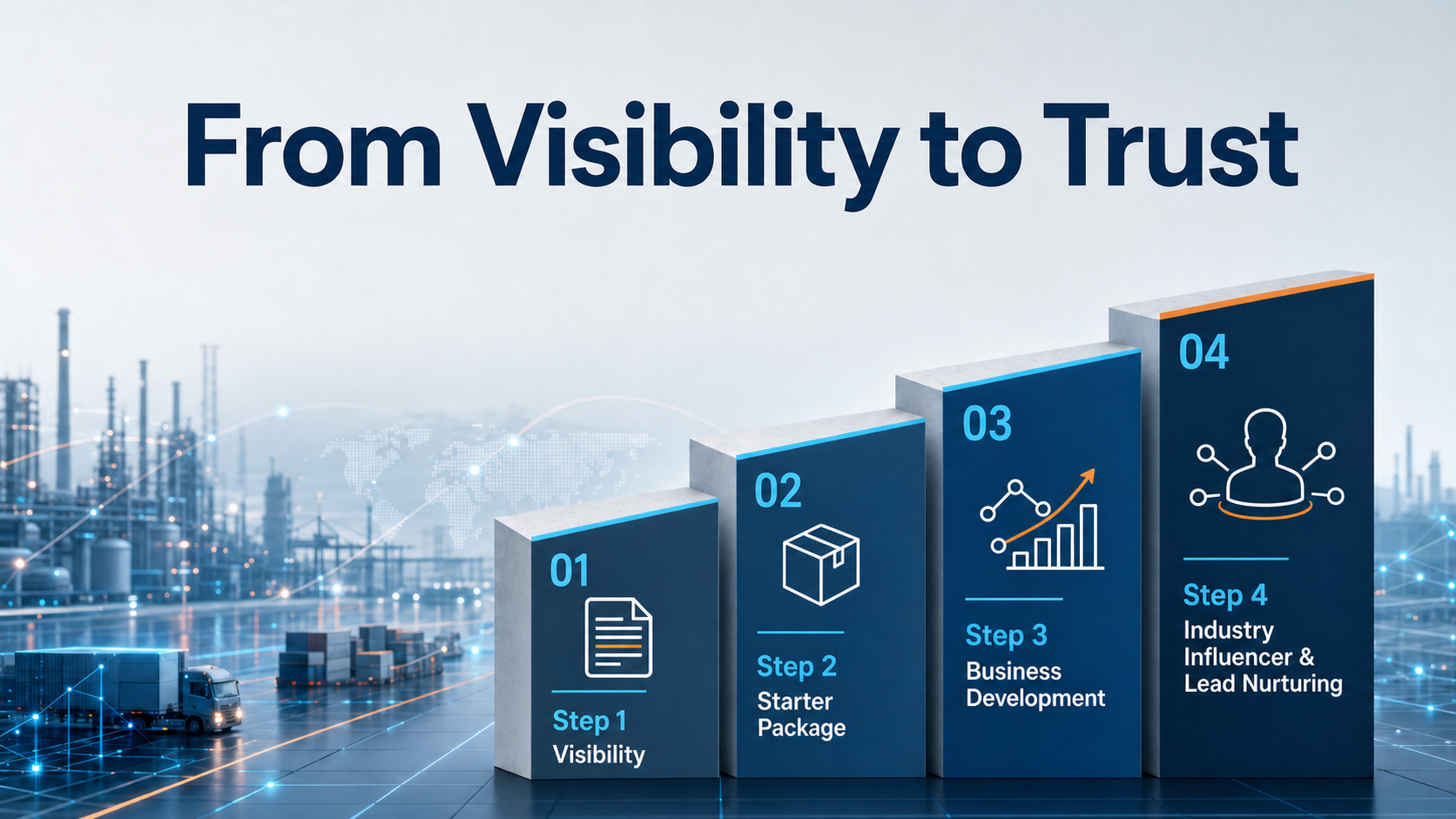
From visibility to trust: Your scalable path with Xpert.Digital - Image: Xpert.Digital
In industrial B2B, sustainable business relationships rarely emerge overnight. They develop step by step – through visibility, professional relevance, recurring touchpoints, and growing trust. Xpert.Digital's 4-stage model addresses precisely this: It offers a structured path that begins with a manageable entry point and can evolve into deeper collaboration in business development if needed.
Instead of relying on loud marketing promises, this model puts the relationship at the forefront. Companies start with clearly defined, easily calculable measures and then decide, based on their own experience, how far they want to expand the collaboration. A key factor for this undisturbed trust-building process: The platform completely avoids annoying advertising ads, so the editorial focus remains solely on the companies' expertise.
More information here:
Your global marketing and business development partner
☑️ Our business language is English or German
☑️ NEW: Correspondence in your native language!

Konrad Wolfenstein
I and my team are happy to be available to you as your personal advisor.
You can contact me by filling out the contact form here wolfenstein@xpert.digital:or simply call me at +49 7348 4088 965. My email address is
I'm looking forward to our joint project.