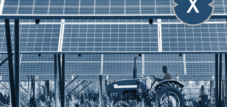
Agri-photovoltaics: Opportunities for smaller systems and elevated installations – Image: Xpert.Digital / Max kegfire|Shutterstock.com
Agri-photovoltaics as an opportunity
Agri-photovoltaics, or AgriPV, is the term for photovoltaic systems installed on agricultural land. Electricity generation from AgriPV systems can make a significant contribution to the energy transition and reduce CO2 emissions.
However, the current support for photovoltaics through the Renewable Energy Sources Act (EEG) is not sufficient to accelerate the further expansion of photovoltaics.
To further accelerate the expansion of photovoltaics, the German government has presented an amendment to the Renewable Energy Sources Act (EEG) that will significantly increase subsidies for photovoltaics. Furthermore, subsidies will be more closely linked to the overall expansion of renewable energies in the future.
Germany's photovoltaic sector benefits from the use of agricultural land for the construction of solar power plants. The recent amendment to the Renewable Energy Sources Act (EEG), with its reduction of the funding thresholds, strengthens the economic viability of agrivoltaic (AgriPV) systems. Combined with rising electricity prices, consumers' high demands for sustainable energy production, and positive experiences from other countries, this presents an attractive investment opportunity for agricultural businesses in Germany.
Agri-photovoltaics: better opportunities for smaller systems and elevated installations
In a joint position paper, the German Farmers' Association (DBV), the Fraunhofer Institute for Solar Energy Systems ISE, and the Kehl University of Applied Sciences for Public Administration welcome the increased support for agri-photovoltaics (Agri-PV) in the Renewable Energy Sources Act (EEG) in light of the amendment to the EEG coming into force in 2023. The amendment will make it possible to receive feed-in tariffs for electricity generated by PV systems on agricultural land through the EEG's standard tendering process. To help this still-emerging technology achieve a breakthrough, more targeted support for elevated Agri-PV systems and simplification of the permitting procedures for the construction of Agri-PV systems are still needed.
The technology has enormous potential: If half of the 80,000 hectares of ground-mounted solar power plants planned in Germany by 2030 were built as elevated agri-PV systems, they could generate an average of approximately 30,000 terawatt-hours of electricity annually. "Agri-PV can certainly become an important component of the energy transition in the future. Many farmers see agri-PV as a good way to combine renewable energies with agriculture," says Udo Hemmerling, Deputy Secretary General of the German Farmers' Association (DBV). "Policymakers must create a framework that makes even smaller agri-PV systems economically attractive and enables farms to operate them themselves."
The German Farmers' Association (DBV), the Fraunhofer Institute for Solar Energy Systems (ISE), and Kehl University of Applied Sciences therefore recommend that even elevated agri-PV systems, which are not subject to tendering requirements under the Renewable Energy Sources Act (EEG), should be eligible for a technology premium. Systems with a nominal output of less than one megawatt are generally exempt from the tendering requirement; in the case of citizen energy cooperatives, the limit is even higher, at six megawatts.
Smaller systems, in particular, allow farms to own and operate the systems themselves. They can more easily manage the necessary investments.
Another obstacle to realizing the full potential of agri-PV is the unclear legal situation regarding permitting procedures. "Since agri-PV systems are built outdoors, the local municipality usually needs to draw up a development plan. Often, this requires amending the land-use plan first. These procedures are extremely time-consuming and would therefore delay the market ramp-up of agri-PV," says Prof. Dr. Michael Frey, Professor of Law and Public Administration at Kehl University of Applied Sciences. To promote the expansion of renewable energies, the German Farmers' Association (DBV), the Fraunhofer Institute for Solar Energy Systems (ISE), and Kehl University of Applied Sciences recommend prioritizing smaller systems that are spatially and functionally connected to the agricultural operation or serve horticultural production. This type of system is attractive to a large number of farms, enabling them to quickly adopt agri-PV
Large, elevated agri-PV systems will be eligible for an additional premium of 1.2 cents per kilowatt-hour under the standard EEG tenders to cover the extra costs of the more complex substructure. "We welcome special funding for elevated systems because they offer particular synergies, such as protection from hail, heavy rain, or excessive sunlight," says Max Trommsdorff, Group Leader of Agri-Photovoltaics at the Fraunhofer ISE. However, doubts exist regarding the efficiency and accuracy of a fixed premium. "The currently highly volatile steel prices make it virtually impossible to accurately predict the additional costs for the substructure of elevated systems. In our view, separate allocation volumes for elevated agri-PV would therefore be more suitable than a fixed premium within the EEG tenders." This would prevent over-subsidization and ensure a significant expansion of elevated agri-PV systems.
The amendment to the Renewable Energy Sources Act (EEG), which came into force in January 2023, already established important framework conditions in Germany for the future market ramp-up of agrivoltaics. For example, it will now be possible to receive feed-in tariffs for electricity from PV systems on agricultural land within the framework of the EEG's standard tendering process. At the same time, a legal entitlement to 85 percent of area-based payments under EU direct payments will exist from 2023 onwards.

Semi-transparent solar modules for agri-PV are already in use
Semi-transparent solar modules are already being used in a research facility of the "Model Region Agri-Photovoltaics Baden Württemberg".
More information here:
Plan your solar system for the most common applications conveniently online with our solar system planner!
With our user-friendly solar system planner, you can design your individual solar system online. Whether you need a solar system for your home, your business, or for agricultural purposes, our planner allows you to consider your specific requirements and develop a customized solution.
The planning process is simple and intuitive. You simply enter the relevant information. Our planner takes this information into account and creates a customized solar system that meets your needs. You can try out different options and configurations to find the optimal solar system for your application.
Furthermore, you can save your plan to review it later or share it with others. Our customer service team is also available to answer any questions and provide support to ensure your solar system is optimally planned.
Use our solar system planner to design your individual solar system for the most common applications and accelerate the transition to clean energy. Get started now and take an important step towards sustainability and energy independence!

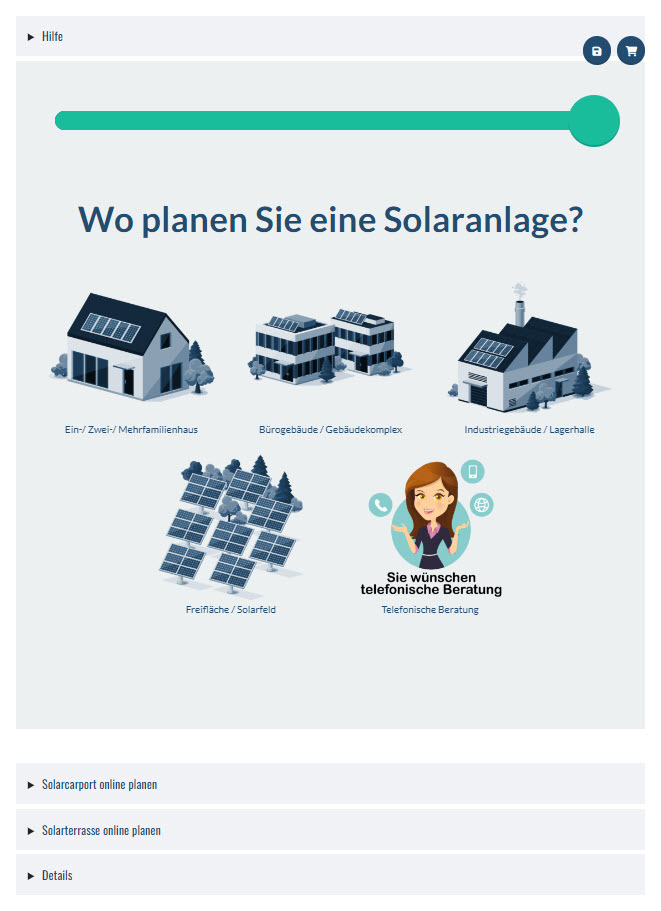
The solar system planner for the most common applications: Plan your solar system online here - Image: Xpert.Digital
More information here:
📣 Energy-efficient renovation and new construction, consulting, planning and implementation for industry, retail and municipalities
Our experienced team supports you in optimizing your buildings to reduce energy consumption and promote sustainable energy use with photovoltaics. We analyze your individual needs and develop customized concepts that are both economically and ecologically sound. Whether it's the energy-efficient renovation of existing buildings or the construction of new, energy-efficient structures, we are here to help. Industrial plants, retail buildings, and municipal facilities can reduce their energy costs, minimize their environmental impact, and simultaneously improve the comfort and efficiency of their buildings with our tailored solutions.
👨🏻 👩🏻 👴🏻 👵🏻 Energy-efficient renovation and new construction, consulting, planning and implementation for private households
We offer comprehensive support for private households in the energy-efficient renovation and new construction of buildings with photovoltaics. Our experienced team is at your side to assist you with consulting, planning, and implementing your sustainable energy solutions. We analyze your energy consumption, identify potential savings, and develop customized concepts to improve your energy efficiency. From improving building insulation and installing energy-efficient windows and doors to installing photovoltaic and solar thermal systems – we guide you step by step to make your home more energy-efficient and environmentally friendly. Trust in our expertise and benefit from the numerous advantages that energy-efficient renovation and the use of renewable energies offer. Together, we'll create a sustainable future for your home.
Position paper, October 2022 - DBV, Fraunhofer ISE and Kehl University
1. Important decisions have been made
The goal of achieving greenhouse gas neutrality by 2045 requires a rapid and massive expansion of renewable energies in Germany. At the same time, the need to protect agricultural crops from increasingly frequent extreme weather events such as hail, droughts, and excessively high temperatures is growing. One way to meet these challenges is the dual use of land through elevated agri-photovoltaics (agri-PV). With such cultivation of the land beneath the PV modules, agricultural use can be maintained while simultaneously allowing for a significant expansion of PV capacity in Germany. Ground-level agri-PV, which allows for cultivation between the modules, also improves land-use efficiency.
With the latest amendment to the Renewable Energy Sources Act (EEG 2023), important framework conditions for the market ramp-up of agrivoltaics have already been established in Germany. In the future, it will be possible to receive financial support for electricity from PV systems on agricultural land within the framework of the EEG's standard tendering process, provided that the agricultural use of the land is not significantly restricted by the system. For elevated systems with cultivation beneath the PV modules, there is also an entitlement to a premium to offset the additional costs for the more complex substructure. Regarding EU direct payments, a legal entitlement to 85 percent of the area-based payments will exist from 2023 onwards.
Furthermore, the new regulations governing the tax treatment of agri-PV should be mentioned. The German Farmers' Association (DBV), the Fraunhofer Institute for Solar Energy Systems ISE, and Kehl University expressly welcome the decision by representatives of the highest federal and state tax authorities to classify land with photovoltaic systems that meet the requirements of DIN SPEC 91434 as category I or II agri-PV as agricultural assets. The decree of July 15, 2022 (Federal Tax Gazette I 2022, p. 1226) increases acceptance among farmers, thereby simplifying land acquisition and advancing the energy transition.
Despite the existing groundwork for expanding agri-PV in Germany, all three institutions still see an urgent need for correction and action to realize the high potential of agri-PV in a timely manner and prevent undesirable developments. This primarily concerns the promotion of elevated agri-PV systems under the Renewable Energy Sources Act (EEG) and the simplification of the permitting procedures for the construction of agri-PV plants.
2. Need for correction in the EEG 2023 regarding the promotion of elevated agri-PV
According to the German Farmers' Association (DBV), the Fraunhofer Institute for Solar Energy Systems (ISE), and Kehl University of Applied Sciences, the distinction between elevated and ground-level agri-PV systems in the new Renewable Energy Sources Act (EEG) represents a significant achievement, as the costs, synergy potential, and application areas of the two systems differ considerably. The introduction of the technology premium in the EEG, amounting to 1.2 cents per kilowatt-hour, now fundamentally takes into account the additional costs and the particular synergy potential of elevated systems.
However, the German Farmers' Association (DBV), the Fraunhofer Institute for Solar Energy Systems (ISE), and Kehl University have serious doubts as to whether the level of the technology premium is sufficient for a significant expansion of elevated wind turbines. Excessive cost pressure could stifle innovation and diversity during market ramp-up and cause agricultural production to be overlooked. In particular, sharply rising steel prices have increased the costs of installation in recent years.
From the perspective of the German Farmers' Association (DBV), the Fraunhofer Institute for Solar Energy Systems (ISE), and Kehl University, the introduction of a dedicated segment for elevated solar power plants would be more effective in the regular tenders of the Renewable Energy Sources Act (EEG) than a fixed premium. This would ensure that a significant increase in the installation of elevated agri-PV systems actually takes place.
3. Enabling EEG subsidies for small plants as well
Currently, the German Renewable Energy Sources Act (EEG 2023) only provides for special subsidies for elevated agri-PV systems within the framework of standard tenders. Non-tendered systems with a capacity below one MWp, on the other hand, only receive the standard feed-in tariff, which is currently even lower than the average premiums for large, tendered systems.
This standard tariff will, in most cases, be insufficient for the construction of elevated systems. It is unclear whether the same applies to system combinations within the framework of the EEG's innovation tenders. Legal certainty should be established here as soon as possible.
To maintain public acceptance for the expansion of renewable energies, the participation of the local population plays a crucial role. This includes giving farms the opportunity to become owners and operators of agrivoltaic (AgriP) systems themselves. However, it seems significantly more likely that local farms can manage the necessary investments for small systems (in the range of a few hundred kWp) than for large systems (1 MWp and above). By subsidizing even smaller AgriP systems, local acceptance can be increased and the barriers to entry into AgriP can be lowered.
According to the German Farmers' Association (DBV), the Fraunhofer Institute for Solar Energy Systems (ISE), and Kehl University of Applied Sciences, elevated wind turbines should be eligible for appropriate funding under both the statutory feed-in tariff and the regular tendering process of the Renewable Energy Sources Act (EEG). This could be implemented either through a separate quota or a sufficient technology premium.
4. Simplification of approval procedures
Another obstacle to realizing the full potential of agri-PV is the current legal framework regarding permitting procedures. From the perspective of the German Farmers' Association (DBV), the Fraunhofer Institute for Solar Energy Systems (ISE), and Kehl University, it is essential to remove these hurdles to the construction of agri-PV systems.
Agri-PV systems are typically located in rural areas. In principle, only privileged projects are permitted there, provided they do not conflict with public interests and access to the site is guaranteed. Unlike all other renewable energy sources and facilities for the disposal of radioactive waste, privileged status for agri-PV systems in rural areas is currently not possible in many cases.
Therefore, the local municipality usually needs to draw up a (project-specific) development plan. Often, this requires amending the land-use plan first. These procedures are usually very time-consuming and would thus delay the market ramp-up of agri-PV.
Therefore, the German Farmers' Association (DBV), the Fraunhofer Institute for Solar Energy Systems (ISE), and Kehl University recommend granting preferential treatment under Section 35 of the German Federal Building Code (BauGB) to smaller installations, up to approximately 1 hectare or 1 megawatt of nominal capacity, that are spatially and functionally related to agricultural operations or serve horticultural production. Furthermore, additional measures to simplify permitting procedures appear advisable, such as the digitalization of permitting processes and the expansion of expertise within local permitting authorities.
☀️🌾🌽🥕🍅🥒 Agri-PV for farmers and municipalities
Everything from a single source, specifically designed for solar solutions for large agri-PV systems. Refinance or offset your future investment with your own electricity generation.
☀️🍅 For solar installers
Consultation and planning including a non-binding cost estimate. We connect you with strong partners in photovoltaics.
☀️🥒👨🏻 👩🏻 👴🏻 👵🏻 For private households
We have a regional presence throughout the German-speaking world. We have reliable partners who will advise you and implement your wishes.
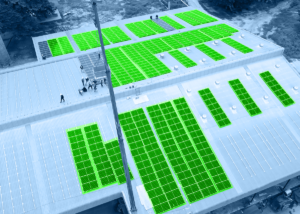
- Planning photovoltaics on warehouses, commercial buildings and industrial buildings
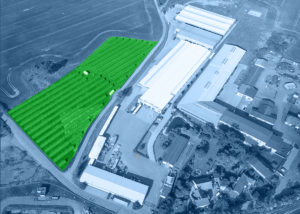
- Industrial plant: Planning a photovoltaic open-field system or open-area system
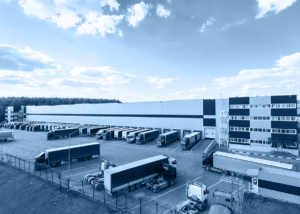
- Planning solar power systems with photovoltaic solutions for freight forwarding companies and contract logistics
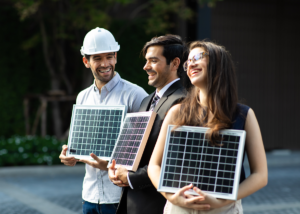
- B2B Solar Systems and Photovoltaic Solutions & Consulting
Agri-photovoltaics: With Xpert.Solar Agri-PV – your individual strategic consulting, planning and implementation

Konrad Wolfenstein
I would be happy to serve as your personal advisor.
You can contact me by filling out the contact form below or simply call me on +49 7348 4088 965 .
I'm looking forward to our joint project.
Write to me


Xpert.Digital – Konrad Wolfenstein
Xpert.Digital is a hub for industry focusing on digitalization, mechanical engineering, logistics/intralogistics and photovoltaics.
With our 360° Business Development solution, we support renowned companies from new business to after-sales.
Market intelligence, smarketing, marketing automation, content development, PR, mail campaigns, personalized social media and lead nurturing are part of our digital tools.
You can find more information at: www.xpert.digital – www.xpert.solar – www.xpert.plus
Keep in touch