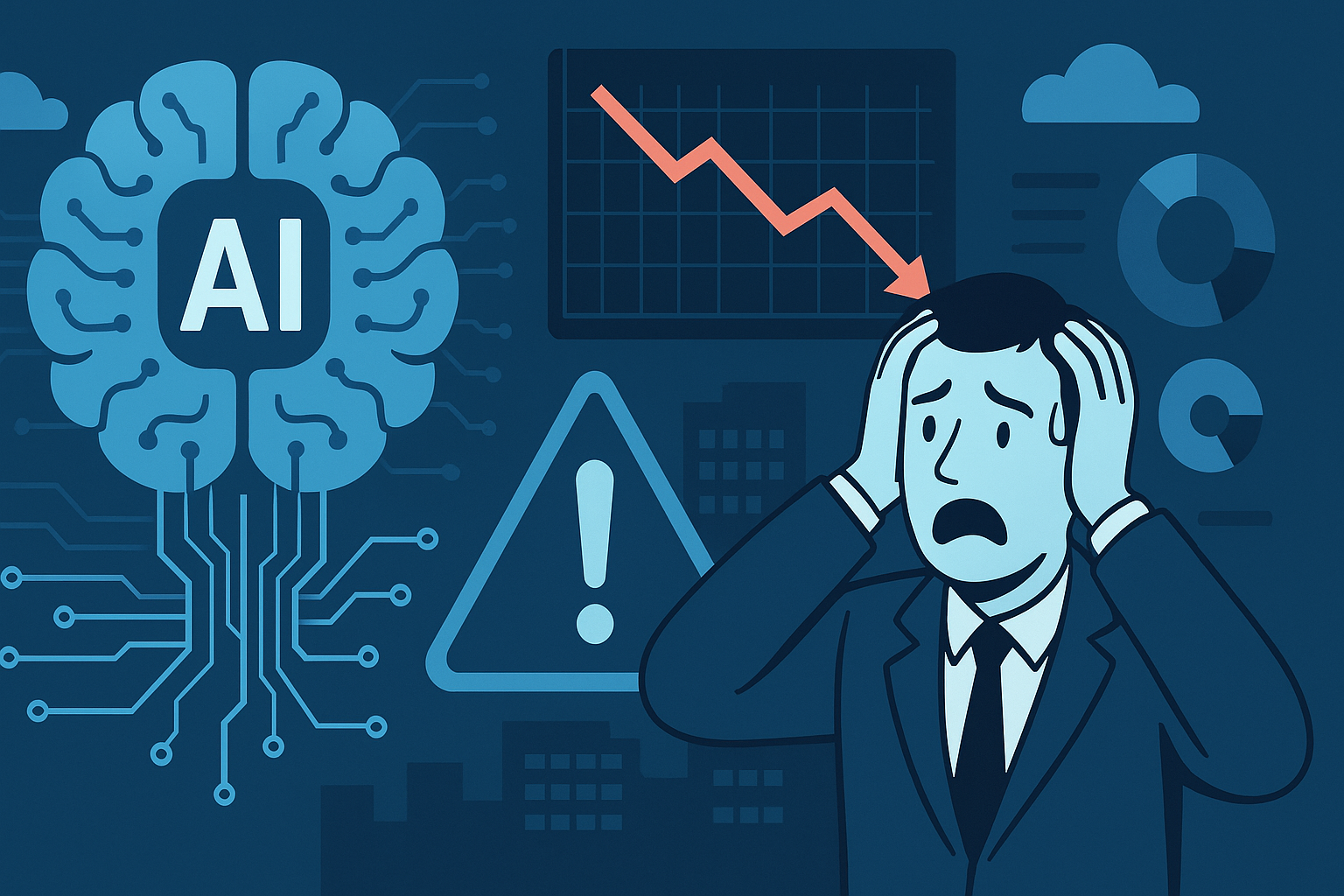
Beware the trap: Agent washing exposed – The marketing problem that jeopardizes your AI projects! – Image: Xpert.Digital
Autonomy vs. Automation: The crucial difference that will save your AI project
Invest wisely: How to recognize genuine AI agents and avoid costly mistakes
The rapid development of artificial intelligence has led to a remarkable phenomenon that is shaping both the technology sector and the corporate world: so-called agent washing. This marketing problem represents one of the most significant challenges for companies that want to implement real AI agents and contributes substantially to the confusion and high failure rates in AI projects.
Related to this:


Understanding the problem of agent washing
Agent washing describes a widespread practice in the technology industry where vendors strategically market existing technologies such as AI assistants, robotic process automation, or chatbots as supposedly agent-based solutions. This rebranding occurs despite the fact that these systems often lack the crucial characteristics of genuine AI agents. Gartner, the renowned consulting firm, estimates that of the thousands of vendors, only about 130 offer truly authentic agent-based AI technologies.
This practice is by no means accidental, but follows an established marketing pattern already observed in other sectors. Similar to greenwashing, where companies give themselves an environmentally friendly image without any corresponding basis, technology providers using agent washing attempt to profit from the current hype surrounding AI agents without making the necessary investments in actual agent technology.
Fundamental differences between real AI agents and conventional systems
To fully understand the problem of agent washing, it is essential to grasp the fundamental differences between authentic AI agents and traditional automation solutions. True AI agents are characterized by several key features that fundamentally distinguish them from conventional systems.
Autonomy and decision-making ability
While traditional automation tools like Robotic Process Automation (RPA) strictly follow predefined rules, true AI agents possess the ability to make autonomous decisions. They can analyze vast amounts of data in real time, recognize patterns, and make informed decisions based on these insights, without requiring constant human supervision. This autonomy allows them to respond appropriately even in unpredictable situations and adapt their strategies accordingly.
Learning and adaptability
Another crucial characteristic of true AI agents is their ability to learn continuously. Unlike rule-based systems, which remain static, AI agents analyze historical data, identify trends, and draw insights from large datasets. This continuous learning process allows them to adapt to new information and refine their performance, becoming increasingly efficient and accurate over time.
Contextual understanding and flexibility
While conventional chatbots largely follow rule-based dialogues and limit themselves to answering predefined questions, true AI agents are capable of reasoning and understanding complex relationships. They can not only process structured data such as spreadsheets, but also analyze unstructured information such as emails or documents in context. This capability allows them to follow nuanced instructions over extended periods and independently achieve complex business objectives.
The impact of agent washing on companies
Agent washing has far-reaching negative consequences for companies that want to implement genuine AI solutions. This practice creates unrealistic expectations among decision-makers who believe they are acquiring mature agent technology, when in reality they are only receiving enhanced automation tools. This discrepancy between expectation and reality contributes significantly to the high failure rates in AI projects.
Economic consequences and waste of resources
Gartner predicts that more than 40 percent of all agent-based AI projects will be discontinued by the end of 2027. The main reasons for this are rising costs, unclear economic benefits, and insufficient risk control measures. Anushree Verma, Senior Director Analyst at Gartner, explains that most of these projects are still in their early stages and often originated as experiments or proof-of-concepts fueled by the current hype.
The underlying models are often not yet technically mature enough to deliver the promised performance. They lack the necessary capabilities to independently achieve complex business objectives, nor are they capable of following nuanced instructions over extended periods. These technical limitations mean that many solutions marketed as agent-based offer no substantial advantage or genuine return on investment.
Loss of confidence and market distortion
Agent washing not only leads to immediate economic losses but can also undermine trust in AI technologies in the long term. Companies that have disappointing experiences with purported AI agents may be more hesitant to adopt genuine AI solutions in the future. This can slow down the entire industry and stifle innovation.
Related to this:

Technical demarcation and identifying features
To identify and avoid agent washing, it is crucial to understand the technical differences between various automation technologies and to recognize genuine AI agents.
Robotic Process Automation (RPA) versus AI agents
RPA systems are designed to automate rule-based, repetitive tasks. They mimic human actions to read and process structured data, but can only operate in clearly defined situations. Once they encounter a situation that deviates from the norm, they are unable to adapt automatically and must alert a human agent.
AI agents, on the other hand, can perform multi-phase tasks and adapt to unexpected situations thanks to their decision-making abilities. They go beyond basic automation and become dynamic, problem-solving units that can independently continue the process even if things don't go as planned.
Chatbots versus real AI agents
Traditional chatbots are only capable of responding to users and forwarding information to a human agent. Their responses are often based on pre-defined scripts or natural language processing, which significantly limits their usefulness. They can only react, not act proactively or make complex decisions.
True AI agents, on the other hand, recognize problems, find solutions, and implement them automatically. They can reason, make context-based decisions, and perform actions independently, without the need for rule-based dialogues or configurations.
Agentic Process Automation (APA) as a future technology
Agentic Process Automation (APA) represents the next evolutionary stage in automation. Unlike traditional automation tools, APA systems can perform targeted process automation through autonomous AI agents. Multiple agents execute multi-phase tasks and are coordinated by an orchestration layer, enabling flexible and adaptable automation.
Market dynamics and industry development
The market for AI agents is currently experiencing a period of intense growth, but one characterized by uncertainty and over-representation. A Gartner survey of 3,412 webinar participants clearly illustrates the current market situation: 19 percent of respondents stated that their company has already invested significantly in agentic AI, while 42 percent reported more cautious investments.
Investment behavior and market maturity
The figures illustrate a divided market situation: While a considerable proportion of companies have already invested or are planning investments, 31 percent of respondents are either undecided or taking a wait-and-see approach. This reluctance is quite justified, given that many of the currently available offerings do not deliver the promised benefits.
Gartner nevertheless predicts significant growth potential for true agentic AI solutions. By 2028, at least 15 percent of all daily business decisions are expected to be made autonomously by agentic AI, compared to zero percent in 2024. Additionally, it is anticipated that by 2028, approximately 33 percent of all enterprise software applications will have agentic AI components, compared to less than one percent in 2024.
B2B procurement: Supply chains, trade, marketplaces & AI-powered sourcing

B2B procurement: Supply chains, trade, marketplaces & AI-powered sourcing with ACCIO.com - Image: Xpert.Digital
More information here:
AI Agent Washing: How companies sell fake intelligence as innovation
Quality control and market consolidation
The discrepancy between the thousands of vendors and the estimated 130 companies with genuine agent-based technologies suggests an impending market consolidation. Companies offering true innovation will differentiate themselves from those merely engaging in agent washing.
Related to this:

Challenges in AI implementation
Implementing true AI agents presents various challenges that extend beyond the issue of agent washing. These challenges partly explain why many companies opt for less sophisticated, but also less effective, solutions.
Technical complexity and infrastructure requirements
Integrating real AI agents into existing enterprise systems is technically challenging and can significantly disrupt existing processes. Many companies lack the necessary IT infrastructure to effectively handle AI workloads. A Cisco study shows that only about a quarter of companies in Switzerland have flexible networks suitable for AI implementations.
The majority of companies cannot handle new AI processes with their current IT infrastructure due to limited or nonexistent scalability. Almost all require additional graphics processing units (GPUs) to meet the increased performance and computing demands.
Data quality and data availability
High-quality, diverse, and accessible data is a fundamental requirement for all AI activities. However, most companies are poorly positioned when it comes to providing such data. The main problem is that company data is not stored in a centrally managed database, but rather scattered in silos throughout the organization.
These data silos not only complicate the implementation of AI agents but can also lead to flawed models and incorrect conclusions. Incomplete or inaccurate data undermines the effectiveness of any AI solution, whether it's a true agent or a traditional automation solution.
Cultural and organizational barriers
The introduction of AI agents is not just a technical challenge, but above all a cultural one. Employees must be willing to abandon old ways of working and accept new technologies. Resistance to change, a lack of understanding of the benefits of the transformation, and insufficient training can significantly jeopardize its success.
The shortage of skilled workers in the IT and digital sectors presents another major obstacle. Without the right talent, possessing both technical know-how and an understanding of digital business models, the full potential of AI technology often remains untapped.
Strategies for avoiding agent washing
Companies that want to implement true AI agents must learn to recognize and avoid agent washing. This requires a systematic approach and the right evaluation criteria.
Identifying genuine AI agents
True AI agents are distinguished by specific characteristics that differentiate them from conventional automation solutions. They act independently and can handle unexpected situations without requiring constant human intervention. They possess the ability to learn from their environment and adapt their strategies in real time.
A key distinguishing feature is the ability for autonomous perception and data collection. True AI agents continuously gather data from diverse sources and analyze user behavior as well as text and speech information using natural language processing. Based on this analysis, they create action plans, break down complex tasks into sub-goals, and prioritize them accordingly.
Related to this:

Due diligence in supplier selection
When selecting AI solutions, companies should conduct thorough due diligence. This includes a detailed review of the vendors' technical specifications, references, and case studies. Companies should ask critical questions: Can the system learn and adapt independently? Does it possess genuine decision-making capabilities? Can it handle complex, multi-stage tasks without human intervention?
Pilot projects and phased implementation
Gartner recommends using agent-based AI only where it delivers clear added value or a demonstrable return on investment. A good starting point is using AI agents for decision-making, automating routine processes, or handling simple queries before tackling more complex use cases.
Future prospects and market development
Despite current challenges and the issue of agent washing, agentic AI marks a significant step forward in AI capabilities and opens up new market opportunities. The technology offers the potential to use resources more efficiently, automate complex tasks, and drive innovation in everyday business.
Transformative impacts on industries
AI agents will have a transformative impact, particularly in marketing and sales. They will enable companies to segment customers based on buying patterns and preferences with unprecedented efficiency and create personalized experiences. Unlike traditional marketing automation platforms that operate according to fixed rules, true AI agents can dynamically respond to customer behavior and adapt their strategies accordingly.
Evolution of workplaces
The development of true AI agents will also have a significant impact on the world of work. Bloomberg Intelligence estimates that the increased use of AI agents at the world's largest banks alone could lead to the loss of 200,000 jobs in the near future. This development underscores the need for businesses and society to proactively develop retraining and further education programs.
Regulatory developments
With the increasing prevalence of true AI agents, regulatory frameworks will also play a greater role. Companies must consider data protection, data sovereignty, knowledge of and compliance with global regulations, as well as the concepts of bias and transparency with regard to both data and algorithms.
Recommendations for companies
Given the complexity of the agent washing problem and the challenges of implementing real AI agents, companies should take a systematic approach.
Strategic planning and goal setting
Companies should first develop a clear digital strategy that defines how AI agents can contribute to achieving business goals. Vague goals like "We want to use AI" are insufficient. Instead, specific, measurable goals should be defined that are aligned with the business strategy.
Skills development and further training
Promoting further education is essential to empower employees at all levels to work effectively with AI. Companies should invest strategically in training, data-driven decision-making processes, and innovative applications to achieve efficiency gains, process optimization, and new business opportunities.
Focus on data protection and security
Ensuring data protection and IT security is essential to minimize risks such as data misuse and to build trust in the technology. These measures not only contribute to increased efficiency but also promote the acceptance and sustainable use of AI.
Navigating the Agent Washing Dilemma
Agent washing poses a significant challenge for companies seeking to reap the benefits of true AI agents. The widespread practice of rebranding existing technologies as supposedly agent-based solutions leads to unrealistic expectations, wasted resources, and ultimately, high failure rates in AI projects.
To succeed, companies must learn to differentiate true AI agents from traditional automation solutions. This requires a deep understanding of the technical differences, careful due diligence in vendor selection, and a strategic approach to implementation.
Despite current challenges, the development of true AI agents offers enormous potential for innovation and increased efficiency. Companies that lay the right foundations now and are not misled by the agent washing hype will be able to benefit from the transformative possibilities of this technology in the long term.
The future lies not in simply automating individual tasks, but in intelligent collaboration between humans and true AI agents that can learn independently, adapt, and solve complex business problems. The key to success lies in shaping this future with clarity, realism, and strategic vision.
We are here for you - Consulting - Planning - Implementation - Project Management
☑️ SME support in strategy, consulting, planning and implementation
☑️ Creation or realignment of the AI strategy
☑️ Pioneer Business Development

Konrad Wolfenstein
I would be happy to serve as your personal advisor.
You can contact me by filling out the contact form below or simply call me on +49 7348 4088 965 .
I'm looking forward to our joint project.
Write to me


Xpert.Digital - Konrad Wolfenstein
Xpert.Digital is a hub for industry focusing on digitalization, mechanical engineering, logistics/intralogistics and photovoltaics.
With our 360° Business Development solution, we support renowned companies from new business to after-sales.
Market intelligence, smarketing, marketing automation, content development, PR, mail campaigns, personalized social media and lead nurturing are part of our digital tools.
You can find more information at: www.xpert.digital - www.xpert.solar - www.xpert.plus
Keep in touch