
From smart city dashboard to the acting city: Vietnam's bet on the Agent City – creative image on the topic, with AI: Xpert.Digital
Agent City: Vietnam's innovative answer to the challenges of urban development
Those who only let AI analyze data are not building a smart city – but an expensive control center
Vietnam is embarking on a groundbreaking transformation in urban development. The Agent City concept not only creates a new model for smart cities but also heralds a paradigm shift in the use of artificial intelligence (AI). Unlike traditional smart city projects, which often rely on isolated technical solutions, Vietnam aims to develop AI agents that can actively intervene in and optimize urban processes. These agents not only collect data but also perform specific tasks, coordinate with other digital actors, and utilize public and commercial systems across borders.
The transition from passive data analysis to proactive action is challenging not only technologically but also institutionally. The central question is not only what AI can achieve, but also what powers it has, for whom it acts, and how its actions are monitored. In a rapidly urbanizing country with a booming economy, this step is both necessary and of enormous importance. Vietnam's Agent City could therefore not only increase the efficiency of urban services but also serve as a model for other countries facing similar challenges.
Vietnam's leap from observation to action
Vietnam aims not merely to catch up in the next stage of smart city development, but to establish its own model early on. At its core is the Agent City: a city where artificial intelligence no longer simply collects data, recognizes patterns, makes predictions, or provides decision-making templates. AI agents are intended to actually perform limited, clearly defined tasks, coordinate with other digital actors, and utilize public and commercial systems across organizational boundaries. This shifts the central question from technical capability to institutional authorization: The value of an AI is determined not only by what it can do, but also by what it is allowed to do, whom it represents, what data it can access, and who is responsible for its actions.
This transition is more economically significant than the term "Smart City" might initially suggest. Traditional Smart City projects improve individual functions: traffic lights react to traffic volume, cameras detect hazards, sensors report water leaks, and digital portals simplify administrative services. Such solutions generate efficiency but often remain trapped within departmental, data, and application boundaries. A system might detect a disruption but cannot independently coordinate its resolution between traffic authorities, police, emergency services, utility companies, and private mobility providers. This is precisely where the Agent City comes in. Its aim is to transform numerous isolated digital capabilities into a functional urban network.
For Vietnam, this ambition comes at a favorable yet challenging time. The country recorded real economic growth of around 8 percent in 2025; gross domestic product per capita was approximately US$5,066. At the same time, nearly 39 percent of the population lived in cities. Further urbanization, the growing middle class, increasing mobility, and the expansion of digital services are intensifying the pressure on public administration and infrastructure. Vietnam's digital economy reached a gross merchandise volume of approximately US$39 billion in 2025. E-commerce alone accounted for roughly US$25 billion, transportation and food delivery services for approximately US$5 billion, and the online travel market for around US$4 billion. An Agent City would therefore not be a technological gimmick on the periphery of the economy, but rather a potential operational layer for markets that already generate tens of billions of dollars in revenue.
The decisive strategic advantage lies in combining growth with institutional restructuring. Mature industrialized nations often have to integrate agent-based systems into decades-old administrative, corporate, and IT structures. Vietnam can develop parts of its digital infrastructure more quickly around shared data models, digital identities, and machine-readable processes. However, this does not automatically translate into an advantage. Skipping over legacy technologies can just as quickly create new dependencies. Without reliable rules, interoperable data, and qualified specialists, the Agent City would merely become another layer of proprietary platforms. The leap forward will only succeed if Vietnam does not procure individual AI products, but instead creates a robust operating system for digital agents.
Why the current Smart City model is reaching its limits
Vietnam's smart city development to date demonstrates both the potential and the weaknesses of the traditional approach. After several years, implementation remained fragmented in many places, with inconsistent funding and organizational disparate structures. While intelligent operations centers, camera systems, specialized applications, and local data repositories emerged, binding standards for interoperability, cost control, and sustainable operation were not universally in place. Some control centers showcased impressive screens and key performance indicators, but this did not translate into a comprehensive, data-driven governance system for the city. The fundamental problem was less a lack of technology than a lack of a shared architecture and data ownership.
This experience is central to Agent City. An AI agent can only operate across organizational boundaries if the systems involved describe the same issues with sufficient consistency. A street, a company, a permit, an invoice, a medical appointment, or a tourist service must be machine-readable, up-to-date, and unambiguously referenceable. If formats, terms, and responsibilities don't align, the agent must bridge the uncertainty through assumptions. What might merely lead to an inaccurate answer during an information search can cause real harm in the case of a payment, permit, traffic management, or medical prioritization.
Vietnam has therefore formulated the principle for public data that it should be accurate, complete, clean, up-to-date, consistent, and shared. This requirement sounds administrative, but it is highly relevant economically. Data quality determines the effort required for any subsequent automation. If data is cleaned and reassigned for every application, integration costs, project durations, and dependencies on service providers increase. Conversely, if there are shared dictionaries, interfaces, and identifiers, new services can be developed more quickly. Such a data foundation functions similarly to a transportation infrastructure: it reduces transaction costs for many stakeholders simultaneously, even though its benefits are not fully apparent in any single project.
The shift from warning to coordinated action simultaneously exacerbates the liability problem. A conventional system can report that a street is congested. An agent, on the other hand, could adjust signals, reroute buses, inform passengers, prioritize emergency services, and temporarily restrict access for delivery vehicles. Each individual action can be beneficial, while their combination can generate unexpected side effects. Therefore, the city needs not only better algorithms but also transparent delegation chains, tiered approvals, and the ability to immediately halt actions. At its core, Agent City is less a project for artificial intelligence than a project for institutionally controlled automation.
AI agents as new economic players
An AI agent differs from a traditional chatbot in that it can pursue a goal, plan multiple work steps, utilize tools and data sources, and execute actions within granted permissions. In a city, a citizen agent could coordinate appointments, prepare forms, pay fees, and book suitable mobility options. A business agent could check inventory levels, coordinate delivery times, monitor permit requirements, and submit bids. An administrative agent could verify applications for completeness, determine responsibilities, initiate follow-up questions, and handle simple, standard cases. Multiple agents could negotiate with each other without each step requiring manual intervention.
Economically, this creates a new form of division of labor. Until now, digitalization has primarily reduced the costs of individual information and communication processes. Agentic systems can additionally reduce coordination costs. They handle the aggregation of information, the tracking of deadlines, switching between platforms, and the coordination of numerous small decisions. Particularly in rapidly growing cities, significant hidden costs arise from waiting times, media breaks, repeated data entry, unclear responsibilities, and poorly synchronized resources. Reducing these inefficiencies increases the efficiency of existing infrastructure without requiring the construction of new roads, counters, or administrative units to the same extent.
The global productivity potential is significant, but it doesn't guarantee economic returns. Studies suggest that AI agents could take over tasks that currently account for a substantial portion of working hours. Generative AI is projected to generate several trillion US dollars in additional annual value in the long term. At the same time, only a minority of companies are currently reporting clearly measurable impacts on their bottom line. Many organizations are achieving local time savings without fundamentally changing processes, responsibilities, or business models. For an "Agent City," this leads to a clear lesson: a digital assistant at every counter doesn't automatically create a more productive administration. Only the complete redesign of workflows unlocks greater economic benefits.
Cost accounting must extend beyond computing power and software licenses. An agent incurs expenses for data maintenance, integration, identity management, monitoring, human oversight, security checks, and the correction of erroneous results. Its economic value is derived from the benefit of correctly completed tasks, minus these total operating costs and the expected costs of damage. Particularly complex agents can consume significant computing resources without generating proportionally more value. Vietnam should therefore not strive for the most autonomous city possible, but rather for an economically sound tiered approach: simple rules for stable, routine cases, analytical AI for forecasting, and agentic systems only where multi-level coordination actually generates added value.
The economic leverage lies in the transaction costs
The greatest impact of an Agent City is likely to come not from spectacular individual applications, but from thousands of small gains in time and coordination. A restaurant that handles permits, deliveries, staff scheduling, tax obligations, and digital orders across separate systems loses productive time every day. A tourist has to coordinate transportation, accommodation, tickets, translation, payment, and local regulations using various applications. A patient often organizes referrals, appointments, diagnoses, insurance, and transportation themselves. While each of these processes is manageable, their cumulative effect creates significant economic friction.
Agents can reduce this friction by not only displaying information but also translating it into actions with the user's consent. This lowers search costs, waiting times, and error rates. Markets become more liquid when offers are comparable in a machine-readable way and agents can automate small transactions. Smaller companies gain access to capabilities that previously required their own administrative staff or specialized service providers. For Vietnam's large number of small and medium-sized enterprises, this can be more productive than deploying highly complex AI in individual large corporations.
The distribution mechanism, however, is ambivalent. Lower process costs do not automatically benefit the providers. In highly competitive markets, efficiency gains are often passed on to customers through lower prices and better service. Sustainable profits are more likely to arise where companies create new offerings, control access to customers, or build data and platform advantages. Agent-based markets could intensify this concentration. If a few platforms control the identities, interfaces, and payment methods of agents, market power shifts from local service providers to technology providers. An open agent-city architecture is therefore not just a technical decision, but also a competition policy decision.
For the state, the economic benefit lies in the greater effectiveness of limited budgets. Transportation infrastructure, hospitals, and administrative offices can be utilized more efficiently, maintenance can be planned more proactively, and services can be delivered more precisely. However, efficiency should not be confused with mere cost-cutting. If saved personnel hours are simply reduced without strengthening service quality, oversight, and developing new skills, resilience can decline. It is more sensible to reduce routine work and shift human capacity to complex cases, oversight, consultation, and conflict resolution. The city will then not become automated and devoid of people, but rather more organizationally efficient.
Financial services as an attractive but risky starting point
The financial sector is well-suited for early pilot projects because processes are already highly digitized, transactions are clearly measurable, and economic benefits are quickly apparent. Agents could check invoices, prepare payments, analyze fraud indicators, compare financing offers, or support small businesses with liquidity planning and tax deadlines. In an urban context, fees, public transport, utilities, and commercial offerings could be integrated more user-friendly. Digital payment systems thus provide an important bridge between public administration and the local economy.
However, it is precisely here that the authority must be strictly limited. An agent checking an invoice needs read access to relevant documents and potentially access to contract data. This does not mean they can initiate payments independently. The principle of least privilege requires that each function be authorized separately. Larger amounts, new recipients, or unusual transactions should require additional human confirmation. Rights must be time-limited, revocable at any time, and fully logged.
Financial agents clearly demonstrate why identity encompasses more than just a username. The system must know which technical agent is acting, which person or organization commissioned them, in which runtime environment they are operating, which target has been authorized, and what powers are currently in effect. A verifiable chain of instruction, identity, authorization, and action is essential for trust and accountability. Without it, the risk of fraud, stolen credentials, manipulated instructions, and unclear responsibility increases.
Since March 2026, Vietnam has had a specialized AI law with risk-based obligations and a legal framework for controlled testing. Transitional periods apply to existing systems, depending on the sector; health, education, and financial applications are granted longer adaptation periods due to their sensitivity. This provides the country with a foundation for combining technical pilot projects with oversight and compliance requirements. However, the quality of implementation will be measured by whether rules are translated into machine-readable controls, clear responsibilities, and effective appeal mechanisms.
Tourism, trade and gastronomy as visible test markets
Tourism, retail, and hospitality offer a favorable benefit-to-systemic-risk ratio. A travel agent could coordinate transportation, accommodation, sightseeing, restaurant reservations, translation, and payment. Local providers could dynamically publish available capacity and offer personalized packages. For Vietnam, with its growing online travel market, this would be a directly monetizable application. At the same time, citizens and visitors would experience the benefits in their daily lives, leading to faster acceptance and feedback than with invisible administrative processes.
The bottleneck lies in the standardization of product and service information. Agents need reliable details on prices, availability, features, cancellation policies, accessibility, origin, and payment options. If this data is inconsistent or intentionally misleading, the agent not only automates the purchase but potentially also the deception. Companies must therefore describe their offerings in a machine-readable format, while platforms must indicate the origin and timeliness of the information. Secure rules for negotiations and transactions between agents will be just as important as traditional consumer protection information.
Small providers must not be excluded. Large hotel chains, banks, or trading platforms can more easily finance standardized interfaces than a family restaurant, a local travel agency, or a street vendor. If access standards become too complicated or expensive, the agent city will concentrate demand among a few digitally mature companies. Shared tools, cost-effective interfaces, and public support programs can prevent technological efficiency from turning into economic displacement.
Especially in these sectors, Vietnam should begin with clearly defined tasks. An agent can initially search for offers, check data, and prepare bookings. Only after gaining solid experience should they independently complete transactions or combine multiple services into dynamic packages. Success can be measured by completed transactions, time savings, error and cancellation rates, revenue of smaller providers, customer satisfaction, and complaints. A high number of conversations conducted, on the other hand, would not be a meaningful economic performance indicator.
🎯🎯🎯 Data-driven B2B industry hub as a quasi-in-house solution


The quasi-in-house solution: How Xpert.Digital closes operational gaps in B2B marketing and sales – Smart Content-Driven Business - Image: Xpert.Digital
Xpert.Digital is a data-driven B2B industry hub led by Konrad Wolfenstein . The company acts as an external, quasi-in-house solution for industrial partners, closing operational gaps in marketing, content, and sales – without requiring additional resources on the client side.
More information here:
Innovative approaches to the Agent City in Vietnam
Healthcare and public services are demanding stricter limits
In healthcare, agents can coordinate appointments, remind patients of preventative care, consolidate findings, balance resources, and relieve medical staff of administrative tasks. The benefits are particularly significant when healthcare resources are scarce and processes are fragmented. Nevertheless, this is a high-risk area. Incorrect prioritization, incomplete data, or inappropriate recommendations can endanger health and lives. Therefore, an agent should primarily support organizational processes, while diagnosis, treatment decisions, and sensitive triage remain under qualified human responsibility.
Similar caution applies to public services. Agents could prepare applications, identify missing documents, track processing status, and expedite standard cases. However, they must not be allowed to make discretionary political or legal decisions unnoticed. Citizens must be able to recognize when AI was involved, what data was used, and how a decision can be challenged. Where state benefits, rights, or sanctions are affected, there needs to be an accessible human contact person and a clear explanation.
The sensible boundary is not simply between automated and manual processes, but rather based on potential damage, reversibility, and uncertainty. An erroneous restaurant reservation can usually be corrected. A denied social benefit, an incorrect medical assessment, or the freezing of a financial account can have existential consequences. The greater the potential damage and the more difficult the reversal, the more stringent the authorizations, tests, and approvals must be. This risk differentiation prevents both technological overload and blanket bans.
Public services are crucial for the legitimacy of the overall model. When agents reduce waiting times, make applications easier to understand, and relieve citizens of repeated data entry, tangible social value is created. Conversely, if they are primarily used for surveillance, control, or staff reduction, mistrust grows. The Agent City must therefore be measured by service quality and participation, not by the number of installed systems.
Data sovereignty becomes industrial policy
The Agent City initiative prioritizes data sovereignty and autonomy. Individuals and organizations should retain control over their data, internal rules, and the agents who represent them. This demand concerns privacy but extends further into economics. Whoever controls data access, models, computing power, and agent identities will influence a significant portion of urban value creation in the future. Data sovereignty is therefore simultaneously a matter of consumer rights, a security requirement, and industrial policy.
Vietnam has explicitly designated data as a strategic resource and a new factor of production in its 2026 strategy. The national data strategy aims to establish, among other things, three national data centers, fully standardized central data repositories, at least five data platforms, 150 domestically produced data products, services, and AI models, and at least 1,000 companies specializing in data and AI technologies by 2030. It also envisions 50,000 data stewards, 300,000 employees with data skills, and a core group of at least 5,000 specialists. These goals demonstrate that Agent City is not viewed in isolation but is embedded within a broader strategy for digital sovereignty and economic development.
According to figures from 2026, the existing infrastructure includes approximately 42 commercial data centers with a planned total capacity of about 372 megawatts. 4G reached almost the entire population, and 5G approximately 92 percent. By 2030, the AI computing capacity invested in Vietnam is projected to increase to about 560 EFLOPS in BF16 format or 1,100 EFLOPS in FP8 format; this will require approximately 500 megawatts of electrical power. These figures underscore the need for investment, but also the energy policy dimension. A city can be digitally sovereign and simultaneously energy-dependent if additional computing loads overwhelm power grids, costs, and emissions.
Sovereignty should not be confused with technological isolation. Vietnam needs international technology, capital, standards, and research partnerships. Crucially, critical functions must remain portable, data access must be controlled, and no single provider should dominate the entire value chain. Open interfaces, exportable protocols, and competition among various cloud, model, and agent providers increase negotiating power. True sovereignty means the ability to choose, not complete autarky.
Safety begins before action
In an agent city, it's not enough to simply log errors after the fact. Rules must be enforced before any action is taken. When an agent accesses another organization's system, a control gateway should verify their identity, their client, and the specific purpose of the action. It grants only the permissions necessary for the task. If the agent exceeds the permitted limits, the action must be blocked before it takes effect. This proactive control distinguishes a robust agent infrastructure from a retrospective monitoring platform.
Technically, this requires verifiable non-human identities, cryptographic proofs, secure runtime environments, and continuously updated access rules. Authorization must be tied to the agent, its client, the specific transaction, and the execution context. Long-running agents require mechanisms for immediate revocation because risks and responsibilities can change during an operation. Immutable logs should record which data was used, which tools were invoked, and which permissions were granted.
Another risk is manipulation through content. An agent might read a website, email, or file as information, even though it contains hidden instructions. If received content is automatically interpreted as commands, an attacker can manipulate the agent into performing unauthorized actions. Therefore, the architecture must strictly separate data and authorized instructions. Critical actions require additional checks; in cases of unusual amounts, new targets, or contradictory information, the system should abort or require human confirmation.
Security incurs costs and can slow down processes. However, it is not the opposite of efficiency, but rather its prerequisite. A single major incident can damage trust, acceptance, and investment in the long term. Especially in public systems, trust acts like intangible capital: it reduces resistance, facilitates data use, and increases the willingness to engage in digital interaction. A secure agent city, therefore, does not need to be maximally seamless. At critical points, a deliberately built-in degree of friction is economically sound.
The digital divide determines political viability
The third core priority is reducing the digital divide. Agent services must not only benefit people with modern devices, high levels of education, and their own paid assistants. Older citizens, people with low digital skills, people with disabilities, and small businesses without their own IT department must have access. Otherwise, Agent City would not eliminate existing inequalities, but rather automate them.
Shared public agents can play a crucial role here. They could be accessible via citizen centers, mobile phones, voice interfaces, or staffed terminals. Crucially, users must not be forced to relinquish extensive data rights to a private provider. Clear consent, easy revocation options, and alternative non-digital access methods remain essential. Inclusion does not mean forcing everyone to use an agent, but rather ensuring choices.
Linguistic and cultural adaptation is also economically relevant. Agents who insufficiently understand local expressions, administrative terminology, or regional offerings disadvantage certain groups and businesses. Domestic models and high-quality Vietnamese datasets can therefore provide a strategic advantage. Their value lies not only in national symbolism but also in lower error rates, improved service, and the ability to more accurately reflect local markets.
The distribution of benefits should be measured from the outset. Average time savings can mask the fact that well-connected users benefit significantly, while others face longer journeys or higher costs. Meaningful key performance indicators (KPIs) must therefore differentiate according to income, age, region, company size, and digital literacy. An agent city is only successful when it becomes not only more efficient but also genuinely more accessible to broad segments of the population.
Sandboxes need to test real risks, not pretty demos
Controlled testing environments are essential for agent cities because the interactions of multiple agents cannot be fully predicted. A sandbox creates a limited space where applications can be tested under supervision, risks identified, and rules adjusted. Vietnam has enshrined this approach in its AI legislation. Competent authorities can monitor tests and suspend or terminate them if they pose a threat to safety or rights. Test results can later be incorporated into conformity assessments and adjusted obligations.
A good sandbox, however, is not a regulatory safe haven for providers. It must simulate real-world stresses: conflicting data, system failures, fraudulent participants, revoked authorizations, unusual peak loads, and conflicts between agent targets. Equally important are scenarios in which an agent acts technically correctly but produces a socially undesirable outcome. Citizens should be able to experience applications and provide feedback before widespread rollout.
Pilot projects should begin with a concrete problem, not with an available technology. Suitable tasks involve high transaction volume, measurable benefits, limited potential for harm, and clear human responsibility. Tourist booking coordination, merchant registration, simple administrative applications, appointment scheduling, or preliminary invoice verification meet these criteria better than autonomous medical decision-making or comprehensive traffic management. The initial task should be small enough to limit errors but realistic enough to provide economic insights.
The transition to regular operation must not depend on a successful demonstration. Reliable data is needed regarding costs per completed task, the proportion of human rework, errors, complaints, safety incidents, energy consumption, service quality, and distributional effects. A pilot project may function technically but still be economically unviable if monitoring and corrective action are more expensive than the benefits. Similarly, a seemingly less autonomous system may be the better solution if it works reliably in conjunction with human employees.
Infrastructure alone does not create an Agent City
Data centers, cloud platforms, edge systems, and high-performance networks form the physical foundation. They determine latency, availability, data location, and costs. For traffic management or emergency services, some processing must take place close to the point of operation, while other tasks can be centrally managed. A hybrid architecture combining local, national, and commercial resources is therefore more plausible than a completely centralized solution.
The bottleneck, however, is likely to lie more frequently in organizational structure and personnel. Vietnamese companies are increasingly adopting AI; a 2026 survey put the figure at around 26 percent, or approximately 245,000 companies, up from 18 percent the previous year. Three-quarters of users reported productivity gains, and 64 percent cited average revenue increases of 15 percent. Such survey results demonstrate momentum but should not be confused with macroeconomically validated effects. At the same time, 54 percent of the surveyed companies identified a lack of digital and AI skills as an obstacle, while 87 percent of employers considered further training essential.
Agent City therefore needs more than just software developers. Data stewards, cybersecurity specialists, process architects, administrative lawyers, domain experts, and employees who can monitor automated decisions are all in demand. Particularly important are individuals who can translate business processes into machine-readable rules. Without this bridging expertise, systems are created that are technically impressive but functionally unusable.
Public communication is also part of the infrastructure. Cities must explain which agents are deployed, what rights they possess, and how citizens can intervene. Secrecy breeds speculation; exaggerated promises lead to disappointment. Transparency doesn't mean disclosing complex source code, but rather making accountability understandable. Public consent cannot be retroactively imposed.
A new market between government, business and research
Agent City creates an ecosystem in which government agencies, technology companies, research institutions, and civil society assume distinct roles. The government sets rules, operates critical public services, and protects rights. Companies develop applications, models, interfaces, and security solutions. Research institutions examine methods, risks, and impacts. Citizens and local communities not only provide data but must also be involved in the design and evaluation process.
This opens up new markets for Vietnam's economy. Domestic providers can develop agents for administration, tourism, trade, logistics, healthcare, and urban operations. Further opportunities arise in identity services, verification tools, data cleansing, secure gateways, logging, simulation, and training. Solutions that can later be exported to other rapidly urbanizing countries are particularly valuable. Vietnam could transform itself from a user to a provider of urban AI infrastructure.
To achieve this, the public sector must avoid dependencies. If complete functional chains are purchased as closed platforms, the know-how and data models remain with the supplier. A modular architecture with clear interfaces, interchangeable components, and verifiable performance indicators is preferable. Public and private investments can complement each other if responsibilities for operation, security, data, and long-term costs are clearly defined.
The economic policy challenge is to promote both competition and common standards. Too many proprietary solutions create new silos; a single national platform can weaken innovation and resilience. A federated model with binding identity, data, and security rules, but competing services, offers a better balance. The city then provides not monopolistic software, but a trustworthy market and operating space.
Success requires a different balance sheet than before
The success of an agent city cannot be measured by the number of installed sensors, connected databases, or registered agents. What matters is whether concrete services improve. This includes shorter processing times, fewer errors, lower costs per service, higher utilization of existing infrastructure, and measurably better experiences for citizens and businesses. Security, control, and participation must be given equal weight alongside efficiency.
Economic indicators should encompass the entire lifecycle. In addition to development and computing power, this includes data maintenance, system integration, training, monitoring, insurance, corrections, and decommissioning. Furthermore, the amount of manual rework required must be considered. An agent that automates 90 percent of a process can be uneconomical if the remaining 10 percent is particularly complex and expensive. Conversely, even partial automation can be highly beneficial if it relieves skilled workers of monotonous preparatory tasks.
Equally important are competitive and distributional effects. Will the revenue of local small providers increase, or will demand shift to a few platforms? Will outlying districts benefit as much as central business districts? Will people without their own agent receive worse service? Will decisions remain contestable? Such questions belong in the same assessment as time and cost savings.
The clear perspective, therefore, is that Vietnam should pursue Agent City with determination, but not make autonomy an end in itself. The country possesses growth momentum, large digital markets, new legal frameworks, and ambitious data and infrastructure goals. At the same time, there are well-known weaknesses in interoperability, institutional coordination, financing, and skilled personnel. A successful path leads through a few clearly defined areas of application, common technical rules, verifiable identities, consistent human oversight, and a sober cost-benefit analysis.
The real innovation is controlled ability to act
The Agent City marks a real qualitative shift. A city that displays data is informed. A city whose systems can operate and coordinate within clear boundaries becomes operationally intelligent. This step can reduce administrative costs, make markets more accessible, improve public services, and utilize scarce infrastructure more efficiently. It can also help Vietnam build its own expertise in data economics, cloud computing, cybersecurity, and AI products.
However, this model carries the risk of invisibly shifting power into technical systems. If permissions, data access, and selection mechanisms are not transparent, private platforms or poorly regulated models decide which companies are found, which citizens are prioritized, and which actions are carried out. The principle of human control must therefore not remain a political formula. It must be demonstrated through technical safeguards, effective rights of withdrawal, traceable logs, and clear accountability.
Vietnam's advantage lies precisely in establishing these rules early on, alongside the infrastructure. Instead of simply smothering existing smart city silos with generative AI, the country can design a common level of action where identity, purpose, authorization, and responsibility are verified before every action. If this succeeds, the Agent City will become more than just a technology project: it will become a new economic institution that organizes transactions and digitally maps trust.
If this institutional framework fails, what will remain are expensive data centers, impressive control rooms, and isolated pilot applications. If it succeeds, Vietnam can demonstrate how rapidly growing cities can not only deploy artificial intelligence but also master it. The future of the smart city, therefore, does not depend on how autonomous its agents are. It depends on how precisely humans define their goals, rights, and boundaries—and whether this results in measurable economic benefits for citizens and businesses.
📈🚀 From visibility to trust 👀🤝 Your scalable path with Xpert.Digital

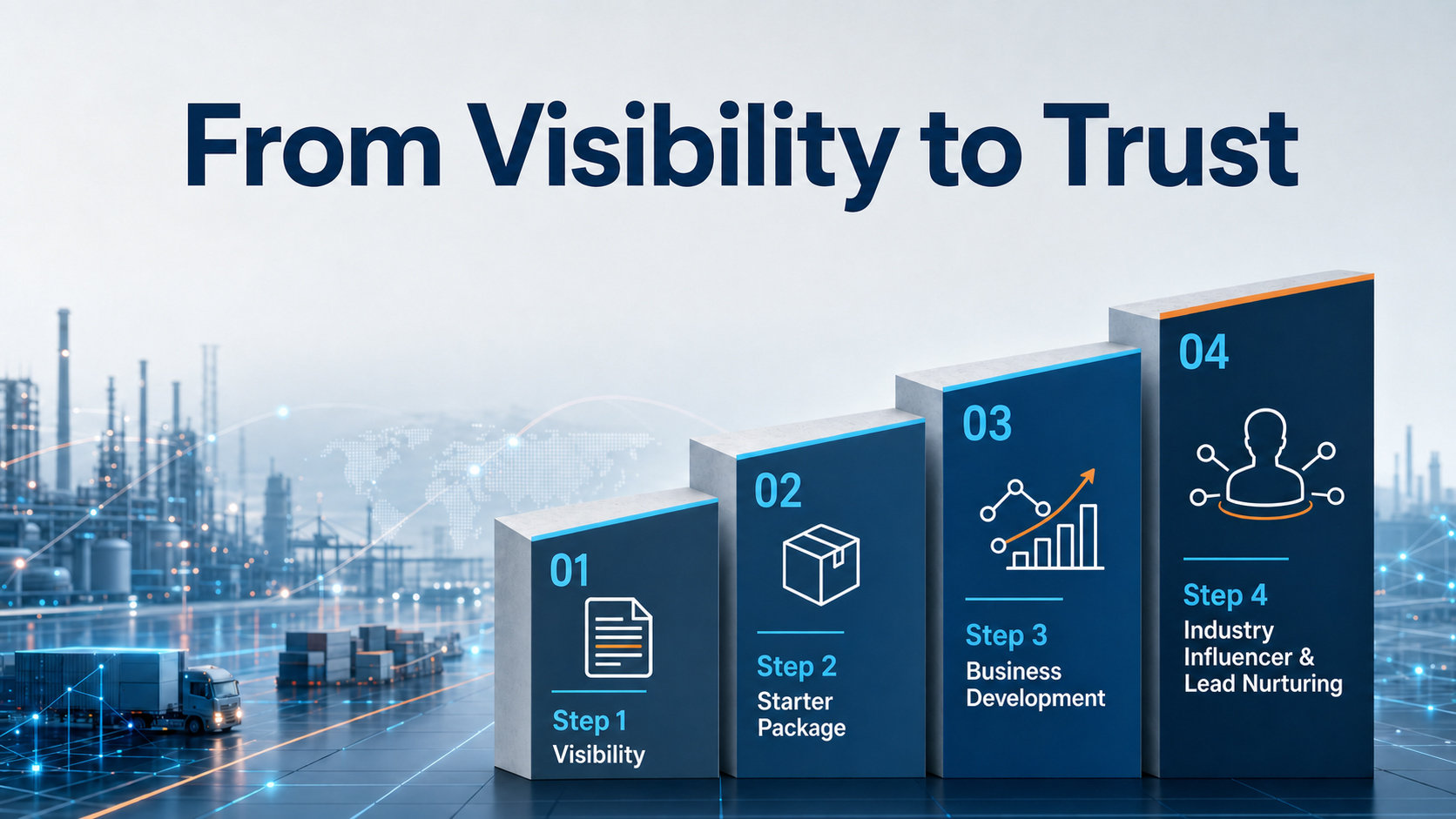
From visibility to trust: Your scalable path with Xpert.Digital - Image: Xpert.Digital
In industrial B2B, sustainable business relationships rarely emerge overnight. They develop step by step – through visibility, professional relevance, recurring touchpoints, and growing trust. Xpert.Digital's 4-stage model addresses precisely this: It offers a structured path that begins with a manageable entry point and can evolve into deeper collaboration in business development if needed.
Instead of relying on loud marketing promises, this model puts the relationship at the forefront. Companies start with clearly defined, easily calculable measures and then decide, based on their own experience, how far they want to expand the collaboration. A key factor for this undisturbed trust-building process: The platform completely avoids annoying advertising ads, so the editorial focus remains solely on the companies' expertise.
More information here:
Your global marketing and business development partner
☑️ Our business language is English or German
☑️ NEW: Correspondence in your native language!

Konrad Wolfenstein
I and my team are happy to be available to you as your personal advisor.
You can contact me by filling out the contact form here wolfenstein@xpert.digital:or simply call me at +49 7348 4088 965. My email address is
I'm looking forward to our joint project.