
Not necessarily the most efficient solution: chaotic storage in a classic rack warehouse – Image: Nejron Photo|Shutterstock.com
How workshops & car dealerships can score points
Like many other industries, the automotive market is characterized by intense competition. This applies to both new car sales and the after-sales business of car dealerships and automotive repair shops. The challenges include, in particular..
- fiercer competition in saturated markets
- declining profit margins, especially in new car sales
- Increasing process complexity due to ever shorter product cycles and growing diversity of vehicle types
- declining brand loyalty on the customer side
- higher demands on services
In these times of intense competition and rising demands, efficient spare parts logistics are becoming increasingly crucial for businesses to operate productively. This particularly affects service-oriented companies that must ensure a continuous and uninterrupted supply of spare parts for their customers. This is especially true for larger car dealerships and automotive repair shops that aim to guarantee a constant supply of the parts their affiliated branches require.
And so, even in the often neglected spare parts logistics sector, the trend towards more efficient structures and processes is becoming increasingly prominent. However, identifying and implementing these potential improvements is not always easy.
Spare parts logistics in the automotive sector

And this is precisely where two opposing requirements collide: On the one hand, a lot of valuable storage space is needed for the storage of the numerous spare parts, but this space is also used by the workshop area for maintenance and repair work.
The problem is further exacerbated by
- an increasing variety of models offered by car manufacturers
- Trend towards ever greater individualization of vehicles
- Growing ranges of finished and spare parts as well as tools
- Shorter service times due to increased customer demands
- increasing after-sales and spare parts business
In view of the growing demand for spare parts and stagnant storage space, sophisticated logistics are needed to optimize internal material flow.
Time is money
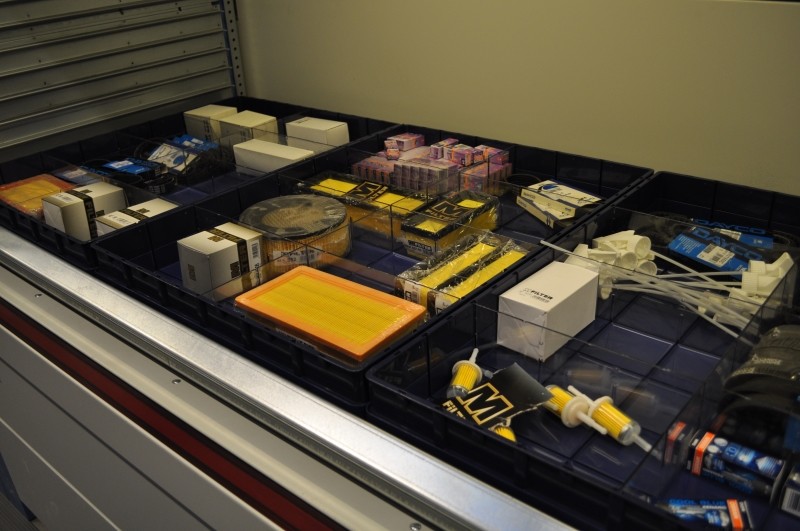
Spare parts storage in an automated system
Workshops and spare parts warehouses often use conventional storage systems (e.g., static shelving units or drawer cabinets) where a wide range of mostly small wear and spare parts are stored unpackaged or in boxes and containers. However, this type of storage, along with the usually manual order management, is time-consuming and labor-intensive. Furthermore, the large product range and the high volume of orders increase the risk of errors in selecting and shipping items. But for companies, time is money, and mistakes cost time. This increases the pressure to always have the right part available at the right time. So, what needs to happen to make this a reality in the warehouse?
Efficient storage with automated storage systems
For automotive companies (and not only them), the challenge is to optimize their existing storage space for efficient spare parts storage. Given the growing product range, this first requires creating additional storage space. Furthermore, it's essential to ensure that spare parts can be accessed quickly and reliably.
Instead of conventional shelving solutions that consume a lot of space and are prone to errors, dynamic systems offer a solution that efficiently manages the storage and retrieval process. They offer a whole range of advantages:
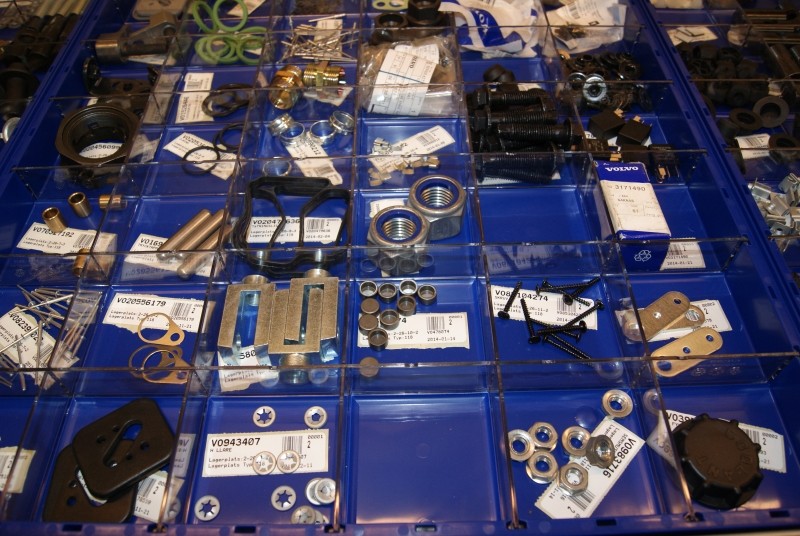
More efficient order picking through fast and precise parts retrieval. Items are stored via a central retrieval opening and automatically made available. Additionally, visual indicators reduce manual errors during the picking process.
Shorter processing times are achieved because providing items at the workstation significantly reduces staff walking distances. This also virtually eliminates the travel time of order pickers, a factor that can account for up to 65% of picking time in high-bay warehouses. Furthermore, quick and targeted access to stored goods prevents unproductive search times. The logical consequence is a substantial increase in throughput.
Safe and ergonomic operation is ensured because the goods-to-person principle automatically provides the order picker with the requested items at the picking opening of the storage system. Strenuous activities such as lifting heavy loads are eliminated. Safety doors and grilles also reduce the risk of injury, resulting in a decrease in sick leave.
Reduced personnel costs thanks to automated device control. Employees can instead be deployed to more profitable areas such as the workshop or customer service, as fewer staff are needed in the warehouse. Furthermore, the intuitive operation eliminates the need for extensive training of order pickers.
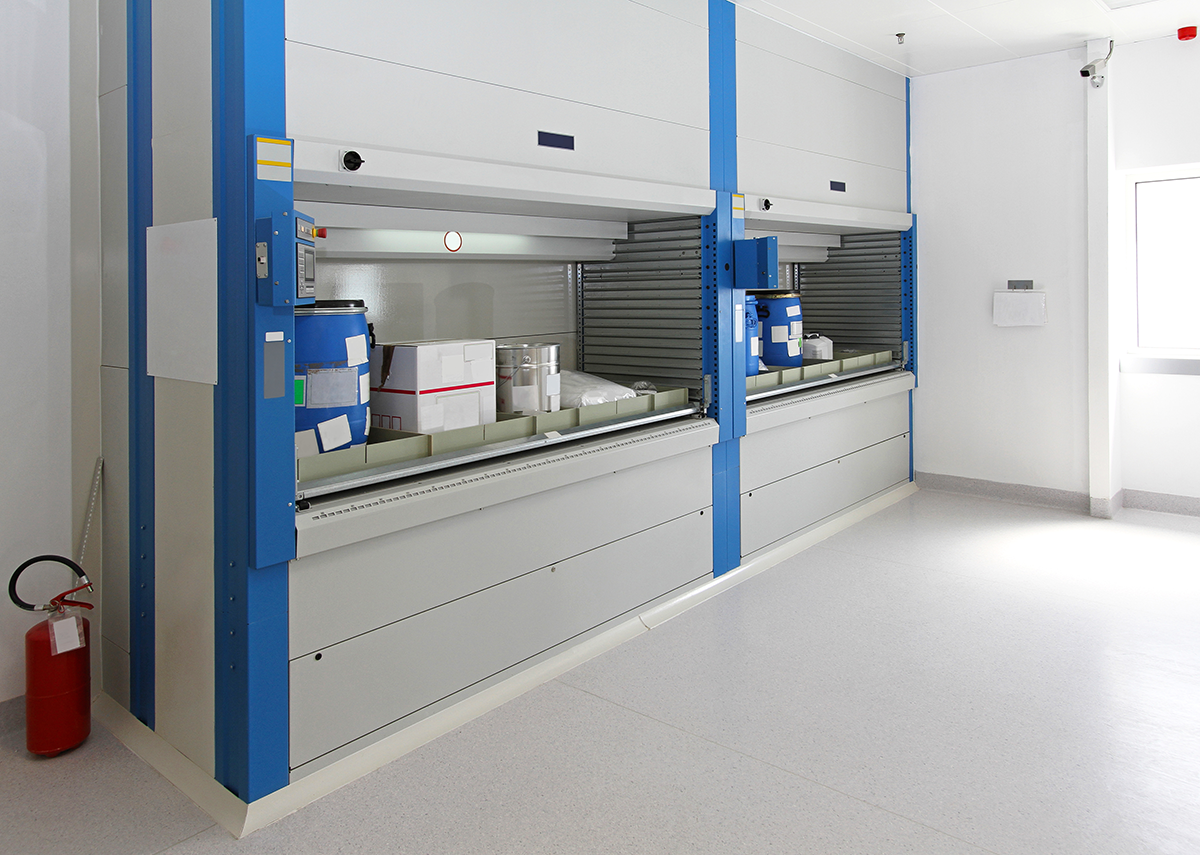
Storage lift – Dynamic storage device – Image: Baloncici|Shutterstock.com
The use of dynamic storage systems leads to an increase in storage volume while simultaneously saving space, increasing productivity, and reducing costs. All these advantages help companies secure their competitive position and optimize the quality of customer contact through improved service.
Ultimately, the equipment ensures a clean, tidy, and presentable work environment for customers. This is not insignificant when it comes to their assessment of the provider's quality and competence.
Keep in touch