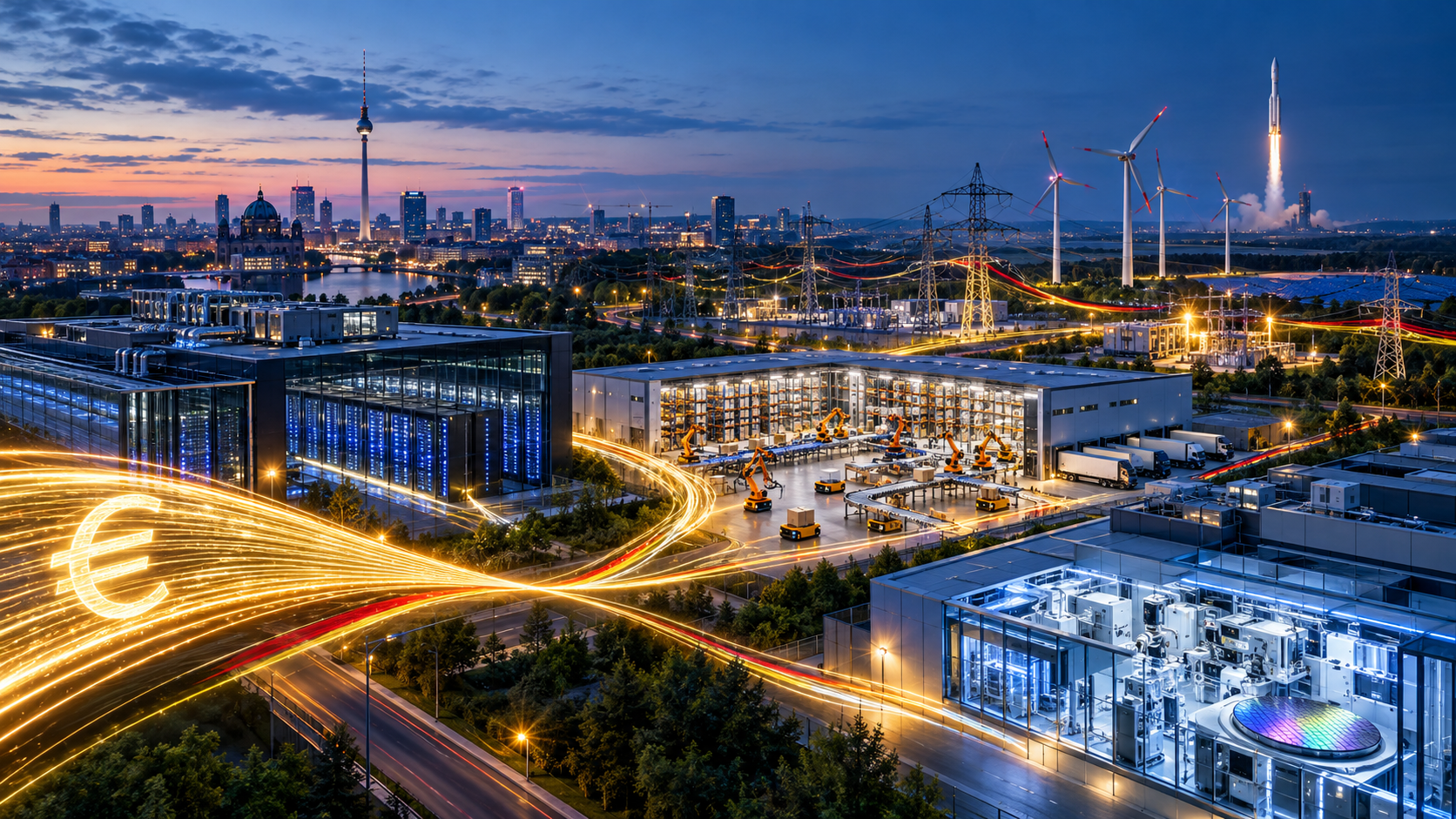
A signal against the narrative of German decline? Merz is pitching billions, Amazon is following suit: Germany's investment gamble – a creative image on the topic, with AI: Xpert.Digital
The Chancellor promises a new beginning – but success will not be determined by summit speeches, but by implemented projects
New investment plans offer hope. However, this does not yet prove an economic turnaround
Capital is available – now the location needs to show that it can use it to generate growth
Germany as an investment location is apparently less of a write-off than some crisis diagnoses would suggest. At the German government's investment summit in Berlin, Chancellor Friedrich Merz pointed to corporate commitments of around €800 billion by 2028. Amazon provided a concrete example: The US technology company plans to invest more than €16 billion in Germany in 2027, including €4.8 billion for expanding its cloud and AI infrastructure around Frankfurt. Other key areas include logistics, satellite internet, and German film and television production.
Merz combined his billion-euro announcement with an unusual promotion of Germany's business advantages. Even the custom of reserving spots on the beach with towels before breakfast on vacation served as a tongue-in-cheek example of the German mentality. His underlying economic message: Germany is reliable, predictable, and precise – qualities that investors value.
However, there is a crucial difference between a convincing location promise and an economic turnaround: Announced capital must actually flow into productive facilities, efficient infrastructure, and competitive business models. The central question, therefore, is not simply how many billions companies promise. What matters is how much of that additional capital is actually invested, what added value is generated in Germany, and whether the modernization also reaches small and medium-sized enterprises (SMEs).
Related to this:
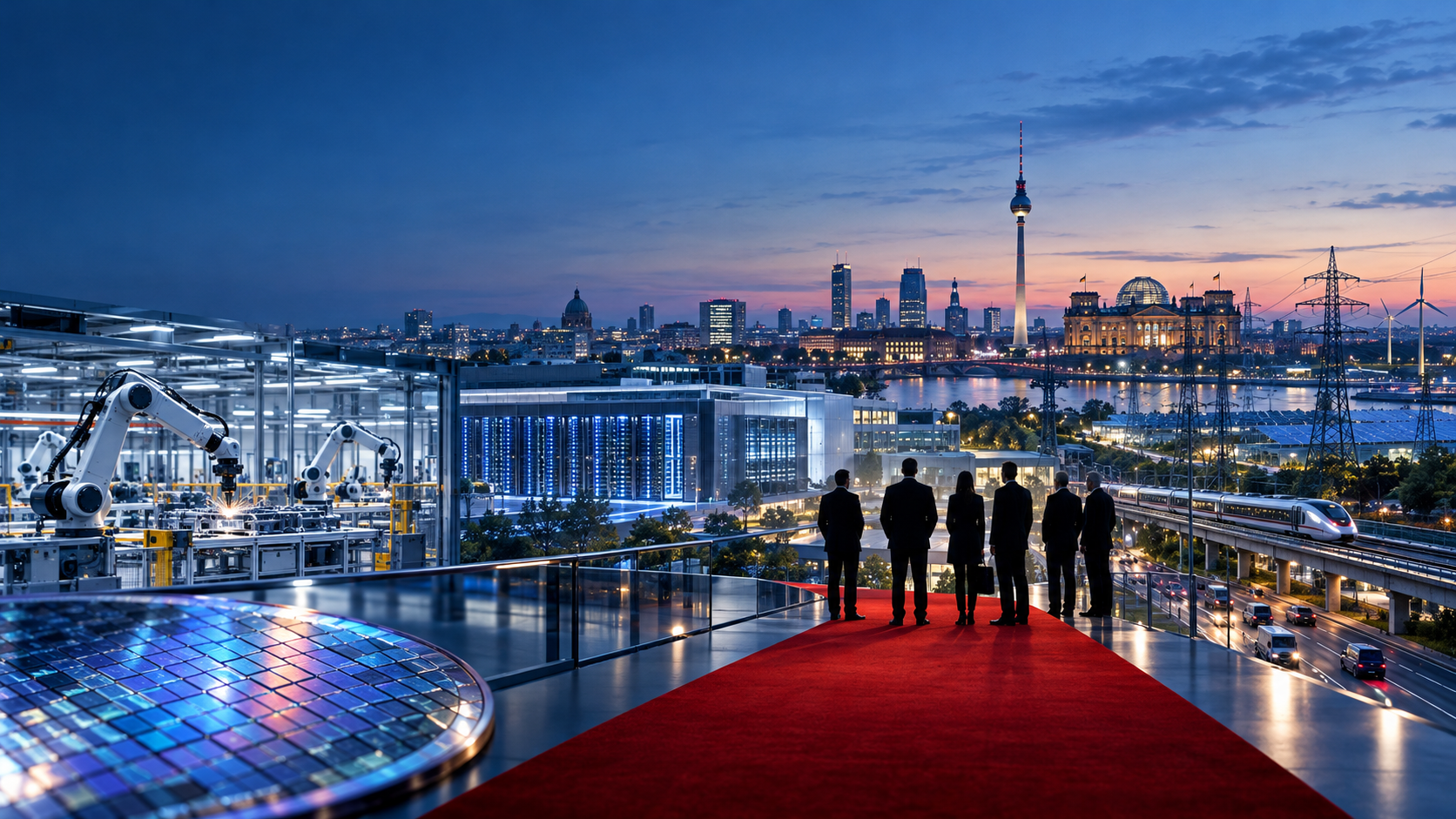
Germany's 850 billion gamble: A signal against the German decline narrative
The windfall sounds enormous – but Germany's future will not be decided by billion-euro announcements, but on construction sites, in factories and in permitting offices
The investment plans of the "Made for Germany" corporate initiative represent a remarkable sign of confidence. Nearly 150 companies and investors intend to invest more than €850 billion in Germany between 2025 and 2028. This figure, now communicated, exceeds the initially announced figure of over €800 billion. For 2025 alone, the initiative has already earmarked investments of over €200 billion. Furthermore, Amazon has announced plans to invest more than €16 billion in Germany in 2027. A significant portion of this investment is earmarked for data centers, cloud and AI infrastructure, modern logistics, satellite communications, and film and television production.
These figures contradict the widespread notion that Germany is generally avoided by international capital. Foreign direct investment has also developed significantly better recently. In 2025, around €86 billion flowed into Germany from abroad, about 50 percent more than in the previous year. Even if direct investment flows are influenced by individual large transactions and can fluctuate considerably, the finding remains relevant: International companies by no means consider Germany a write-off location.
Nevertheless, it would be premature to conclude that substantial investment announcements alone will guarantee a sustainable economic turnaround. A pledge is not yet a realized investment, a realized investment is not yet a productivity boost, and a productivity boost is no guarantee of widespread prosperity. What matters is which additional projects actually materialize, how quickly they are implemented, what added value remains in Germany, and whether they modernize the economy's capital stock. The economic value of the announced influx of funds therefore depends less on its impressive total amount than on its composition and implementation.
Why 850 billion euros sounds bigger than it actually is economically
More than €850 billion within four years seems at first glance like an unprecedented, historic sum. However, to put it into perspective, this amount must be compared with regular investment activity. In 2025, companies in Germany invested a total of around €491 billion. Together with private residential construction investments of approximately €271 billion and public investments of around €145 billion, the total investment volume in the German economy reached roughly €908 billion. The commitments made under this initiative, on the other hand, are spread across the years 2025 to 2028 and also encompass very different forms of capital expenditure.
In purely mathematical terms, 850 billion euros over four years equates to an average of roughly 212.5 billion euros per year. This is enormous, but it doesn't necessarily translate into an additional annual economic stimulus of this magnitude. A large portion of the announced expenditures would likely have occurred even without the initiative. Companies need to replace machinery, modernize buildings, update software, expand computing capacity, and fund research to maintain their existing business. Such replacement, maintenance, and already planned expansion investments are economically important, but they shouldn't be interpreted entirely as newly mobilized capital.
Furthermore, the number of members in the initiative has increased significantly since its launch. The rise in the total volume from an initial minimum of €631 billion to more than €850 billion is therefore not only due to increased plans by existing members, but also to additional companies and investors. For the companies that joined early on, the net increase in investment plans was only a low double-digit billion euro amount. Energy suppliers and financial investors increased their projects, while infrastructure operators became more cautious in some cases, and investment activity in the pharmaceutical industry suffered due to regulatory uncertainty.
The economically decisive factor is therefore additionality. This describes the proportion of investments that would not have occurred without improved framework conditions, political incentives, or new market opportunities. This precise proportion cannot yet be reliably derived from the total sum. The figure of more than 850 billion euros is therefore primarily an indicator of the existing investment base and the fundamental interest in the location. It is not precise proof of an additional investment boom.
From political promise to business decision
Investments are not generated by summits, appeals, or public pronouncements alone. Companies invest when the expected risk-adjusted return on a project is higher than its financing costs and higher than the returns on alternative locations. Political attention can raise expectations, expedite processes, and reduce uncertainty. However, it cannot compensate for persistently inadequate economics.
Germany continues to possess significant locational advantages. These include its large sales market, its central location in Europe, a dense industrial base, high-performing research institutions, a skilled workforce, a reliable legal system, stable institutions, and a generally high credit rating. The close connection between mechanical engineering, automation, chemicals, electrical engineering, logistics, software, and industrial research is particularly attractive. This structure provides excellent conditions for integrating artificial intelligence not only as a digital service but also directly into production processes.
At the same time, high energy prices, rising labor costs, skills shortages, lengthy approval processes, complex regulations, and a sometimes inadequate digital administration are putting a strain on investment calculations. For large companies, such obstacles are annoying but often manageable. For small and medium-sized enterprises (SMEs), however, they can completely derail a project. Those with their own legal department, specialized funding experts, and international financing options can deal with bureaucratic hurdles much more effectively than a regional industrial supplier with limited staff.
The investment summit will only be more than a political spectacle if it leads to a lasting change in administrative practice. Investors need binding timelines, clear responsibilities, digital application processes, reliable network connections, and predictable regulatory requirements. A red carpet in front of the conference building is economically worthless if years of planning and approval processes await behind the next door.
Amazon as a prime example of the new investment economics
Amazon's announced investments of more than €16 billion for 2027 demonstrate how drastically the nature of modern large-scale investments has changed. It's no longer just about factory buildings, warehouses, or transport vehicles. The package encompasses physical infrastructure, digital platforms, data centers, artificial intelligence, robotics, media production, and space travel. It thus addresses several growth markets simultaneously.
Amazon is much more than just an online retailer in Germany. The company operates a dense logistics network, develops cloud services, employs software and data center specialists, produces audiovisual content, and is building a satellite-based communications infrastructure with Amazon Leo. According to the company, more than €100 billion has been invested in Germany since 2010. In 2025 alone, the investment volume was around €15 billion. More than 40,000 people are permanently employed by Amazon, including approximately 3,000 at Amazon Web Services.
The €16 billion planned for 2027 would therefore not be an isolated, one-off decision, but rather the continuation of a long-term location strategy. This increases the credibility of the announcement. A company that already has data centers, logistics properties, customer relationships, personnel, and regulatory experience can deploy additional funds more quickly than a new investor without local infrastructure.
Nevertheless, this figure should also be considered in a more nuanced way. Investments in logistics automation can create jobs while simultaneously reducing the personnel required per delivered unit. Data centers generate high construction and equipment investments, but employ significantly fewer people in their day-to-day operations than traditional industrial plants of the same investment size. Film productions strengthen creative services, but their impact is often project-based. Satellite launches promote European space capabilities, but not every euro of an international space program generates added value in Germany.
Data centers are becoming a key industrial resource
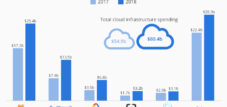
Of the announced Amazon investments, approximately €4.8 billion will be allocated to expanding the AWS Europe region around Frankfurt. The focus is on cloud and AI infrastructure. This part of the package is of particular strategic importance for Germany because computing power is increasingly becoming a fundamental production resource. Just as industrial development in the 19th century depended on transportation routes and in the 20th century on electricity and telecommunications, today access to data, cloud platforms, and high-performance AI infrastructure determines the speed of innovation and scalability.
Germany is already the largest data center location in Europe. Installed IT connection capacity reached approximately 2,980 megawatts in 2025 and is projected to increase to more than 5,000 megawatts by 2030. Cloud applications, high-performance computing (HPC), and AI are experiencing particularly dynamic growth. The share of AI- and HPC-oriented capacity could rise from around 530 megawatts in 2025 to more than 2,000 megawatts in 2030. Frankfurt and the Rhine-Main region form the most important German cluster and one of the most significant data hubs in Europe.
The economic impact of such investments extends beyond the immediate expenditures. Companies can develop new digital products faster, analyze production data, optimize supply chains, and deploy AI models without having to build their own large data centers. This gives small and medium-sized enterprises (SMEs) in particular access to technologies that were previously only available to very large corporations. However, this is contingent on cloud services being secure, affordable, and compliant with European data protection and sovereignty requirements.
This also presents a strategic conflict of objectives. Germany gains urgently needed digital infrastructure, but increases its dependence on an American hyperscaler. A sovereign European cloud can be more strongly shielded organizationally and technically, but ownership, core technology, and a large part of the platform economy remain in American hands. From an economic policy perspective, it would be wrong to therefore forgo foreign investment. It would be equally wrong to ignore this dependence. Germany needs both: high-performing international providers and stronger European value creation in chips, cloud software, cybersecurity, data spaces, and AI models.
Electricity is becoming the bottleneck for digital modernization
The expansion of data centers is only possible if power grids, generation capacities, and local infrastructure keep pace. German data centers consumed approximately 21.3 terawatt-hours of electricity in 2025. Around 31 terawatt-hours are expected for 2030, and this figure could increase significantly in the longer term. This growth is primarily driven by cloud services and compute-intensive AI applications.
The Rhine-Main region is attractive for new data centers because it is home to the DE-CIX internet exchange point, numerous enterprise customers, financial institutions, and an established service provider ecosystem. However, this very concentration exacerbates local bottlenecks. Network connections, space, cooling, and available electrical power are becoming scarce resources. If a data center has to wait years for a connection, Germany loses investments not because of a lack of demand, but because of inadequate infrastructure planning.
It would be economically problematic to pit large digital consumers against industry, heat pumps, electromobility, or the electrification of chemical processes. What is needed instead is a coordinated expansion. New data centers should be built where grids are resilient, additional renewable energy generation can be developed, and waste heat can be used effectively. Flexible load management, storage, long-term power purchase agreements, and improved spatial distribution could facilitate integration.
The quality of the electricity is also relevant. For operators, it's not just the price per kilowatt-hour that counts, but also security of supply, grid stability, and predictability. Germany can only maintain its position as a data center location if it combines competitive electricity costs with a reliable and increasingly climate-neutral supply. If this fails, new capacities will migrate to regions that offer cheaper energy and faster connections.
Logistics between job creation and automation
In addition to cloud infrastructure, Amazon is investing in new and existing logistics sites. The company is currently creating around 3,000 new jobs, including building a new center in Könnern and modernizing several existing locations. Robotics, automated conveyor technology, and digital control systems are expected to increase productivity at logistics centers in Bad Hersfeld, Dortmund, and other locations.
Such projects can be significant for regional labor markets. Logistics centers are often built outside the most expensive metropolitan areas, creating jobs and boosting local business tax revenues, the construction industry, and services. They also improve the delivery capabilities of small and medium-sized retailers who utilize platform and shipping services. This allows German sales partners to reach customers domestically and internationally more quickly.
At the same time, automation is changing the employment structure. New technology doesn't necessarily replace entire locations, but it reduces the workload per shipment and shifts tasks from manual order picking to machine control, maintenance, data analysis, and process management. In the short term, employment and automation can grow simultaneously if shipping volume increases faster than productivity. In the long term, however, simple routine tasks are likely to come under pressure.
The quality of the investment therefore also depends on whether employees receive systematic further training. A successful logistics strategy must not stop at creating additional jobs. It must enable transitions into more technically demanding roles. Otherwise, modern facilities may be built, but at the same time, skills gaps and new social tensions will arise.
Our EU and German expertise in business development, sales and marketing

Our EU and German expertise in business development, sales and marketing - Image: Xpert.Digital
Industry focus areas: B2B, digitalization (from AI to XR), mechanical engineering, logistics, renewable energies and industry
More information here:
A thematic hub offering insights and expertise:
- Knowledge platform covering global and regional economies, innovation and industry-specific trends
- A collection of analyses, insights, and background information from our key areas of focus
- A place for expertise and information on current developments in business and technology
- A hub for companies seeking information on markets, digitalization, and industry innovations
Small and medium-sized enterprises (SMEs): Key to economic stability
Space investments with European side effects
Amazon's satellite internet service, Amazon Leo, is part of the broader investment portfolio. A total of 24 launches with Arianespace have been booked for the construction of the constellation. The Ariane 6 project is supported by a European industrial network, which includes significant German sites in Bremen and Ottobrunn. In particular, the upper stage manufactured in Bremen and numerous supplier components ensure that a portion of the added value remains in Germany.
The economic benefits extend beyond individual rocket launches. Regular commercial orders improve the utilization of Ariane production, spread high fixed costs across more missions, and stabilize specialized supply chains. This strengthens expertise in materials, propulsion technology, electronics, precision manufacturing, and systems integration. Such capabilities are relevant for both civilian and security policy purposes.
However, a global satellite program cannot be entirely attributed to Germany. Launches take place from the European spaceport in French Guiana, satellites are developed and manufactured internationally, and a large portion of the expenditures is incurred outside of Germany. For a sound economic assessment, it would therefore be necessary to disclose what share actually translates into German value creation, employment, and tax revenue.
Strategically, the investment is nevertheless significant. Europe needs independent launch capabilities and competitive space companies. A major commercial customer like Amazon helps to increase production rates and establish the Ariane 6 in the market. At the same time, Amazon Leo creates another American-controlled communications network alongside Starlink. Europe thus benefits industrially, but remains dependent on the digital platform and end-customer access. Here, too, the basic pattern is evident: Germany wins investments and contracts, but must then strategically develop its own technological strength.
Film productions are more than a cultural side project
By the end of 2027, Amazon plans to produce 15 films and series for Prime Video in collaboration with German studios. Compared to the billions invested in data centers and logistics, this area seems small. Nevertheless, it possesses a different kind of economic leverage. Audiovisual productions connect the creative industries, software, studio technology, tourism, advertising, music, and international marketing.
Streaming services have increased the demand for locally produced content. German films can now more easily reach an international audience when distributed via global platforms. This benefits production companies, actors, writers, camera crews, post-production, dubbing, and digital special effects. Filming also generates regional spending on hotels, transportation, set construction, and services.
However, the dependence on a few international platforms remains problematic. Whoever controls financing, distribution, and customer access wields significant negotiating power over producers. Germany should therefore not only promote individual productions but also strengthen rights expertise, technical infrastructure, and independent production companies. Crucially, intellectual property, creative capabilities, and long-term corporate value must not be entirely lost to international platforms.
More growth does not necessarily mean structural recovery
The German economy is expected to grow by around 1.3 percent in real terms in 2026. This is significantly higher than anticipated at the beginning of the year. Robust exports, stronger industrial production, and government spending on infrastructure and defense are supporting the recovery. Growth of around 1.1 percent is expected for 2027, while the momentum could slow considerably again in 2028.
This development justifies cautious optimism, but not a cause for complacency. A significant portion of the current upswing is driven by public spending. Business investment and private consumption remain comparatively weak. Price-adjusted business investment declined in 2025 and was significantly below the 2019 level. Measured against economic output, private investment activity is at a historically low level.
This raises a key economic policy question: Do government investments and large-scale projects trigger a self-sustaining private investment cycle, or do they merely mask structural weaknesses temporarily? In the best-case scenario, new infrastructure improves the profitability of private projects. Faster transportation routes, efficient power grids, digital administration, and increased computing capacity reduce costs, increase productivity, and attract further capital. In the worst-case scenario, government spending increases without improvements to planning processes, competition, or supply capacity. In such cases, the additional billions primarily lead to higher prices, bottlenecks, and windfall gains.
Investment announcements are therefore most effective when they have a complementary effect. A new data center is more productive when sufficient electricity, fiber optic connections, and qualified personnel are available. A new factory needs transport routes, suppliers, and expedited permitting. An AI platform only unfolds its full potential when medium-sized companies possess digitized data sets and their employees are proficient in using the applications. Capital alone does not eliminate structural deficiencies; however, it makes their elimination more urgent.
The middle class remains the decisive stress test
The major investment announcements come predominantly from corporations and institutional investors. However, for the broader German economy, it is crucial whether small and medium-sized enterprises (SMEs) also increase their investments. The situation is particularly strained in this sector. While 92 percent of the surveyed companies report a general need for investment, only 61 percent are actually planning corresponding projects. Investment in digitalization is especially lacking.
The reasons are less a lack of ideas than weak demand, high energy, material, and labor costs, and more difficult financing. More than a quarter of companies rate access to credit as problematic. Smaller businesses are particularly affected. At the same time, a shortage of skilled workers and uncertainty about future regulations are weighing on long-term decisions.
An economic boom driven solely by a few large corporations remains fragile. Large companies can shift their investments internationally and often possess considerable market power. Small and medium-sized enterprises (SMEs), on the other hand, anchor value creation, training, supply networks, and regional employment. If they fail to invest, machinery, software, and business models will continue to age despite spectacular billion-dollar projects elsewhere.
Policymakers should therefore not try to buy individual large investments with ever more subsidies. More important are general improvements that benefit all companies: faster depreciation, reliable energy costs, simple digital processes, better equity financing, competitive corporate taxes, and an efficient capital market. Large projects can be flagship projects, but an economy does not thrive on flagship projects alone.
Jobs are not the only measure
In public debate, investments are often evaluated based on the number of new jobs they create. This metric is understandable, but it falls short in an aging economy. Germany will face a tighter labor supply in the coming years. Therefore, investments must not only increase employment, but above all improve the value added per employee.
A highly automated logistics center or data center may create relatively few direct jobs relative to the capital investment and still be economically valuable. If the infrastructure enables thousands of companies to implement more productive processes, the greatest impact lies outside the investing company. Conversely, a labor-intensive project may create many jobs but exhibit low productivity and low wages.
The right question, therefore, is not how many jobs are created directly per billion euros invested. What matters is whether new facilities, software, and research increase production potential, enable well-paid jobs, and stimulate further private investment. For Germany, the combination of capital infiltration, skills development, and immigration is more important than a purely quantitative employment balance.
Regional differences must also be considered. In economically disadvantaged areas, a logistics center with several hundred jobs can be of considerable importance. In contrast, in the strained Rhine-Main region, a new data center can exacerbate existing shortages of electricity, space, and skilled workers. Investment policy must therefore take a more spatially oriented approach and assess infrastructure, the labor market, and local impacts together.
Productivity determines the actual yield
Germany has been suffering from weak productivity growth for years. An aging capital stock, slow digitalization, and low business dynamism are hindering economic performance. Investment is the key response, but only if it embodies technological progress and is used efficiently.
Cloud infrastructure can increase productivity because companies can access computing power flexibly and scale new applications more quickly. AI can shorten development times, perform predictive maintenance on machines, automate quality control, and reduce administrative work. Robotics can take over physically demanding tasks and counteract the shortage of skilled workers. Modern power grids and storage systems can distribute energy more efficiently. Research and development create new knowledge that spreads through supply chains.
However, the benefits don't automatically materialize with the installation of the technology. Companies must change processes, standardize data, and train their employees. Simply layering new software over old processes, at worst, only digitizes inefficiencies. The greatest productivity gains arise when the organization, technology, and business model are renewed together.
Germany has a unique opportunity here. Its strength lies not primarily in consumer-oriented internet platforms, but in industrial applications. Machines, vehicles, energy grids, chemical plants, and logistics systems generate vast amounts of high-quality data. If this data can be used securely, Germany can take a leading role in industrial AI. However, this requires companies to be willing to build data spaces, standardize interfaces, and enter into collaborations without compromising trade secrets and cybersecurity.
Foreign capital is welcome, but not neutral
The increase in foreign direct investment to around €86 billion in 2025 is a positive sign. Germany needs international capital, technology, and market access. Foreign investors can create new production capacities, increase competition, and transfer knowledge. Long-term direct investments that involve research, local suppliers, and skilled employment are particularly valuable.
However, not all capital inflows are of the same quality. Mergers and acquisitions initially change ownership structures without automatically creating new assets. Financing within a group can statistically appear as direct investment, even though the real capital effect is limited. Individual large transactions can significantly distort annual figures. Therefore, a comparison with longer-term averages is more meaningful than a simple year-on-year comparison.
Furthermore, Germany must weigh openness against economic security. Ownership and control issues are relevant for critical infrastructure, semiconductors, energy, telecommunications, defense, and sensitive data. Blanket isolation would harm growth and innovation. Conversely, naive openness could deepen strategic dependencies.
The appropriate response is a clear, predictable review framework. Investors need to know which areas are open, what safety requirements apply, and how long decisions take. Politically motivated, case-by-case decisions and changing criteria increase uncertainty. Reliability is a competitive advantage here as well.
The greatest risks lie between announcement and construction
The first danger lies in confusing gross and net effects. When a company replaces an old plant, productivity may increase, but the capital stock grows less than the gross expenditure would suggest. If other projects are canceled or plants are closed at the same time, a large single investment can mask a negative overall effect.
The second danger is double counting. Investments can appear simultaneously in company announcements, industry initiatives, and political programs. An AWS data center, for example, can be included in Amazon's overall investment total, the "Made for Germany" initiative, and regional investment statistics. Without transparent demarcation, the impression quickly arises that multiple funds are flowing, even though it's the same project.
The third danger lies in capacity bottlenecks. If the construction industry, network operators, engineering firms, authorities, and suppliers are expected to implement a large number of projects simultaneously, prices and waiting times increase. While the nominal investment volume grows, fewer facilities are actually built. Germany must therefore not only mobilize capital but also expand its implementation capacity.
The fourth danger is regulatory instability. Companies invest for decades. Energy policy, taxes, labor law, data protection, and funding conditions must therefore be predictable. Frequent policy changes increase the risk premium and make even well-intentioned subsidies less effective.
The fifth threat is geopolitical in nature. Trade conflicts, energy price shocks, wars, and technological export controls can disrupt supply chains or alter investment calculations. Semiconductors, cloud infrastructure, satellite communications, and defense, in particular, are closely linked to security issues. Resilience therefore requires supplier diversification, European capabilities, and sufficient strategic reserves.
How investment success should be measured
A credible assessment cannot be limited to announced billions of euros. Transparent monitoring is needed that distinguishes between planned, approved, started, and completed projects. Only in this way can it be seen where projects get stuck in the process and which political obstacles are truly relevant.
The proportion of additional investments compared to previous plans should also be measured. Companies are not required to disclose sensitive trade secrets. Aggregated data by industry and investment type would already be helpful. Furthermore, data on German value creation, research and development, regional effects, energy demand, and expected productivity impacts would be important.
Speed also matters. An investment project approved after two years has a different present value than the same project after seven years. Lengthy processes incur financing costs, tie up management resources, and increase the risk that technology or market assumptions will become obsolete during the waiting period.
For data centers, grid connection times, additional renewable energy generation, energy efficiency, waste heat utilization, and water consumption should be specified. For logistics projects, the degree of automation, qualifications, and regional traffic impact are relevant. For space contracts, the German value-added contribution should be made transparent. For media productions, in addition to production costs, rights, international revenues, and the development of sustainable creative capacity are also important.
Such an approach would depoliticize the debate. Companies could demonstrate progress, policymakers could address bottlenecks more effectively, and the public would see which announcements are actually being implemented. Transparency would not be a vote of no confidence, but rather a prerequisite for credibility.
Germany doesn't need a windfall, it needs investment capacity
The more than €850 billion invested in the "Made for Germany" initiative, Amazon's planned €16 billion for 2027, and the increased foreign direct investment mark a real improvement in sentiment. They demonstrate that, despite high costs and structural problems, Germany continues to possess strong industrial, technological, and institutional foundations. Significant investment opportunities exist, particularly in cloud computing and AI, energy, infrastructure, logistics, aerospace, defense, and industrial transformation.
However, this optimism must be tempered with certain conditions. A significant portion of the announced sums was already planned or part of the normal investment cycle. The actual additionality of these investments is unclear. At the same time, many medium-sized companies are underinvesting, despite their high modernization needs. This means that Germany is not yet experiencing a widespread investment boom, but rather a mix of large-scale projects, government incentives, and continued weak diversification.
The justified outlook is therefore cautiously positive. The announcements are more than mere symbolic politics, but less than proof of a complete transformation of Germany's economic position. They could become the starting point for a self-sustaining upswing if Germany accelerates permitting processes, expands energy and grid infrastructure, facilitates private financing, implements digital administration, and trains skilled workers. If these reforms fail to materialize, some of the billions risk being lost to delays, price increases, and replacement investments.
The real measure is not whether Germany announces 850 billion euros. What matters is whether this investment translates more quickly into a more modern capital stock, higher productivity, technological sovereignty, and sustainable prosperity. Germany possesses capital and ideas. Its scarcest asset now is the ability to rapidly transform both into functioning reality.
🎯🎯🎯 Data-driven B2B industry hub as a quasi-in-house solution


The quasi-in-house solution: How Xpert.Digital closes operational gaps in B2B marketing and sales – Smart Content-Driven Business - Image: Xpert.Digital
Xpert.Digital is a data-driven B2B industry hub led by Konrad Wolfenstein . The company acts as an external, quasi-in-house solution for industrial partners, closing operational gaps in marketing, content, and sales – without requiring additional resources on the client side.
More information here:
Your global marketing and business development partner
☑️ Our business language is English or German
☑️ NEW: Correspondence in your native language!

Konrad Wolfenstein
I and my team are happy to be available to you as your personal advisor.
You can contact me by filling out the contact form here wolfenstein@xpert.digital:or simply call me at +49 7348 4088 965. My email address is
I'm looking forward to our joint project.